Category Archives: Prayer Path

The Author Who Enters His Own Story

by Dee Ann Loving-Tackitt
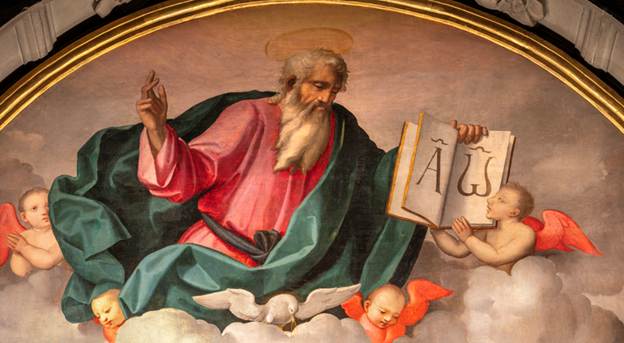
Then God said,“Let us make mankind in our image, in our likeness, so that they may rule over the fish in the sea and the birds in the sky, over the livestock and all the wild animals, and over all the creatures that move along the ground.” So, God created mankind in his own image,
in the image of God he created them; male and female he created them.                               
Genesis 1: 26–27

Yes, we address God our Father with many names. YHWH, Elohim, El Shaddai, Jehovah Rapha. Another way I understand God’s relationship with all of us is as the Author of all creation, His living story. Many of us, through J.R.R Tolkien, read how he shaped Middle-earth with language, imagination, and design. God is THE Creator. The difference between Tolkien and THE Creator is infinite: Tolkien made a fictional world, while God authors reality itself.

The theologian Kevin Vanhoozer discusses God as the Author of His own story, naming it Theodramatic Theology.

What is Authorial Analogy?

A human author writes. God creates.

An author creates with words, while God creates when He speaks.

An author shapes the plot. God creates the plot as He writes our story.

An author writes the story from beginning to end, but God knows the end before our beginning.

God does not need ink; He creates with His Power.

In Genesis, when God speaks, light appears. When He speaks, life begins. Psalm 33 says, “By the word of the Lord were the heavens made.”

Three Types of Divine Authorship

Authorial Analogy can be explained in three ways.

  1. God as our divine author creates with order, beauty, meaning, and life. Authors have that goal as well.
  2. God shapes history by just creating and stepping back. Yet He chooses to join the story. In the Bible, God spoke to Abraham, sent prophets, became Christ, and took part in the story He writes.
  3. By speaking and working through human writers, God has given us Scripture. In this way His voice is heard in many times, places, and styles.

What About Human Freedom?

How can we be free if God is our Creator? This question is often asked. Are we merely puppets? I don’t think so. God does not do all the talking, keeping us silent. He wants to have a conversation. God speaks, and we should respond! Right away! I have experienced this: God calls, convicts, persuades, reveals, and teaches. This is how He heals us. God waits for us to respond. When we choose to listen and talk to God, our hearts soften. But the opposite is true as well: when we choose to resist, our hearts harden. God does not force this conversation; He waits for us to choose to join His story. He holds the whole story in His hands.

  • We are responsible to God and others within the story God writes.
  • God can stand outside His creation, just as an author is physically outside His story.
  • Yet, God IS present within creation. Therefore, he can be compared to the author who steps into His own story.

The Bible

Where can we read God’s story? Open the Bible. We can read how He creates, makes covenants, and gives us shalom (peace) through His Word. Not only does God speak in the Bible, but He is present in the Bible because He is speaking directly to you. That is why I call Him the Author of all Creation. We live God’s story because He speaks, sustains, and guides.

“As Author, God is not limited by his created work … one authorial day is like a character’s thousand years (2 Pet. 3:8). The Author can open the text to any page, flip back and forth at will, and write himself into the drama of human history: God’s Word and Spirit are in created time but not of it.” Kevin Vanhoozer

Shall we pray?

Heavenly Father,

We weave fictions of our lives with words. We create myths without Your authorship. We welcome Your Words that build a holy place in our hearts while turning love into beautiful music. We still do not fully understand Your way. In Christ, the language You put in our hearts illuminates this dim world. May Your love always cleanse our minds and replenish us with joy. In Jesus’ precious name we pray. Amen.

Resources

Freeman, Austin M. “The Author of the Epic: Tolkien, Evolution, and God’s Story.” Zygon 56, no. 2 (2021): 500–516. EBSCOhost.

Hronich, Andrew. 2025. “God and Indiana Jones.” Liberty Theological Review 9, (1). 

Settecase, Parker. “Don’t Write off the Absentee Author: Why the Problems of Divine Hiddenness and Neglect Don’t Destroy Vanhoozer’s Authorial Analogy.” Perichoresis 21, no. 4 (2023): 34–51. https://doi.org/10.2478/perc-2023-0030.


How God Restores What Trauma Breaks

by Dee Ann Loving-Tackitt

“He heals the brokenhearted and binds up their wounds.” — Psalm 147:3

Trauma has a way of breaking life open. It can shatter our sense of safety, silence our voice, and fracture our identity. Neuroscience shows that when people relive traumatic memories, the brain’s language centers go quiet while emotional centers flare with activity. This is why survivors often say, “I don’t have words for what happened.” Trauma steals language.

But God has always been in the business of restoring what was broken—especially the parts of us that feel too shattered to name. And Scripture gives us a powerful pattern: healing often begins when people reclaim their story.

Interestingly, modern research on expressive writing echoes this same truth. When trauma survivors write about their experiences, they re-engage the parts of the brain responsible for language, narrative, and meaning-making. Over time, expressive writing has been shown to reduce anxiety, improve mood, strengthen working memory, and support post-traumatic growth.

Science and Scripture meet in a beautiful place: healing begins when we bring our story into the light.

David’s Psalms: When Pain Finds Its Voice

The Psalms are filled with raw, unfiltered emotion. David writes through fear, betrayal, grief, and despair. He names what feels unspeakable. He puts chaos into language.

This mirrors what expressive writing does today—helping the brain integrate overwhelming experiences and restore emotional balance. David’s writing becomes both prayer and processing, a sacred act of survival.

Joseph’s Redemption: Rewriting a Wounded Story

Joseph endured betrayal, abandonment, false accusation, and imprisonment. Years later, he reframes his story with God’s help:

“You meant evil against me, but God meant it for good.” — Genesis 50:20

This is meaning-making—the same cognitive shift expressive writing often produces. Joseph doesn’t erase the trauma; he integrates it. His identity is rebuilt not by forgetting the pain but by understanding it through God’s lens.

Job’s Lament: Wrestling Toward Understanding

Job’s suffering is overwhelming—loss of family, livelihood, health, and dignity. Much of the book is Job trying to make sense of his pain. He speaks, questions, laments, and reflects. He narrates his trauma in real time.

This mirrors the therapeutic process: naming the pain, exploring its meaning, and slowly reconstructing identity after devastation. Job’s restoration is not only physical; it is deeply narrative.

Israel’s Exile: Remembering, Rebuilding, and Returning

The exile is a national trauma. Israel loses home, identity, and stability. In response, the prophets call the people to remember, write, and tell their story. Lamentations records communal grief. Ezra and Nehemiah describe rebuilding both the city and the people’s identity.

God leads them through a process of naming the loss, narrating the experience, and rebuilding life with new meaning—just as expressive writing helps trauma survivors do today.

The Risen Christ: Scars That Tell a Story

After the resurrection, Jesus appears with His scars still visible. The wounds remain, but they no longer signify defeat—they signify victory, identity, and purpose.

This is the heart of trauma recovery: the wound becomes part of the story, not the end of it.

Where Scripture and Science Meet: Healing Through Story

Modern research shows that expressive writing helps trauma survivors:

  • Re-engage language centers
  • Integrate fragmented memories
  • Reduce distress
  • Improve mood and functioning
  • Rebuild meaning
  • Experience post-traumatic growth

Scripture shows God leading people through the same arc:

  • Naming the trauma (Psalms, Lamentations)
  • Narrating the experience (Job, Joseph)
  • Rebuilding identity (Exile and Return)
  • Finding meaning in suffering (Paul)
  • Transforming wounds into testimony (Jesus)

Both tell the same truth: healing often begins when we reclaim our story.

Trauma may silence us, but God invites us to speak—to write, to remember, to narrate, to rebuild. Expressive writing becomes not just a therapeutic tool but a spiritual practice, a way of joining the long biblical tradition of people who found healing by putting their pain into words.

And in doing so, we discover what Scripture has always promised: our wounds can become part of a redeemed story.

A Prayer for Healing and Restoration

Father, You see every wound, every memory, every moment that felt too heavy to carry. You know the places where trauma has stolen our words and fractured our sense of self. Today, we ask You to gently restore what has been broken. Give us courage to name our pain, strength to write our story, and grace to see Your hand in every chapter. Bind up the wounds that still ache. Bring light to the places that feel dark. And transform our scars into testimonies of Your faithfulness. Amen.

Follow Jesus: The True Direction of the Law

by Dee Ann Loving-Tackitt

Opening Scripture
“For I desire mercy, not sacrifice, and acknowledgment of God rather than burnt offerings.” (Hosea 6:6; cf. Matthew 9:13)

The Tension Between Legalism and Mercy

Legalism has always been uncomfortable with mercy. It clings tightly to rules, even when God Himself shows that mercy is the deeper law. Yet the New Testament does not erase the Law—it reveals its heart. Jesus does not come to dismantle what God established; He fulfills it (Matthew 5:17), uncovering what the Law was always pointing toward: the mercy of God extended to His people through relationship, not mere regulation. Mercy Woven Throughout the Old Testament

All throughout Scripture, we see that mercy was never an afterthought—it was always central. David, fleeing for his life, ate the consecrated bread reserved for priests, and God did not condemn him (1 Samuel 21:1–6). The Hebrew midwives disobeyed Pharaoh’s command to kill the male infants, preserving life instead of submitting to wicked authority, and Scripture says God blessed them (Exodus 1:17–21). Rahab hid the spies, defying her king and risking her life, and rather than being judged, she was redeemed and woven into the very lineage of Christ (Joshua 2; Matthew 1:5). Again and again, mercy did not break God’s will—it fulfilled it.

Jesus Reveals the Fullness of the Law

Jesus brings this truth into full light. When He walks among the people, He heals on the Sabbath (Mark 3:1–5). He reaches for those labeled “unclean” and restores them (Mark 1:40–42). He sits with sinners and calls them into new life (Luke 5:30–32). And He declares plainly, “I desire mercy, not sacrifice” (Matthew 9:13). In every act, Jesus shows us that the Law was never meant to burden or crush—it was meant to guide hearts toward God, to open the way for redemption, and to reflect His compassion.

The Law Points to Christ

So here is the truth we must hold onto: if a law does not point us to Christ, if it does not reflect His mercy, if it does not move people toward redemption, then it is no longer functioning as God intended. The Law is a signpost—and every signpost must point to Jesus. When we cling to rules without mercy, we miss the destination. But when we walk in mercy, we step into the very heart of God.

Closing Prayer
Heavenly Father, thank You for revealing the true heart of Your Law through Jesus. Forgive us for the times we have clung to rules without reflecting Your mercy. Teach us to see people the way You see them—with compassion, grace, and a desire for their redemption. Help us to walk in truth without losing love, and to uphold Your Word in a way that points others to Christ. Let our lives be signposts that lead others to You as we share mercy and Your Truth.

In Jesus’ name, Amen.

A New Song in the Heart: When Worship Becomes Theology

by Dee Ann Loving-Tackitt

“God is Spirit, and those who worship Him must worship in spirit and in truth.” — John 4:24

Worship begins where Jesus begins—with the Spirit. Before we ever lift a song, raise a hand, or open a hymnal, Jesus sets the foundation: true worship is Spirit‑led. It is not confined to a building, a style, or a tradition. It flows from hearts shaped by the Holy Spirit and anchored in the truth of God’s Word. When we start here, every act of worship becomes more than sound; it becomes surrender.


Why Hymns Matter More Than We Realize

For generations, hymns have been the church’s way of teaching the faith. They were the catechism of the common believer, the seminary of the shepherd and the seamstress, the farmer and the fisherman. When people could not read Scripture, they sang Scripture. When they could not articulate doctrine, they memorized doctrine through melody.

Hymns are not just music; they are memory. They are not just poetry; they are proclamation. They are not just tradition; they are testimony. And when we sing them with hearts yielded to the Holy Spirit, they become a lifeline—carrying truth into places our minds may forget but our spirits remember.


The Cross Teaches Us to Sing

At the cross, sorrow becomes song.
At the cross, suffering becomes strength.
At the cross, theology becomes doxology.

This is why the church has always sung—not because life is easy, but because Christ is worthy. Not because we have all the answers, but because we know the One who does. When we sing, we preach to ourselves, we preach to one another, and we preach to the watching world. And in that preaching, hope rises.

Paul echoes this when he writes, “Sing and make music from your heart to the Lord” (Ephesians 5:19). Spirit‑led worship is not performance; it is participation in the life of God.


A New Song for a New People

Psalm 40:3 declares, “He put a new song in my mouth, a hymn of praise to our God.” That means the song is not self‑generated—it is Spirit‑given. The melody of redemption is placed in us by the One who redeemed us. When God rescues us, He doesn’t just change our circumstances—He changes our song.

This is why hymns endure. They are not merely human creativity; they are human response to divine revelation. They become Scripture in the heart, shaping us long after the final note fades.


Closing Reflection

Worship is not only something we study—it is something we sing. And every time we lift our voices, we join the great cloud of witnesses who have sung their way through suffering, through joy, through doubt, through faith, and always toward the cross. May every song we sing be Spirit‑breathed, Scripture‑rooted, and Christ‑centered.


Closing Prayer

Heavenly Father,
Thank You for giving us a new song—one shaped by Your Spirit and anchored in Your truth. Teach us to worship as Jesus commanded: in spirit and in truth. Let every hymn, every melody, and every whispered prayer draw us closer to the cross. Fill our hearts with gratitude, our mouths with praise, and our lives with the sound of redemption. May our worship honor You and bear witness to Your hope in a world that desperately needs it. In Jesus name we pray.
Amen.

What Boethius, Baseball, and Bread Are Teaching Me About God

Why the Unchanging God is the Anchor of My Faith


A Grandma, Boethius, and Saturday Morning Theology

“For I the Lord do not change.” — Malachi 3:6

I know. I’m a grandma who retired and took up theology. While some people spend Saturday mornings gardening, I spend mine studying Boethius (c.480-524 CE). He was an early Christian philosopher whose writings on God, time, and eternity have deepened my Bible study and helped me think about what it means to say that God does not change.

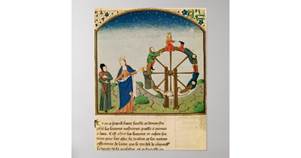
Boethius is often associated with the image of the “Wheel of Fortune.” He pictured life as a spinning wheel—one moment we may feel on top, and the next, everything can shift. Circumstances rise and fall, and very little in this world stays steady for long. (His personal story behind this is powerful, but that’s a story for another blog.) His insight is simple but lasting: if we place our trust in changing circumstances, we will always feel unstable. But if we trust God, who never changes, we can remain steady no matter where we are on the wheel.

That matters to me because everything in my life changes. My thoughts shift, my body ages, and my understanding grows. But God is not like me. God does not grow older, learn something new, or move from one state to another. God simply is.

What I find so helpful is the idea that God is eternal, not just in the sense that He lives forever, but in the sense that He exists beyond time altogether. I live in the past, present, and future. God does not. So when I think about God knowing the future, I do not picture Him waiting for tomorrow to arrive. What is future to me is not future to God. He sees all of time at once. That means God can know everything without changing.

What Does “Timeless” Really Mean?

“From everlasting to everlasting you are God.” — Psalm 90:2

When theologians say God is timeless, they do not mean He has a very long life. They mean He is not stretched out across moments at all. My life is lived in before-and-after. I live after the flood and read about it as something that happened long ago. But God’s life is not before the flood, during the flood, or after the flood. God does not move through events the way I do.

That raises an obvious question: how can a timeless God relate to people like me who live one moment at a time? I experience life as a sequence. One thing happens, then another. From my point of view, events unfold little by little. From God’s point of view, all moments are present. So, the question is whether He can know what happens in time without being bound by time as I am.

What helps me here is realizing that knowledge is more than a list of facts. To know something fully is not just to know true statements about it, but to know the thing itself. So, if God is omniscient, His knowledge cannot be reduced to a giant collection of correct information. He knows reality itself fully and perfectly.

Patrick’s Game Helped Me See It

“O Lord, you have searched me and known me.” — Psalm 139:1

Last weekend I watched my grandson Patrick play baseball, and his team won. I knew that game from my own limited perspective. I saw what happened from the stands, felt the excitement, and remembered certain moments more than others. But God’s knowledge would be different. He would know every player, every motion, and every moment all at once and perfectly. My knowledge is partial and unfolds in time. God’s knowledge is full and perfect.

Do Changes in the World Mean Changes in God?

“…with whom there is no variation or shadow due to change.” — James 1:17

Here comes Nicholas Wolterstorff, another theologian keeping me company on these Saturday mornings, with a fair question: if God knows a changing world, must God change too? I understand the concern because when I learn something new, my knowledge changes. I find out the bread is ready or hear that Patrick’s team won. But there is a difference between coming to know something and simply knowing it. I learn bit by bit. God does not. He does not “find out” what is happening in the world. So, changes in the world do not mean changes in God.

So where does all of this leave me on a Saturday morning with Boethius, Patrick’s baseball game, and bread rising in my kitchen? It leaves me convinced that God can know a changing world without being a changing God. I learn a little at a time. God does not. He knows the world as its Creator, not as a spectator trying to catch up.

“Jesus Christ is the same yesterday and today and forever.” — Hebrews 13:8

And that is why this matters for discipleship. Because God does not change, His love does not waver, His wisdom does not fail, and His promises do not weaken. I can follow Christ even when I do not understand what He is doing in my life. In the end, all my Saturday morning theology brings me here: I can trust the God who sees the whole story when I can barely see the next step.

Prayer:

Heavenly Father,

Thank You that You do not change. When my life feels uncertain and my understanding feels small, help me trust Your steady love, wisdom, and faithfulness. Teach me to follow Christ one step at a time, resting in the truth that You see the whole story and hold me in Your care. In Jesus name we pray. Amen.

Scriptures for Further Reading

  • Malachi 3:6 — “For I the Lord do not change.”
  • Hebrews 13:8 — “Jesus Christ is the same yesterday and today and forever.”
  • James 1:17 — with God there is “no variation or shadow due to change.”
  • Psalm 90:1–2 — God’s eternal nature
  • Isaiah 46:9–10 — God’s knowledge and purposes
  • Psalm 139:1–6 — God’s perfect knowledge of us
  • Lamentations 3:22–23 — God’s faithfulness
  • Numbers 23:19 — God does not change like human beings do

Resource

Brown, Graham. “God’s Unchanging Knowledge of the World.” Sophia 28, no. 2 (1989): 2–12.

Amazing Grace

Scripture, Doctrine, and the Church Family


📖 Scripture

“Therefore, there is now no condemnation for those who are in Christ Jesus.”
— Romans 8:1


Living Free in Christ: Baptist Doctrine

Bernie and I recently joined First Baptist Lubbock, and in this season, we have been intentionally studying Baptist doctrine together. As I’ve leaned into that—especially as a doctoral student in Biblical Studies at a Baptist university—I’ve found something that has deeply encouraged my heart… something I am truly thankful for.

As I studied the doctrine, this is what I found:

At its core, Baptist theology carries a beautiful truth for struggling Christians: receiving new mercies is part of the Christian life —the steady rhythm of God’s grace.

This truth is deeply reflected in Baptist doctrine.

  • Salvation by grace reminds us that we are not defined by our past, but justified through Christ.
  • The priesthood of all believers tells us we can come directly to God—boldly and immediately
  • Soul competency reminds us that we stand personally before God, responsible to Him above all.
  • Sanctification reminds us that growth is ongoing… and stumbling is not the end

And I found myself thinking:

This is amazing grace.


📖 What Does Scripture Say?

As a Bible student, I had to ask:

What does Scripture actually say about living in ongoing renewal without shame through the steady rhythm of God’s grace?

From the very beginning, we see that shame entered through sin.

In the Garden, Adam and Eve didn’t just feel guilty—they hid. Shame whispered, “This is who you are now.” It shifted identity.

But the Gospel tells a different story.

Jesus meets people in their shame—and He restores them.

He does not define them by their failure.
He redefines them through His grace.

In John 8, when the woman was brought before Him, Jesus had every right to condemn her… but instead, He extended mercy, called her out of sin, and lifted her from the shame that once held her. And, He told her to go and sin no more.


What We Are Reminded of in Scripture

  • “If we confess our sins, He is faithful and just to forgive us…” (1 John 1:9)
  • “As far as the east is from the west, so far has God removed our transgressions from us.(Psalm 103:12)
  • “Therefore, if anyone is in Christ, the new creation has come: The old has gone, the new is here!” (2 Corinthians 5:17)

Here is the truth:

Shame may enter through sin, but it is broken through the finished work of Christ.

When Jesus said, “It is finished,” He wasn’t just paying for sin—He was breaking the power of sin and removing the guilt that once defined us, restoring our identity in Him.


Doctrine and Scripture Together

When I compare what I found in Baptist doctrine with what I found in Scripture, they align so beautifully:

  • Doctrine says we can come boldly → Scripture says there is no condemnation for those in Christ.
  • Doctrine says we have access to God → Scripture says we are cleansed and made new for those in Christ.
  • Doctrine says growth is ongoing → Scripture says grace is sufficient for those in Christ.

And this is what I am most thankful for:

Being made new is a natural part of the Christian life—the steady, faithful rhythm of God’s grace.


🤍 Why the Church Family Matters

From my heart, I want to say this:

This is why being part of a church family matters so much.

Yes, we can come to God individually—and that is a beautiful truth.
But we were never meant to walk this out alone.

We need a place where:

  • grace is spoken out loud
  • Truth is lived in community
  • restoration is seen
  • And people remind us who we are when we forget

The church becomes living proof that starting again is possible… not just once, but daily.


🌸 Living This Out

In our home, in our church, and through The House of Prayer, this is what Bernie and I are learning to live: Daily priesthood means daily renewal
Daily renewal means we keep walking forward—restored, renewed, and covered in grace.


🙏 Prayer

Father,
Thank You for the gift of grace that continually renews us in Christ.
Thank You that in Christ, we are not defined by our past or our sin, but made new in Christ.

Teach us to come boldly to You—not hiding, not hesitating, but trusting in Your mercy.
Help us receive Your forgiveness fully and walk in the new identity You have given us.

Strengthen us to keep growing, keep turning, and keep trusting You.
And thank You for the gift of the church—for people who speak truth, extend grace, and walk alongside us.

Let our lives reflect the rhythm of Your grace—again and again.

In Jesus’ name,
Amen.

Consider the Lilies: Walking the Prayerful Path of Trust

Matthew 6:28

I spent a beautiful afternoon with the Lubbock Christian Women’s Connection, and from the moment I walked in, I knew it would be special. One of our fearless leaders greeted me with such kindness, looked straight into my eyes, and said, “Dee Ann, we need you to be a table hostess.”

Now I will be honest with you—there is an old fear that sometimes tries to rise up in moments like that. It grabs hold of my words and makes them want to dance into a stutter. For just a second, I felt it coming. But instead of letting fear speak, I quietly reached for Jesus’ hand and said, “Of course.”

And oh, how the Lord provides.

Karen Wood became my buddy for the day. By God’s grace, I managed to get us both safely to the Country Club, and we were ready to celebrate sisterhood. But what meant the most was this—Karen leaned in and said so gently, “I’ve been a hostess before… we can do it together.”

Isn’t that just like Jesus?

I whispered a quiet thank-you to Him in that moment—for a sweet friend, for His steadying presence, and for the courage to step into a responsibility I might have once avoided.

The afternoon itself was rich with beauty. Lindy Woods filled the room with songs that seemed to settle right into our hearts, preparing us for what God had in store. Then we heard from Leana Neagle of Willis, Texas, whose message, “On the Heels of Grace,” felt like holy ground.

Her story of miraculous healing was truly unforgettable.

After surviving a horrific wreck—something she should not have lived through—she faced the very real possibility of losing her legs. Doctors doubted. Healing seemed uncertain. Even walking again felt out of reach. And yet, in that place of deep trial, she encountered a word she had never fully understood before: testify.

Through the power and mercy of God, not only did she keep her legs, but she went on to do what once seemed impossible—she walked a marathon. And there she stood before us, whole, strong, and full of faith, declaring the goodness of God.

It was more than a testimony—it was a living picture of grace in motion.

The theme of our gathering was flowers, and as I sat at the table, my heart turned to Scripture:

“And why are you anxious about clothing? Consider the lilies of the field, how they grow: they neither toil nor spin.”
— Matthew 6:28

At Table 4, we gathered as women carrying responsibilities, hopes, and even quiet burdens. And Jesus, knowing hearts like ours, pointed us to something as tender as a flower to teach us about trust.

Throughout Scripture, flowers quietly preach truth:

God’s Provision
Lilies do not strive or strain, yet God clothes them in beauty. If He tends to something so fleeting, how much more will He care for you?

Human Frailty
We are like flowers of the field—here for a moment, then gone. Yet the Word of our God stands forever.

Restoration and Hope
God causes deserts to bloom again. Dry places are never beyond His reach.

Love and Delight
Flowers in Song of Solomon remind us that we are not simply sustained—we are cherished and delighted in.

Flowers bloom for a season, but they return again and again. Their rhythm mirrors our own lives—flourishing, fading, and blooming again through the faithful hand of God.

And after hearing Leana’s story, those flowers seemed to say even more:

God restores what seemed lost.
God strengthens what seemed broken.
God brings life where there was once only fear.

So as I looked at the flowers on our table—and at the women gathered around it—I sensed the Lord gently whispering:

You are seen.
You are sustained.
You are deeply loved.

To the Lubbock Christian Women’s Connection, thank you for such a lovely afternoon, for your warm welcome, and for creating a space where faith and sisterhood bloom so beautifully.

May we all continue walking this Prayerful Path… learning to trust the One who tends every petal.


Prayer

Heavenly Father,

thank You for the gentle lessons You place all around us. In flowers, in friendships, and in testimonies of grace, You remind us that You are always at work.Help us to trust You the way the lilies do—without striving, without fear, simply resting in Your care. Thank You for stories like Leana’s that remind us You still heal, You still restore, and You still call us to testify to Your goodness.For every woman reading this, let Your peace settle deeply.
Where there is weariness, bring rest.
Where there is fear, bring courage.
Where there is dryness, bring new life.Teach us to bloom in every season and to walk faithfully wherever Your grace leads.We love You, Lord.
Amen.

🌿 PART 2 — In God’s Good Time

By Guest Contributor: Robin Grimes

Then God said, “I give you every seed-bearing plant on the face of the whole earth and every tree that has fruit with seed in it. They will be yours for food. Genesis 1:29


Introduction

In Part 1, Robin invited us into the honesty of the garden — a place where the soil tells the truth and where God uses the land to shape the soul.

Today, she returns with a story that is not only practical and unforgettable, but profoundly biblical. Her green-bean vines became a classroom of the Holy Spirit, teaching her about timing, trust, and the futility of striving in her own strength.

I pray you feel the Lord’s gentle conviction and comfort through her words.


🌱 In God’s Good Time

There is a time for everything, and a season for every activity under the heavens. Ecclesiastes 3:1

By Robin Grimes

There’s a story from my garden last year that I still carry with me — a story about green beans, impatience, and the perfection of God’s timing.

I had planted my beans with high hopes and careful attention. The vines grew beautifully — thick, lush, leafy, and full of promise. But that promise seemed hollow. Week after week they produced nothing.

According to the seed packet, they should have been full of beans by then.
In fact, everything should have been working.
But nothing was.

And like any impatient gardener (or impatient child of God), I went into problem‑solving mode.

I amended the soil.
I researched endlessly.
I stared at those vines as if I could will them into fruiting.

I exhausted myself trying to make something happen that simply was not ready to happen.

I finally concluded the seeds must have been bad.

So I made up my mind:
When I return from this eight‑day trip, I will rip them up and start over.

But when I returned — sunburned, tired, dusty, and already reaching for my garden gloves — I stopped in my tracks.

The vines were loaded with beans.

Not a few.
Not barely starting.
Covered.

In eight days of my absence —
out of my controlling influence,
beyond my analyzing,
outside of my striving —
the Lord had done what I could not.

They fruited when I let go.

They produced when I stopped hovering.

They yielded in God’s good time, not mine.

It humbled me.
It exposed me.
It revealed a self‑reliance I did not know I carried.

I had trusted more in:

  • my knowledge
  • my opinion
  • my effort
  • my timing

than in the God who brings forth fruit from the earth.

There is a rhythm to God’s work that my anxious heart wants to rush.
But I cannot rush what only God can grow.

Sometimes the greatest spiritual growth happens
when I stop digging my hands into everything
and trust Him to do the hidden work beneath the soil.

My green beans taught me this:

God is never late.
God is never idle.
God is never dependent on my striving.

He is quietly, faithfully bringing forth fruit
—in beans,
in orchards,
and in me—
exactly when He wills.

I am learning to rest in that.

Robin


Closing Reflection — Pastor Dee

Robin’s experience echoes the parables of Jesus — seeds hidden, work unseen, growth happening under the surface while we sleep and rise, night and day (Mark 4:26–29).

Her green-bean vines preach this truth:
God’s timing is not slow. It’s perfect.
And His timing is often revealed most clearly in the things we cannot control.

As you read this today, maybe there is something in your own life:

  • a prayer unanswered,
  • a hope deferred,
  • a child you’re waiting on,
  • a dream that seems stagnant,
  • a season that feels fruitless.

Take heart.
The God who brought beans in Robin’s absence is the same God who is working beneath the surface in you.

May this story help you loosen your grip, release your worry, and trust the One who brings fruit in His time — and never a moment too late.

Closing Prayer

Gracious Father,

We thank You for being the God who works beneath the surface when we cannot see, measure, or control what You are doing. Thank You for the seeds You plant, the soil You tend, and the fruit You bring forth in Your perfect time.

Forgive us for the moments when impatience replaces trust, when striving overshadows surrender, and when we believe our effort matters more than Your faithfulness. Teach us to loosen our grip on outcomes and rest our hope in You.

For every heart reading today who feels weary from waiting—
for the prayer that seems unanswered,
the season that feels barren,
the promise that appears delayed—
remind us that You are never late, never idle, and never dependent on our own strength.

Do Your quiet work in us, Lord.
Grow what only You can grow.
Bring forth fruit that lasts, not by our labor, but by Your grace.

Help us trust the hidden work of Your hands and rest in the truth that what You begin, You will surely complete—in our lives, in our families, and in Your time.

We receive Your peace today, and we wait with hope.

In Jesus’ name,
Amen.

Rooted: Lessons From the Garden

🌿 PART 1 — Rooted Lessons

By Guest Contributor: Robin Grimes

(Introduction and closing reflection by Pastor Dee)


Introduction

Every so often, the Lord allows us to meet someone whose everyday life becomes a living parable of His goodness. My friend and sister in Christ, Robin Grimes, is that kind of gift.

Robin is a master gardener — not by title alone, but by heart. Her orchard, her soil, her compost, her flowers and vegetables… all of them preach sermons. And she shares these glimpses of God’s grace daily through videos and reflections that bless so many of us.

Today, I’m humbled to feature her writing.
May her testimony speak to your soul as deeply as it has spoken to mine.


🌱 Rooted: Reflections From My Garden and Orchard

By Robin Grimes

I’ve been thinking today about why gardening means so much to me.

I did not grow up a “rooted” child. My family moved frequently — Army life — and our home was fractured at best, with an absentee father who wasn’t interested in us even when he was there.

We lived in base housing, apartments, and trailer parks until I was ten. I never had a home or a yard to call my own.

I believe that has much to do with my grown-up desire to plant, tend, and harvest my own piece of ground.
And God, who always saw me and knew my heart, provided.

“Then the Lord God took the man and put him in the garden of Eden to tend and keep it.” — Genesis 2:15

He placed me on an acre and an eighth of stickers, weeds, and dirt — not a tree or shrub in sight! Who says God doesn’t have a sense of humor?

This was ground untouched by a woman’s or man’s hand. But of course, He created this very ground in the beginning — along with the good works He prepared for me to walk in.

As a child, I spent a lot of time lying about my circumstances. Being raised by wildly unhappy, eventually divorced parents carried a stigma, and I wanted to escape that shame.

But what I found about gardening is this:

🌾 Gardening is a truthful endeavor.

The soil itself tells the truth.
It was cursed with us at the fall,
and the work required to bring life from it
reminds me daily of my own sin nature.

I cannot hide my weakness from the garden.
I cannot pretend my laziness doesn’t exist.
My orchard and garden reflect exactly who I am
and what I do — or fail to do.

A garden cannot be managed by image.
An orchard cannot thrive on pretense.

Trees need timely, protective care.
Compost and fertilizer must be applied regularly.
Weeds must be pulled relentlessly.
“Friendly plants” must be placed close together so they can strengthen and protect each other.

The garden humbles me.
And it points me to the community of Christ — the church —
and to God alone, who brings forth fruit in ground and in people.

Last year, the Lord used my stubborn green beans to teach me about His timing — and my impatience. For two months, they were lush and green but fruitless. According to the seed packet, they should have been in full fruiting.

I exhausted myself researching ways to amend the soil. I tried everything. Nothing worked. I decided the seeds must have been bad and that I’d pull the vines up when I returned from an eight-day trip.

But when I came home…

🌿 They were loaded with beans.

In my absence —
out of my control —
in God’s perfect timing —
they produced.

It was a humbling revelation of my impatience
and my unrecognized self-reliance.
I had been trusting in my own wisdom and effort
instead of trusting the God who brings forth fruit in His time.

I am humbled by my garden daily.
And grateful.

May God be glorified in all we do.

Robin


Closing Reflection

Robin’s story reminds us that God is still forming His people through the earth He made — through soil and seed, through waiting and weeding, through work and wonder.

Her orchard is a place of discipleship.
Her garden is a mirror of sanctification.
Her life is fruit born of God’s faithful tending.

May her words help you recognize the sacred lessons growing right where God has planted you.
And may you find, like she has, that the God who forms gardens still forms souls — with patience, truth, and immeasurable grace.


Heavenly Father,

Creator of soil and soul,
we thank You for the way You speak through what You have made.

Thank You for roots that grow unseen,
for lessons learned in waiting,
for truth revealed when we can no longer pretend.
Thank You for the holy work of tending — pulling weeds, amending soil,
trusting You when growth feels slow or absent.

Teach us to rest in Your timing
when our efforts feel fruitless.
Guard us from self-reliance,
and draw us back to the truth
that You alone bring forth life.

Where You have planted us,
form us.
Humble us.
Grow us.

May we live rooted in Christ,
connected to one another,
and faithful in the quiet work of obedience —
trusting that in due season,
You will cause fruit to appear.

We place our lives, our labor, and our longing
into Your faithful hands.
Be glorified in us.

In Jesus’ name,
Amen.