By Dee Ann Loving-Tackitt

One of the most remarkable aspects of the Lubbock Symphony’s Teaching Artist program is its commitment to bringing music directly into children’s lives. While many students may not yet have the opportunity to attend a symphony concert, the program lets them encounter great music, composers, instruments, and musical ideas in the familiar setting of their own classrooms. Through songs, stories, movement, listening activities, and historical connections, students discover that music is not something distant or reserved for experts. Rather, it is a living language that belongs to them. As I begin my first year as a Teaching Artist, I have already learned an important lesson: music education is not simply about teaching children facts about music. It is about helping them discover wonder.
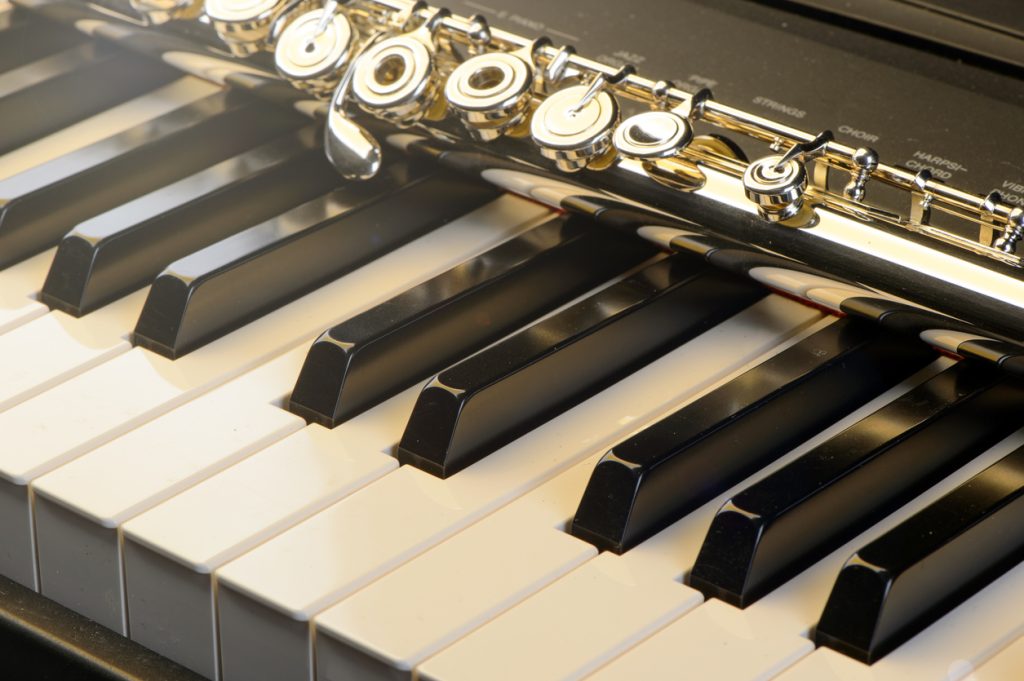
On my way to Bean Elementary one morning, I was listening to the Symphony Hall channel on SiriusXM. Lately, I have been paying close attention to the introductions the hosts give because I am developing program notes and planning future broadcasts for the Ruach Symphony Witness. One particular introduction caught my attention. The host spoke about Bartolomeo Cristofori (1655-1731). Cristofori was an Italian musician, craftsman, and instrument builder who lived during the late seventeenth and early eighteenth centuries. At the time, keyboard players primarily performed on harpsichords. Although beautiful, harpsichords could not respond dynamically to the player’s touch. Whether a key was struck gently or forcefully, the sound remained essentially the same. Cristofori envisioned something different. Because he understood music so deeply, he understood what musicians needed. Through years of experimentation and craftsmanship, he developed a new mechanism that let players control volume and expression with their touch. In doing so, he invented and built the first pianos. What struck me was that Cristofori’s achievement was not merely technical. He did not build a piano because he loved wood, strings, and hammers. He built a piano because he loved music. His musical knowledge let him imagine an instrument that did not yet exist.
As I thought about that story while driving to school, I realized that this is the kind of teacher I want to become. I may never build a musical instrument, but I hope to know music so thoroughly and love it so deeply that I can help shape something even more important: a child’s heart. If Cristofori could create an instrument that inspired generations of musicians, perhaps a Teaching Artist can help create a lifelong love of music in a young person. That thought stayed with me throughout these first two weeks.
During our first week, the students met the Lubbock Symphony Orchestra. They watched videos of our own Maestro Cho and learned about the conductor’s role. They listened to a performance. The students were wonderfully attentive, curious, and eager to learn.
One little girl raised her hand and informed me that Maestro Cho was a conductor, but not a train conductor. I laughed and told her, “That’s true. But knowing Maestro Cho, if someone invited him to conduct a train, he would probably do a wonderful job!” The class erupted in laughter, and from that moment on, the students seemed to feel a personal connection with our orchestra. They understood that musicians are real people and that the symphony belongs to them as much as anyone else.
In several classrooms, we integrated music into literacy instruction. Students practiced long and short vowel sounds by singing them. Rhythm sticks became learning tools that helped reinforce language skills while keeping students actively engaged. Watching children discover that learning can happen through music reminded me of the incredible versatility of our art form.
Other classrooms were studying Abigail Adams and Sojourner Truth, which allowed us to explore history through music. The students learned that Abigail Adams frequently wrote letters to her husband, John Adams, when they were separated. As a folk music researcher, I became fascinated with finding a musical connection to her life. After considerable research, I discovered references in her letters to a Scottish tune that she and John apparently cherished. The children listened carefully as I explained how a simple melody could help people remember loved ones over great distances. They thought it was a very special idea.
When we studied Sojourner Truth, the students learned about her courageous travels and her tireless advocacy for freedom. They discovered that she was also known for her beautiful singing voice. Historical accounts describe how she often adapted familiar tunes and inserted her own messages, allowing her audience to engage with her ideas through song. The students were fascinated by the idea that music could be used not only for entertainment but also to inspire social change. When they heard about Sojourner’s version of “The Battle Hymn of the Republic,” they began to see how music and history are often woven together.
All three of my schools also studied Wolfgang Amadeus Mozart. Students learned about his extraordinary talent and passion for learning. We discussed how great musicians are often great listeners. Mozart paid attention to everything around him, constantly learning from the music he heard.
This activity was by far the favorite with all ten of my classes.
The students enjoyed discovering historical connections between Mozart and Abigail Adams. Although Mozart was a celebrated composer during her lifetime, Abigail’s personal musical preferences seem to have leaned toward the Scottish music she knew and loved. Such connections helped students realize that the people they study in history books were real individuals with personal tastes, interests, and experiences.
As rewarding as the lessons themselves have been, the greatest joy has come from the students. I love their smiles and laughter. And every day, as I prepare to leave, several children run up to make sure I know they love me. I always tell them that I love them too.
Those moments remind me why the arts matter. Long after the students forget the dates, names, and facts we discuss, I hope they remember how music made them feel. I hope they remember that someone shared music with them, believed in their creativity, and invited them into a world filled with beauty. My first two weeks as a Teaching Artist have taught me that teaching music is not merely transferring knowledge. It is building relationships, cultivating curiosity, and nurturing wonder. Bartolomeo Cristofori used his understanding of music to build an instrument. As Teaching Artists, we use our understanding of music to build something even more enduring: a lifelong love of music in children’s hearts. And that may be the most beautiful instrument of all.