
You Can’t Love God If You Don’t Know Him

by Dee Ann Loving-Tackitt

“Love the Lord your God with all your heart, with all your soul, and with all your mind. This is the first and greatest commandment.” Matthew 22:37–38
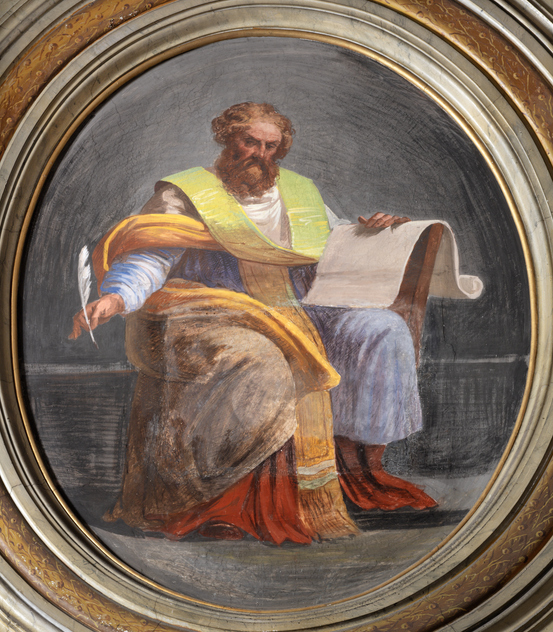
Rome – The fresco of St. Gregory of Nazianzen on the ceiling in the church Chiesa di san Giuseppe alla Lungara

The Bible actually affirms studying and learning Scripture as an expression of love for God—not something to dismiss. Jesus taught that loving God includes using “all your mind,” and God desires that we show love and obedience through godly learning, since He is glorified when we use our minds to understand His Word, ways, and character.

Throughout church history, some believers have feared that education and Bible study produce pride. While pride is a real danger, ignorance is not the biblical solution. Scripture repeatedly calls believers to grow in wisdom, understanding, discernment, and knowledge. The answer to pride is humility, not anti-intellectualism. Several passages directly address this tension between knowledge and love: Paul acknowledges that knowledge exists among believers, but emphasizes that knowledge alone inflates the ego while love builds others up (1 Cor 8:1). Even extraordinary knowledge—prophecy, mysteries, and faith—amounts to nothing without love (1 Cor 13:2).

However, the Bible doesn’t dismiss learning itself. Jesus commands loving God “with all your mind” (Matt 22:37-38), making intellectual engagement a spiritual obligation. Paul urges believers to renew their minds so they can discern God’s will (Rom 12:2). The key is that knowledge should produce transformation, not pride. Several passages show how knowledge and love interconnect: Paul prays that love will increase alongside knowledge and discernment, leading to righteousness (Phil 1:911). Peter describes knowledge as one link in a chain that includes faith, virtue, self-control, and love—qualities that keep believers effective in knowing Christ (2Pet 1:5-8). The deepest principle appears in John’s assertion that loving God and knowing God are inseparable; whoever loves has been born of God and knows Him, because God is love (1 John 4:7-8). True knowledge of God is shown through obedience to His commands, and genuine love is perfected by keeping His word (1 John 2:3-5).

God did not give us minds so we could admire our knowledge. He gave us minds so we could know Him more fully, hearts so we could love Him more deeply, and hands so we could serve Him more faithfully. So when people dismiss Bible study as mere “head knowledge,” they raise a legitimate concern—but they misdiagnose the problem. The issue isn’t studying Scripture; it’s studying without allowing that knowledge to move your heart toward love for God and others. Religious thought is the prerequisite for religious affection and obedient action. Study and devotion aren’t opposites; they’re meant to work together. Shalom.

Heavenly Father,

The more we know You, the more we can love You; the more we love You, the more we seek to know You—guide Your Word into our hearts so we can be obedient to Your commands. In Jesus’ precious name we pray. Amen.

Resources

  1. Donald S. Whitney, Spiritual Disciplines for the Christian Life (Colorado Springs, CO: NavPress; Tyndale House Publishers, Inc., 2014), 275-76.
  2. Raymond Bryan Brown, “1 Corinthians,” in Broadman Bible Commentary: Acts–1 Corinthians, ed. Clifton J. Allen, Broadman Bible Commentary (Nashville, TN: Broadman Press, 1970), 10:337.
  3. William Hendriksen and Simon J. Kistemaker, Exposition of the Gospel According to John, New Testament Commentary (Grand Rapids: Baker Book House, 1953–2001), 2:10-11.
Women’s Encounters with Jesus

by Dee Ann Loving-Tackitt

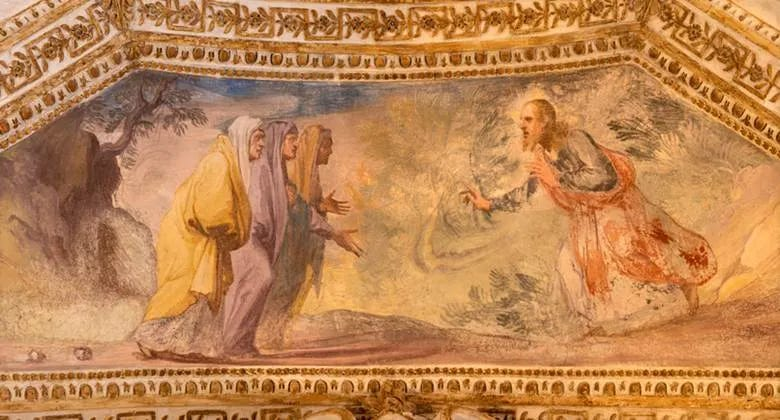
So they hurried away from the tomb in fear and great joy, and ran to tell His disciples. Suddenly, Jesus met them and said, “Greetings!” They came to Him, grasped His feet, and worshipped Him. “Do not be afraid,” said Jesus. “Go and tell My brothers to go to Galilee. There they will see Me.” Matthew 28:8-10( BSB)

At its heart, the story of Jesus is a story of transformation—of individuals, communities, and the world. Yet one of the most countercultural transformations in the Gospels is the central role given to women as witnesses, recipients of healing, and agents of God’s work. A closer look at both the New and Old Testaments reveals compelling patterns: women are not only present but integral to the biblical narrative, often acting with initiative and courage, even when culture discounted their testimony and agency.

All four Gospels record that women were the first witnesses of the resurrection. Mary Magdalene is named as the first to see the risen Lord, earning her the title “apostle to the apostles.” This historical detail is striking: in a world where women’s testimony was not legally admissible, the Gospel writers nevertheless present women as the primary witnesses to Christianity’s central event. The most plausible reason for this? Because it happened that way.

Jesus’ post-resurrection appearances to groups of women, and the inclusion of women as witnesses in various locations and at different times, speak volumes. Despite the cultural script that declared women’s words inadmissible, the Gospels value historical truth over social credibility.

Jesus’ interactions with women in the Gospels heal to restore, bless to affirm, and send to witness and serve. The woman with the issue of blood was excluded from society for twelve years. Yet she was healed and restored to her community, and Jesus did not allow her healing to remain private. This public blessing restored her dignity and status (Luke 8). Jesus repeatedly blessed women publicly, which affirmed their faith and value. Jesus told the sinful woman who anointed him, “Your faith has saved you; go in peace.” Even those on the social margins, like the Samaritan woman at the well or the widow and prophetess Anna, received Jesus’ affirmation and were given a voice in the Gospel story.

The pattern extends to commissioning. Healed women often became witnesses and supporters of Jesus’ ministry. After liberation from seven demons, Mary Magdalene helped support Jesus and his disciples. At the resurrection, women were sent to tell the disciples what they had seen—an act of commissioning that confers agency and responsibility.

Yet the inclusion of women as witnesses met skepticism, especially from the male disciples. The Gospels record the Eleven initially rejecting the women’s report of the resurrection (Luke 24:11). In the Jewish world of the time, women could not testify in court; their words were considered unreliable. Rabbinic tradition and writers like Josephus even claimed women were “not qualified” to bear witness, citing “levity and boldness” of their sex.

The Gospel writers do not gloss over this tension. Jesus himself rebukes the disciples for not believing the women’s testimony. In this way, the Gospel underscores the reliability and importance of the women’s witness, even when it was inconvenient or countercultural.

As a Christian woman, empowered by the Holy Spirit (Acts 1:8), I seek to witness for Christ. By letting my light shine before others (Matthew 5:16), encouraging believers (Colossians 3:16), using the gifts God has given me (1 Peter 4:10), and following the example of women such as Priscilla, who helped teach others in the faith (Acts 18:26), Shalom.