
Category Archives: Theology

You Can’t Love God If You Don’t Know Him

by Dee Ann Loving-Tackitt

“Love the Lord your God with all your heart, with all your soul, and with all your mind. This is the first and greatest commandment.” Matthew 22:37–38
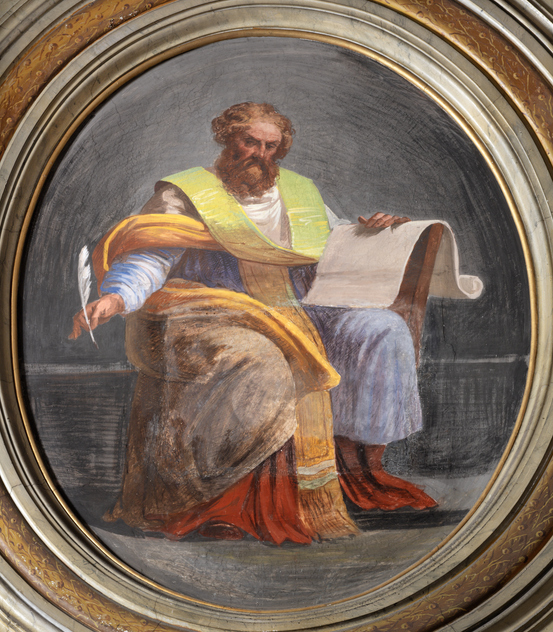
Rome – The fresco of St. Gregory of Nazianzen on the ceiling in the church Chiesa di san Giuseppe alla Lungara

The Bible actually affirms studying and learning Scripture as an expression of love for God—not something to dismiss. Jesus taught that loving God includes using “all your mind,” and God desires that we show love and obedience through godly learning, since He is glorified when we use our minds to understand His Word, ways, and character.

Throughout church history, some believers have feared that education and Bible study produce pride. While pride is a real danger, ignorance is not the biblical solution. Scripture repeatedly calls believers to grow in wisdom, understanding, discernment, and knowledge. The answer to pride is humility, not anti-intellectualism. Several passages directly address this tension between knowledge and love: Paul acknowledges that knowledge exists among believers, but emphasizes that knowledge alone inflates the ego while love builds others up (1 Cor 8:1). Even extraordinary knowledge—prophecy, mysteries, and faith—amounts to nothing without love (1 Cor 13:2).

However, the Bible doesn’t dismiss learning itself. Jesus commands loving God “with all your mind” (Matt 22:37-38), making intellectual engagement a spiritual obligation. Paul urges believers to renew their minds so they can discern God’s will (Rom 12:2). The key is that knowledge should produce transformation, not pride. Several passages show how knowledge and love interconnect: Paul prays that love will increase alongside knowledge and discernment, leading to righteousness (Phil 1:911). Peter describes knowledge as one link in a chain that includes faith, virtue, self-control, and love—qualities that keep believers effective in knowing Christ (2Pet 1:5-8). The deepest principle appears in John’s assertion that loving God and knowing God are inseparable; whoever loves has been born of God and knows Him, because God is love (1 John 4:7-8). True knowledge of God is shown through obedience to His commands, and genuine love is perfected by keeping His word (1 John 2:3-5).

God did not give us minds so we could admire our knowledge. He gave us minds so we could know Him more fully, hearts so we could love Him more deeply, and hands so we could serve Him more faithfully. So when people dismiss Bible study as mere “head knowledge,” they raise a legitimate concern—but they misdiagnose the problem. The issue isn’t studying Scripture; it’s studying without allowing that knowledge to move your heart toward love for God and others. Religious thought is the prerequisite for religious affection and obedient action. Study and devotion aren’t opposites; they’re meant to work together. Shalom.

Heavenly Father,

The more we know You, the more we can love You; the more we love You, the more we seek to know You—guide Your Word into our hearts so we can be obedient to Your commands. In Jesus’ precious name we pray. Amen.

Resources

  1. Donald S. Whitney, Spiritual Disciplines for the Christian Life (Colorado Springs, CO: NavPress; Tyndale House Publishers, Inc., 2014), 275-76.
  2. Raymond Bryan Brown, “1 Corinthians,” in Broadman Bible Commentary: Acts–1 Corinthians, ed. Clifton J. Allen, Broadman Bible Commentary (Nashville, TN: Broadman Press, 1970), 10:337.
  3. William Hendriksen and Simon J. Kistemaker, Exposition of the Gospel According to John, New Testament Commentary (Grand Rapids: Baker Book House, 1953–2001), 2:10-11.
Practicing Resurrection: Answering Christ’s Call to Love, Obey, and Follow

by Dee Ann Loving-Tackitt

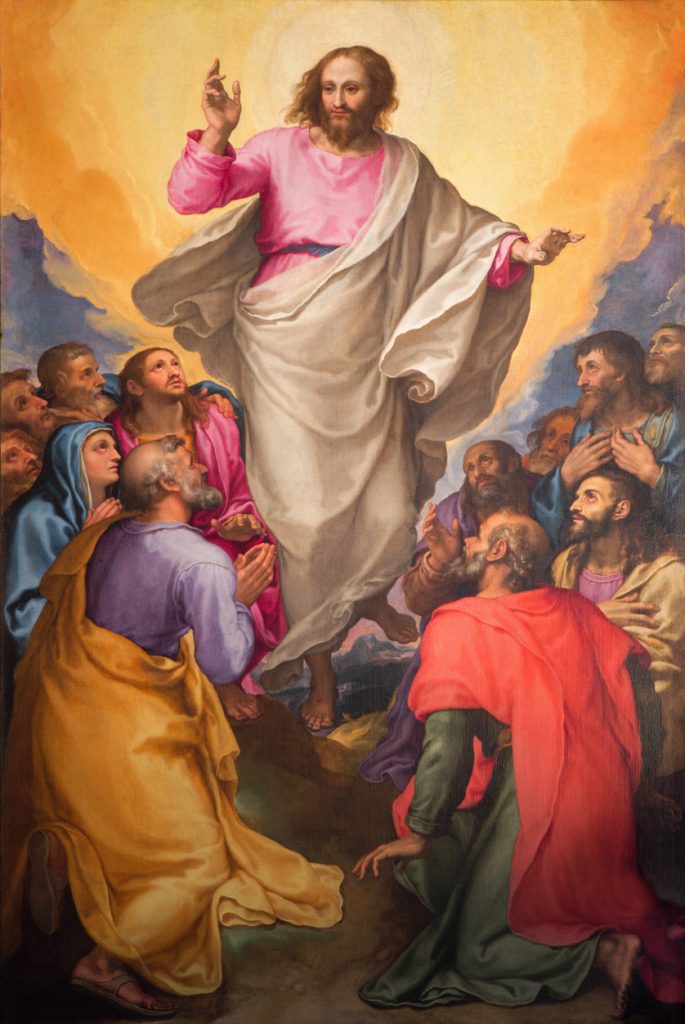
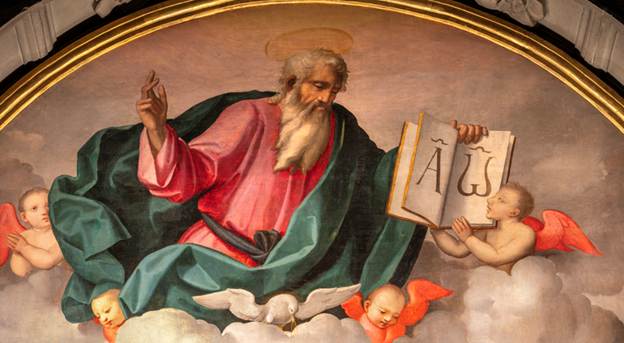
Rome – Ascension of the Lord painting of Chiesa Nuova

“As the Father has loved me, so have I loved you. Now remain in my love. If you keep my commands, you will remain in my love, just as I have kept my Father’s commands and remain in his love. I have told you this so that my joy may be in you and that your joy may be complete.”—John 15:9–11

Writing from a Nazi prison, Dietrich Bonhoeffer wrote, “What keeps gnawing at me is the question, Who is Christ actually for us today?” That question still presses on every serious Christian. Jesus put this issue before his disciples during his farewell supper when he said, “If you love me, you will keep my commandments…You are my friends if you do what I command you” (Jn 15:14 In this sense,  He repeated this challenge in the Sermon on the Mount, “Not everybody who says to me, ‘Lord, Lord,’ will get into the kingdom of heaven. Only those who do the will of my Father who is in heaven will enter” (Matt 7:21).  The risen Christ, while eating breakfast with Peter on the beach, asks him the same question three times, “Simon, do you love me?” Peter replies each time, “Lord, you know I love you.” In light of Peter’s triple denial, Jesus gave him a concrete command: “Feed my sheep.” He concluded with the words, “Follow me” (John 21:15–19).

Jesus was consistent and clear. He was not looking for admirers who would merely nod in agreement with the Sermon on the Mount. He called followers who would put his words into practice. Because God raised Jesus from the dead, we follow the living Christ here and now. To “practice resurrection” is not simply to admire Jesus from a distance, but to let his risen life take shape in our own lives.  

In Christian thought, “practicing resurrection” is a theological concept that means rather than waiting for resurrection only after death, believers “practice resurrection” by embodying qualities associated with resurrection life: hope in the face of despair, forgiveness and reconciliation, justice and compassion, renewal after failure or loss, and participation in God’s work of bringing new life to the world. This phrase is associated with writer and pastor Eugene Peterson, who used it to describe the daily life of discipleship. Fortunately, “practicing resurrection” is something that most of us are already living. We were made in, through, and for Christ (Col 1:16). He has taken our human nature upon himself and joined our lives to his own. Our “life is in Christ, who became for us wisdom from God, and righteousness and sanctification and redemption” (1 Cor 1:30). God created us to know him.  We are given a gracious participation in God’s own goodness. This grace enables us to know God even though apart from him, we are incapable of and unfit for such knowledge.

If we seek knowledge of God by grace through faith, we will walk the way of Jesus, because anyone who seeks to know God will pursue the mind of Christ and the humility and obedience that go with it. We anticipate the life of fellowship we will share with God for eternity. As Paul reflects this kind of mindset, we are to “seek the things that are above, where Christ is seated at the right hand of God.” Irenaeus said it well when he wrote, “The Word of God, Jesus Christ, on account of his great love for mankind, became what we are in order to make us what he is himself.”

Shalom.

The Author Who Enters His Own Story

by Dee Ann Loving-Tackitt

Then God said,“Let us make mankind in our image, in our likeness, so that they may rule over the fish in the sea and the birds in the sky, over the livestock and all the wild animals, and over all the creatures that move along the ground.” So, God created mankind in his own image,
in the image of God he created them; male and female he created them.                               
Genesis 1: 26–27

Yes, we address God our Father with many names. YHWH, Elohim, El Shaddai, Jehovah Rapha. Another way I understand God’s relationship with all of us is as the Author of all creation, His living story. Many of us, through J.R.R Tolkien, read how he shaped Middle-earth with language, imagination, and design. God is THE Creator. The difference between Tolkien and THE Creator is infinite: Tolkien made a fictional world, while God authors reality itself.

The theologian Kevin Vanhoozer discusses God as the Author of His own story, naming it Theodramatic Theology.

What is Authorial Analogy?

A human author writes. God creates.

An author creates with words, while God creates when He speaks.

An author shapes the plot. God creates the plot as He writes our story.

An author writes the story from beginning to end, but God knows the end before our beginning.

God does not need ink; He creates with His Power.

In Genesis, when God speaks, light appears. When He speaks, life begins. Psalm 33 says, “By the word of the Lord were the heavens made.”

Three Types of Divine Authorship

Authorial Analogy can be explained in three ways.

  1. God as our divine author creates with order, beauty, meaning, and life. Authors have that goal as well.
  2. God shapes history by just creating and stepping back. Yet He chooses to join the story. In the Bible, God spoke to Abraham, sent prophets, became Christ, and took part in the story He writes.
  3. By speaking and working through human writers, God has given us Scripture. In this way His voice is heard in many times, places, and styles.

What About Human Freedom?

How can we be free if God is our Creator? This question is often asked. Are we merely puppets? I don’t think so. God does not do all the talking, keeping us silent. He wants to have a conversation. God speaks, and we should respond! Right away! I have experienced this: God calls, convicts, persuades, reveals, and teaches. This is how He heals us. God waits for us to respond. When we choose to listen and talk to God, our hearts soften. But the opposite is true as well: when we choose to resist, our hearts harden. God does not force this conversation; He waits for us to choose to join His story. He holds the whole story in His hands.

  • We are responsible to God and others within the story God writes.
  • God can stand outside His creation, just as an author is physically outside His story.
  • Yet, God IS present within creation. Therefore, he can be compared to the author who steps into His own story.

The Bible

Where can we read God’s story? Open the Bible. We can read how He creates, makes covenants, and gives us shalom (peace) through His Word. Not only does God speak in the Bible, but He is present in the Bible because He is speaking directly to you. That is why I call Him the Author of all Creation. We live God’s story because He speaks, sustains, and guides.

“As Author, God is not limited by his created work … one authorial day is like a character’s thousand years (2 Pet. 3:8). The Author can open the text to any page, flip back and forth at will, and write himself into the drama of human history: God’s Word and Spirit are in created time but not of it.” Kevin Vanhoozer

Shall we pray?

Heavenly Father,

We weave fictions of our lives with words. We create myths without Your authorship. We welcome Your Words that build a holy place in our hearts while turning love into beautiful music. We still do not fully understand Your way. In Christ, the language You put in our hearts illuminates this dim world. May Your love always cleanse our minds and replenish us with joy. In Jesus’ precious name we pray. Amen.

Resources

Freeman, Austin M. “The Author of the Epic: Tolkien, Evolution, and God’s Story.” Zygon 56, no. 2 (2021): 500–516. EBSCOhost.

Hronich, Andrew. 2025. “God and Indiana Jones.” Liberty Theological Review 9, (1). 

Settecase, Parker. “Don’t Write off the Absentee Author: Why the Problems of Divine Hiddenness and Neglect Don’t Destroy Vanhoozer’s Authorial Analogy.” Perichoresis 21, no. 4 (2023): 34–51. https://doi.org/10.2478/perc-2023-0030.