
By Dee Ann Loving-Tackitt
A Treasure Found in the Library
You know me. I’m sitting at my desk in my little library, surrounded by stacks of books, yellow highlighters, sticky notes, and enough coffee to keep me reading just one more chapter. Lately, I’ve been reading a book on Patristic Spirituality, and I simply can’t stop turning the pages.
As I read, I find myself pausing, underlining passages, and thinking, Lord, these believers understood something beautiful about walking with You. Honestly, I hope I have the writing skills to share with you some of these beautiful words from long ago.
The early Christians had a fascinating way of describing the Christian life. They saw it as a journey, not a race. They spoke of growing in grace, learning to love God more deeply, and becoming more like Christ. They called this journey an ascent toward God.
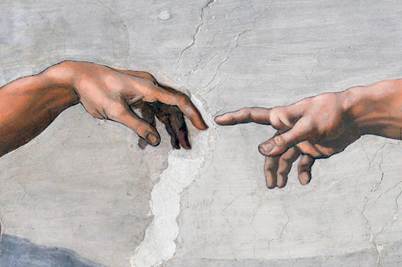
Now before you imagine ladders reaching into heaven or people trying to earn God’s favor, that’s not what they meant at all. They believed the journey begins not with us climbing up to God, but with God coming down to us.
The Restless Heart
One of the great voices of the early church, Augustine, wrote:
“You have made us for Yourself, O Lord, and our hearts are restless until they rest in You.”
Perhaps that is why these ancient writings still resonate today. Deep within every believer is a longing for something more. Not more activity. Not more programs. Not more information. We long for more of God.
The Church Fathers understood that longing. They recognized that every human heart is searching for something that can only be found in Christ. Long before self-help books, podcasts, and social media, these early believers understood that true fulfillment is not found in what we accomplish but in whom we worship.
Christ Came Down
The Fathers often reflected on Paul’s words in Philippians 2:7:
“He emptied Himself, taking the form of a servant.”
To them, the entire Christian life began with this astonishing truth: Christ came down.
The eternal Son of God stepped into our world. He took on human flesh, experienced suffering, and entered the brokenness of humanity. He did not stand at a distance and shout instructions from heaven. He came near. He walked among people. He touched the sick, welcomed the outcast, and ultimately gave His life on the cross.
And because He came down, we can draw near to Him.
This was the heart of what the early Christians meant by ascent. It was not a human achievement. It was a response to divine grace. God made the first move. Our spiritual growth is simply a response to His love.
Growing Closer to God
The early church believed that God was actively transforming believers into the likeness of Christ. We might call this sanctification today. The Fathers often spoke about growing closer to God through prayer, Scripture, worship, obedience, and community.
One thing that surprised me was how practical these ancient writers were. They were theologians, certainly. But they were also pastors. They cared deeply about helping ordinary believers grow spiritually.
They encouraged Christians to pray the Psalms, meditate on Scripture, serve others, and participate faithfully in the life of the church. They understood that spiritual growth rarely happens by accident. Just as a garden requires tending, our relationship with God requires attention and care.
Yet their emphasis was never on religious performance. They were not encouraging people to earn salvation. Rather, they taught that spiritual growth flows from a loving relationship with Christ.
The Simplicity of Spiritual Formation
The more we encounter Christ, the more we are changed by Him. The more we know Him, the more we desire to become like Him. The more we love Him, the more we begin to love others.
That message feels remarkably relevant today.
In a world filled with distractions, many believers find themselves spiritually exhausted. We rush from task to task, appointment to appointment, notification to notification, often forgetting to sit quietly in the presence of God.
The early church reminds us that growth is not always about doing more. Sometimes it is about drawing nearer. Sometimes the most spiritual thing we can do is open our Bible, bow our head, and whisper, “Lord, I want to know You better.”
An Ancient Lesson for Modern Believers
As I closed my book for the evening, I found myself grateful for these faithful voices from centuries ago. Though they lived in a different time and culture, they shared the same desire that every follower of Jesus shares today.
They wanted to know Christ.
And perhaps that is the lesson worth carrying with us.
The Christian life is not merely about getting through another day. It is about walking with the Savior who came down to us and lovingly calls us upward into a deeper relationship with Him.
Until that day when we see Him face to face, may we continue the journey, one step at a time, finding our rest in the One for whom we were created.
Resource
Don W. Springer, and Kevin M. Clarke. Patristic Spirituality : Classical Perspectives on Ascent in the Journey to God.