When Foxes Find a Home and Jesus Does Not

Two foxes have made their home right here on 93rd Street in the middle of Lubbock, Texas. City streets, traffic, porch lights, barking dogs — none of it has discouraged them. They trot across our yards with confidence, slipping between fences as if they’ve lived here forever. And honestly, they probably have. (picture by Ricardo Martinez)

Foxes are astonishingly adaptable creatures. The red fox — the most widespread fox species in the world — thrives in environments ranging from Arctic tundra to deserts, and even in major cities and suburbs. They are small, swift, clever mammals with pointed ears, narrow snouts, and long bushy tails that help them balance and stay warm.

Watching Foxes in the Middle of the City

Watching them here, in the middle of a city, stirred something deep in me. Because Jesus once said something about foxes — and it wasn’t about their cleverness or beauty. It was about home.

“Foxes have dens and birds of the air have nests, but the Son of Man has nowhere to lay his head.” — Matthew 8:20

Jesus and the Cost of Following

This statement wasn’t poetic sadness. It was a challenge — a response to a scribe who boldly declared, “I will follow you wherever you go.” Jesus didn’t applaud his enthusiasm. Instead, He warned him: You don’t know what you’re asking.

Scholars note that Jesus wasn’t merely talking about physical homelessness. He was revealing the deeper reality of His mission — rejection by the very people who should have welcomed Him as Messiah-King. His lack of a place to lay His head was part of His humiliation as the Son of Man, the Lord of creation who walked the earth as a wanderer. Following Him meant embracing that same dispossession, that same reversal of worldly priorities.

Feeling Unmoored When Jesus Calls

And that’s where this touched my heart. Because when Jesus called my name, I didn’t feel homeless — but I did feel unmoored. The things that once felt important no longer held me. The places where I used to “lay my head” — emotionally, spiritually, socially — didn’t fit anymore. My heart started following Jesus in a way that loosened my grip on everything else.

So here I am, watching two foxes who have found a home in the middle of Lubbock, while the One I follow had none. And somehow, that makes sense to me.

What Home Really Is

Because the more I follow Him, the more I realize: Home isn’t where I live. Home is who I follow.

And like those foxes slipping through the fences on 93rd Street, I’m learning to move lightly through this world — not rootless, but free.

A Moment of Invitation

Maybe as you read this, something in your own heart stirred — the same way those foxes stirred mine. Maybe you’ve felt that gentle pull, that holy disconnection from what used to define you. Maybe you’ve sensed Jesus calling your name, inviting you into a life where “home” is no longer a place you build but a Person you follow.

If so, hear this clearly: Jesus still calls disciples the same way He always has — personally, directly, lovingly, and with purpose. He doesn’t ask you to clean yourself up first. He doesn’t ask you to prove anything. He simply says, “Follow Me.”

And following Him will change you. It will loosen your grip on what once felt important. It will reorient your priorities. It will give you a new kind of belonging — not rooted in geography or status, but in grace.

If you sense that call today, don’t ignore it. Open your heart. Say yes. Let Him lead you into the kind of life where even if you have “nowhere to lay your head,” you are never without a home.


Closing Prayer

Heavenly Father,

We love you, Jesus. You are the One who calls us out of what is familiar and into what is eternal. You are the One who walked this world without a place to lay Your head, so that we could find our true home in You.

Today, I lift up every heart reading these words — the searching heart, the restless heart, the weary heart, the heart that feels the tug of Your voice. Draw them close. Speak their name. Give them courage to follow wherever You lead.

Loosen our grip on what cannot save us, and anchor us in the love that never lets go. Make us disciples who walk lightly in this world, but deeply in Your presence.

In Jesus holy name we pray,

Amen.

Related Scriptures

These verses echo the themes of discipleship, surrender, following Jesus, and the cost of leaving behind what once felt like “home.”

• Matthew 8:19–20 — Then a teacher of the law came to him and said, “Teacher, I will follow you wherever you go.” Jesus replied, “Foxes have dens and birds have nests, but the Son of Man has no place to lay his head.”

• Luke 9:57–62 — Jesus calls His followers to radical, immediate obedience.

• Matthew 16:24–25 —Then Jesus said to his disciples, “Whoever wants to be my disciple must deny themselves and take up their cross and follow me. For whoever wants to save their life will lose it, but whoever loses their life for me will find it.”

• Philippians 3:7–8 — Paul counts all things as loss compared to knowing Christ.

• Hebrews 13:14 — “For here we have no lasting city, but we seek the city that is to come.”

• 1 Peter 2:11 — Believers are “sojourners and exiles” in this world.

• John 10:27–28 — “My sheep listen to my voice; I know them, and they follow me. I give them eternal life, and they shall never perish; no one will snatch them out of my hand.”

• Psalm 84:1–4 — Blessed are those who dwell in God’s presence; He is our true home.

• Psalm 90:1 — “Lord, You have been our dwelling place in all generations.”

• Revelation 21:3 — God will dwell with His people; home is ultimately with Him.


Resources

Bruce, F. F. Hard Sayings of Jesus: The Hard Sayings Series. Downers Grove, IL: IVP Academic, 2025.

Chamblin, J. Knox. Matthew: A Mentor Commentary. Ross-shire, Great Britain: Mentor, 2010. Boring, M. Eugene.

“The Gospel of Matthew.” In New Interpreter’s Bible, edited by Leander E. Keck, Vol. 8. Nashville: Abingdon Press, 1994–2004.

Empowered, United, Sent

When the Spirit Comes and the Church Goes

Opening Scripture

“But you will receive power when the Holy Spirit has come upon you, and you will be my witnesses in Jerusalem and in all Judea and Samaria, and to the end of the earth.”
Acts 1:8 (ESV)


After Jesus rose from the grave and ascended into heaven, the disciples entered a new and unfamiliar season. They were no longer walking beside the Teacher they loved, nor hearing His voice face to face. Instead, they were told to wait.

Jesus instructed them to remain in Jerusalem for “the promise of the Father,” assuring them they would soon be “baptized with the Holy Spirit” (Acts 1:4–5). What they were waiting for was not clarity of plans, political restoration, or earthly power—but divine empowerment. The mission would continue, but not by their strength.

The Day Everything Changed

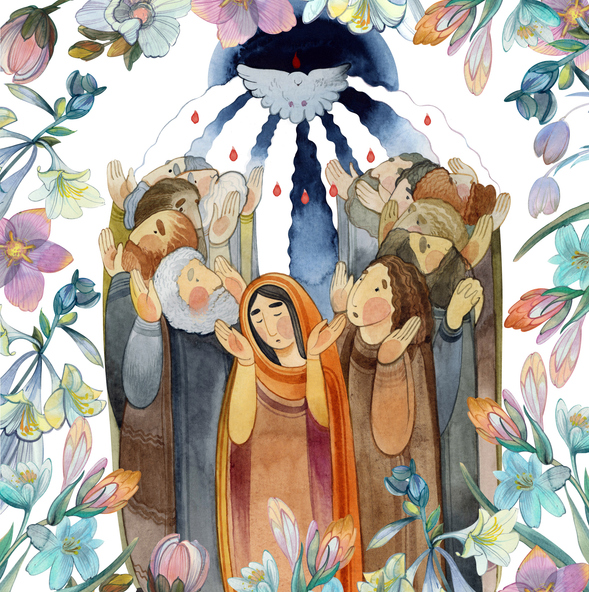
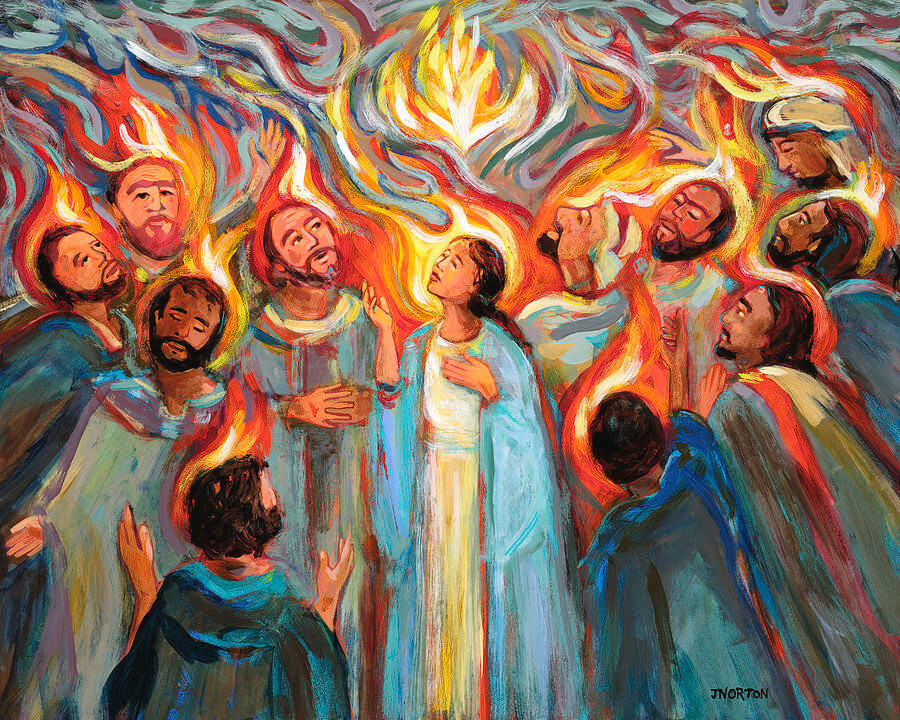
When Pentecost arrived, Scripture tells us the disciples were gathered together when “a sound like a mighty rushing wind” filled the house, and divided tongues of fire rested on each one of them (Acts 2:1–3). They were all filled with the Holy Spirit and began to speak as the Spirit enabled them (Acts 2:4).

What began quietly in prayer erupted into public witness. The sound drew a crowd, and the miracle of many languages proclaimed a single truth: God was doing something new. The Church was being born—not by organization or strategy, but by the Spirit’s power.

Peter stood and explained that what was happening fulfilled the ancient promise spoken through the prophet Joel—that God would “pour out my Spirit on all flesh” (Acts 2:16–18). Sons and daughters, young and old, servants and free—this gift was no longer limited to a few. God’s Spirit was now being poured out on all who believed.

From “With” to “In”

This moment did not happen without preparation. Jesus had spoken often about the coming Spirit. He promised the disciples a Helper—the Spirit of truth—who would be with them and, soon, in them (John 14:16–17). The Spirit would teach them, remind them of Jesus’ words, convict the world of sin and righteousness, and guide believers into truth (John 14:26; John 16:8, 13).

Pentecost marks the shift from temporary visitation to permanent indwelling. Where the Spirit once came upon select individuals for specific moments, He now took up residence in every believer. The Church’s identity was no longer tied to a location or a leader walking on earth, but to the abiding presence of God Himself.

One Body, One Spirit

This gift was not limited to Jerusalem. As the gospel moved outward, the Holy Spirit fell upon Gentile believers as well, confirming that God’s promise extended beyond cultural and ethnic boundaries (Acts 10:44–48). Scripture declares that “in one Spirit we were all baptized into one body”—Jew and Greek, slave and free (1 Corinthians 12:13).

Those who believed were sealed with the Holy Spirit, who became the guarantee of their inheritance in Christ (Ephesians 1:13–14). The Spirit did not merely empower the Church for mission—He united it, marked it, and secured it.

Living Clothed with Power

The same Spirit poured out at Pentecost dwells in believers today. We are not called to live the Christian life on memory alone—remembering what Jesus once did—but on power from heaven, alive and active within us.

The Church does not move forward by confidence in itself, but by surrender to the Spirit. We testify not because we are sufficient, but because God has made us His witnesses. Clothed with power, we live, speak, and serve for the glory of Christ who reigns.


Closing Prayer

Father God,
We thank You for the promise fulfilled at Pentecost, when You poured out Your Holy Spirit and birthed the Church. Thank You that we are not left to walk this life alone or in our own strength. Clothe us again with power from on high. Teach us to listen, to wait, and to walk in step with Your Spirit. Make us faithful witnesses—at home, in our communities, and wherever You send us. May our lives give evidence that Jesus reigns and that Your Spirit lives within us. We pray this in the name of Jesus, our risen and enthroned King.
Amen.


Bible Referenced

Acts 1:4–8
Jesus instructs the disciples to wait for the promise of the Father and promises power through the Holy Spirit to be His witnesses.

Acts 2:1–13
The Holy Spirit comes at Pentecost with wind and fire, filling the disciples and marking the birth of the Church.

Acts 2:16–18
Peter explains Pentecost as the fulfillment of Joel’s prophecy that God would pour out His Spirit on all people.

John 14:16–17
Jesus promises the Helper, the Spirit of truth, who would move from dwelling with believers to living in them.

John 14:26
Jesus teaches that the Holy Spirit would teach believers and remind them of everything Christ said.

John 16:7–15
Jesus explains the Spirit’s role in convicting the world and guiding believers into all truth.

Acts 10:44–48
The Holy Spirit is poured out on Gentile believers, confirming their inclusion in God’s redeemed people.

1 Corinthians 12:13
All believers are baptized by one Spirit into one body, uniting them across divisions.

Ephesians 1:13–14
Believers are sealed with the Holy Spirit, who serves as the guarantee of their inheritance in Christ.

References

Fruchtenbaum, Arnold G. The Messianic Bible Study Collection. Tustin, CA: Ariel Ministries, 1983. Pages 160:5–6.

Longenecker, Richard N. “The Acts of the Apostles.” In The Expositor’s Bible Commentary: John and Acts, edited by Frank E. Gaebelein, 231–352. Grand Rapids, MI: Zondervan Publishing House, 1981. Page 271.

Risen, Seated, Reigning

Why the Throne of Christ Changes Everything

“God raised him from the dead and seated him at his right hand in the heavenly places, far above all rule and authority and power and dominion, and above every name that is named, not only in this age but also in the one to come.”
Ephesians 1:20–21 (ESV)

The resurrection proclaims that Jesus is alive.
The ascension declares where he is—and what that means for the world, the church, and every believer.

The reign of King Jesus does not end at the empty tomb. It moves upward—to the throne of heaven—where the risen Jesus is now seated at the right hand of the Father, reigning, interceding, and securing the future of God’s people. The ascension is not a theological footnote; it is the crowning moment of Christ’s redeeming work and the hinge upon which Christian hope turns.


The Ascension: From Resurrection to Enthronement

Luke describes the ascension of Jesus in Acts 1:9–11, where Christ is lifted up and taken from the disciples’ sight by a cloud. Two angels immediately reframe the moment: “This Jesus, who was taken up from you into heaven, will come in the same way as you saw him go.” The ascension is not Jesus’ disappearance—it is his exaltation.

After his resurrection, Jesus declares, “All authority in heaven and on earth has been given to me” (Matthew 28:18). That authority is not merely promised; it is exercised. The ascension marks the moment when the risen Christ takes his place as the installed King over creation.

Paul describes this cosmic enthronement in Ephesians 1:19–23, proclaiming that God seated Christ “far above all rule and authority and power and dominion.” Jesus is not waiting to reign—he is reigning now.


Enthroned King, Present Lord

The throne of Christ reveals that redemption has moved from accomplishment to application. Acts 2:32–36 presents Jesus as the fulfillment of Psalm 110: the Davidic King exalted to God’s right hand until his enemies are fully subjected.

This kingship is not symbolic. Philippians 2:9–11 announces that God has exalted Jesus and bestowed on him the name above every name. His reign is already established, though not yet universally acknowledged. Resistance to Jesus, therefore, is not legitimate rebellion but futile denial—his authority is already settled by God.

To confess “Jesus is Lord” is to affirm that the decisive victory has already been won.


Seated—and Still Praying: Christ’s Ongoing Intercession

Crucially, the enthroned Christ is not distant or passive. Scripture repeatedly insists that Jesus reigns as an interceding High Priest.

Romans 8:34 affirms that Christ “is at the right hand of God, who indeed is interceding for us.” Hebrews 4:14–16 presents Jesus as the great High Priest who has passed through the heavens and invites believers to draw near to the throne of grace.

Jesus does not cease being compassionate when he ascends. The one who prayed for his followers in John 17 continues that priestly ministry in heaven. Whether understood as active petition, covenantal representation, or both, the biblical witness is clear: the throne of Christ is a throne of intercession.

Believers approach a living Savior who speaks on their behalf.


United with the Ascended Christ

The ascension reshapes not only Christology but Christian identity. Paul declares that God has raised believers up and seated them with Christ in the heavenly places (Ephesians 2:4–7). Union with Christ does not stop at the cross or the resurrection—it extends into his exaltation.

Colossians 3:1–4 calls believers to orient their lives around this reality: “Seek the things that are above, where Christ is, seated at the right hand of God.” Even amid suffering, oppression, or weakness, believers belong to a greater reality already secured in Christ’s reign.

Christian hope is participation in the life of the enthroned Lord.


What If Jesus Had Not Taken the Throne?

To imagine Jesus risen but not enthroned exposes just how essential the ascension is to Christian faith. Without the ascension, redemption would remain unfinished and the incarnation incomplete, leaving Christ’s saving work suspended rather than consummated. Humanity would have no glorified representative in heaven, no assurance that our nature has been welcomed into God’s presence. Christ’s victory over sin, death, and evil would remain a future hope rather than a present reality, and the promised outpouring of the Holy Spirit—sent at Christ’s behest after his exaltation (John 16:7; Acts 2)—would not occur. In such a scenario, the church would stand without its living and reigning Head, lacking the authority, confidence, and assurance that flow from the knowledge that Jesus even now rules from the throne of heaven. The ascension confirms that Jesus’ work is not merely past (the cross), nor only future (his return), but present. He reigns now.


Why the Throne of Christ Changes Everything

Because Jesus is risen, death has been decisively defeated; because he is seated at the right hand of the Father, redemption is secure and complete. Because he reigns, evil’s days are numbered, and its power is ultimately limited, and because he intercedes, believers may draw near to God with confidence and hope. Because Jesus will return, history is not aimless but moving toward a promised and glorious end. The ascension, therefore, is not Jesus leaving the world but Jesus taking his rightful place over it, and to live as Christians is to live under the gracious rule of the King who reigns, prays, and promises, “Surely I am with you always, to the end of the age.”

Prayer

Heavenly Father,

We rejoice over Your Son, risen and reigning Lord Jesus,
We confess that you, Jesus, are not only the Savior who died and rose again,
but the King who now sits at the right hand of the Father,
enthroned in glory, authority, and mercy.

We thank you that your throne is not distant or cold,
but a throne of grace—
where you intercede for us,
sustain us in weakness,
and shepherd your people with perfect love.

Help us to live as those who know where our King is seated.
Lift our eyes above fear, injustice, and uncertainty,
and teach us to seek the things that are above,
where our life is hidden with you.

Strengthen your church to trust your present reign,
to rely on your finished work,
and to walk faithfully until the day you return in glory.

Until that day, keep us anchored in hope,
confident in your victory,
and bold in love and obedience.

We pray all this
in the name of Jesus Christ—
our risen, seated, and reigning Lord.
Amen.

Scripture References:

Primary Texts

  • Acts 1:9–11 – Jesus’ ascension and the promise of his return
  • Matthew 28:18–20 – All authority given to the risen Christ
  • Ephesians 1:19–23 – Christ seated above all power and authority
  • Acts 2:32–36 – Peter proclaims Jesus exalted at God’s right hand
  • Philippians 2:9–11 – The exaltation of Christ and universal confession of his lordship

Christ’s Ongoing Intercession

  • Romans 8:34 – Christ interceding at the right hand of God
  • Hebrews 4:14–16 – Jesus, our great High Priest, inviting us to the throne of grace
  • Hebrews 7:25 – Christ always living to make intercession

Union with the Ascended Christ

  • Ephesians 2:4–7 – Raised and seated with Christ
  • Colossians 3:1–4 – Seeking the things above, where Christ is seated

Victory and Hope

  • Colossians 2:15 – Christ’s triumph over rulers and authorities
  • Revelation 1:17–18 – The living One who holds the keys of death and Hades

Theological Resources:

  • Patrick Schreiner, The Ascension of Christ: Recovering a Neglected Doctrine, ed. Michael F. Bird, Snapshots series (Bellingham, WA: Lexham Press, 2020), 88–89.
    (On the ascension as the climactic fulfillment of Davidic kingship and Christ’s cosmic reign.)
  • Matthew Levering, Engaging the Doctrine of Jesus (and Mary): A Traditional, Historical-Critical, and Mariological Christology (New York, NY: Cascade Books, 2025).
    (On the exaltation of Christ within the breadth of classical and historical Christology.)
  • Glenn D. Butner Jr., Christological Dogmatics: A Theological Witness to the Person and Work of Christ (Grand Rapids, MI: Baker Academic, 2026), 256–257.
    (On Christ’s threefold office—prophet, priest, and king—fulfilled and expanded in the ascension.)
  • Stavan Narendra John, Thomas F. Torrance’s Theology of the Ascension: A Constructive Account (New York, NY: Cascade Books, 2025), 50–51.
    (On the ascension as the necessary completion of the incarnation and the exaltation of human nature in Christ.)
  • M. Ovey, “Ascension [and Heavenly Session of Christ],” in New Dictionary of Theology: Historical and Systematic, ed. Martin Davie et al. (London; Downers Grove, IL: Inter-Varsity Press; InterVarsity Press, 2016), 67–68.
    (On the ascension as present victory, the grounding of Christian assurance, and Christ’s ongoing heavenly session.)

Waiting, Whispers, Wind

Remembering Jesus in the Days Between Promise and Power

“All these with one accord were devoting themselves to prayer, together with the women and Mary the mother of Jesus, and his brothers.”
Acts 1:14 (ESV)

There is something holy about waiting.

Waiting strips away our illusion of control. It slows the body and sharpens the heart. And waiting—especially when God has promised something but has not yet revealed how it will arrive—often becomes the place where memory does its deepest work.

After Jesus ascended into heaven, his followers were left with nothing but a promise and ten long days.

Ten days between miracle and mission.
Ten days between “You will receive power” and the moment that power arrived.
Ten days in an upper room, praying, remembering, wrestling, hoping.

Scripture tells us that about 120 believers gathered together during that time, devoting themselves “with one accord to prayer and supplication.” This was not passive silence or polite religious ritual. Their waiting was active, communal, and full of soul-work.

They prayed.
They searched the Scriptures.
They talked.
They made decisions—Peter even stood to address the need to replace Judas, guiding the group through painful reflection and practical obedience.

But beyond what is recorded, we are invited to wonder: What did they talk about when prayers ended and night set in?
What memories of Jesus filled the room when the oil lamps flickered low?
What stories surfaced again and again while they waited for the Spirit he promised?


A Room Filled with Memory

If we could step quietly into that upper room, we might hear whispers of shared remembrance.

Someone would recall how Jesus welcomed them—not as servants earning favor, but as friends invited into his life. He didn’t simply teach theology; he walked with them, ate with them, noticed them. His presence created a space where people felt safe to confess fear, failure, and doubt.

Perhaps Matthew spoke of the day Jesus looked directly at him and said, “Follow me,” while everyone else still saw a traitor. Perhaps Peter sat silently, remembering the look Jesus gave him after the rooster crowed—and later, the breakfast by the sea where grace restored him more deeply than shame ever wounded.

These memories mattered. They were not sentimental nostalgia; they were the soil in which courage would grow.


Remembering His Compassion

The disciples could not forget his compassion—it was impossible to miss. The Gospels describe Jesus being “moved with compassion” again and again, a phrase reserved uniquely for him. They had watched it happen in real time.

They remembered the crowds who were hungry, when Jesus refused to send them away and instead invited his disciples to participate in the impossible. They remembered children climbing into Jesus’ arms while adults looked on in confusion. They remembered the desperate mother who refused to leave, the leper who dared to come close, the weeping sister standing at a sealed tomb.

In the upper room, those stories would have sounded different now.

Jesus wasn’t just compassionate then—his compassion was the pattern they were being shaped to follow.


His Tears, His Anger, His Courage

Someone may have spoken quietly about how Jesus wept—not privately, not behind closed doors, but openly. He cried at Lazarus’s tomb. He wept over Jerusalem. He allowed sorrow to be seen.

For men raised to believe strength meant stoicism, this would have reshaped everything.

They had also seen his righteous anger, his resolve in the face of suffering, his fear in the garden, his surrender on the cross. Waiting for the Spirit did not mean suppressing emotion—it meant learning how God meets us within it.

In those ten days, they were processing their own grief and confusion, measuring it against the emotional truth they had witnessed in Jesus.


Remembering How He Prayed

Prayer filled the upper room because prayer had filled their years with Jesus.

They remembered mornings when he withdrew to pray while they slept. Nights when he prayed so long they struggled to stay awake. The longest prayer of all—the one he prayed before his arrest—ringing in their ears now as they gathered together.

He had prayed for them.
He had prayed for unity.
He had prayed for future believers they had not yet met.

Now they were doing what he had always done: turning toward the Father together.


The Wait Before the Fire

Pentecost itself would bring wind, fire, and languages from heaven—the fulfillment of a feast that once celebrated the first fruits of harvest and now marked the birth of the Church. God would write his law not on stone, but on hearts alive with the Spirit.

But before the fire came, there was memory.

Before the power came, there was prayer soaked in remembrance.

The Church was not born from strategy or urgency, but from a people who knew Jesus—who had walked with him, watched him love, and learned how to wait together.


An Invitation for Us

Their ten days become an invitation for us.

What if waiting is not wasted time?
What if remembrance prepares us for renewal?
What if the Spirit often comes after we sit long enough to remember who Jesus truly is?

As we wait—whether for direction, healing, clarity, or courage—we are not empty-handed. We carry the memories of Jesus with us, just as they did.

And perhaps, even now, he meets us in the waiting—quietly shaping us for what comes next.

Closing Prayer

A Prayer for the Waiting Place

Father God,
We come to You in the quiet spaces between promise and fulfillment,
between what we have seen You do
and what we are still waiting to see.

Teach us to wait as the disciples waited—
not in fear or passivity,
but in faithful prayer, shared remembrance, and holy expectation.

As they remembered Jesus together,
help us remember Him too:
His compassion that never turned anyone away,
His tears that revealed Your heart,
His courage that carried obedience all the way to the cross,
and His prayers that still surround us today.

Write Your Word not on stone, but on our hearts.
Meet us in our upper rooms—
in our questions, our griefs, our hopes, and our longings.
Prepare us for the wind, the fire, and the work You have already promised.

Until Your Spirit moves in fresh power,
keep us united, keep us praying,
and keep our eyes fixed on Jesus.

We wait with expectancy,
trusting that You are never late
and that You always come.

In the name of Jesus,
Amen.

Resources:

Brand, Chad Owen, and David E. Hankins. One Sacred Effort: The Cooperative Program of Southern Baptists. Nashville, TN: Broadman & Holman Publishers, 2005.

Bruce, Alexander Balmain. The Training of the Twelve; Or, Passages out of the Gospels, Exhibiting the Twelve Disciples of Jesus under Discipline for the Apostleship. New York: A. C. Armstrong and Son, 1889.

Cavey, Bruxy, and Wendy Carrington-Phillips. “Adapting the House Church Model.” In The Church, Then and Now, edited by Stanley E. Porter and Cynthia Long Westfall, 153–155. Eugene, OR: Pickwick Publications, 2012.

Fruchtenbaum, Arnold G. The Messianic Bible Study Collection. Tustin, CA: Ariel Ministries, 1983.

Got Questions Ministries. Got Questions? Bible Questions Answered. Bellingham, WA: Logos Bible Software, 2002–2013.

Harvey, John D., and David Gentino. Acts: A Commentary for Biblical Preaching and Teaching. Kerux Commentaries. Grand Rapids, MI: Kregel Ministry, 2023.

James, Carolyn Custis. Malestrom: Manhood Swept into the Currents of a Changing World. Grand Rapids, MI: Zondervan, 2015.

Story, J. Lyle. “Christology and the Relational Jesus.” American Theological Inquiry 1, no. 2 (2008): 100–101.

Could It Be?

But you, Bethlehem Ephrathah,
though you are small among the clans of Judah,
out of you will come for me
one who will be ruler over Israel,
whose origins are from of old,
from ancient times.”

Micah 5:2 (NIV)

Three Who Followed the Promise Before the Star Appeared

Long before a star split the night sky over Bethlehem, long before wise men packed gifts and set their faces toward a small Judean town, there were others who traveled toward the same King. They did not journey by camel or by compass. They traveled by promise, by prophecy, and by faith. Their roads were marked by scrolls and songs, visions and covenant. Yet, like the three Kings who would one day kneel at the manger, they too asked the question that stirs the heart of every seeker:

Could it be?

David: The King Who Looked Beyond His Throne

David knew what it meant to be king. He wore the crown. He sat on the throne. Yet even in his reign, David sensed that another King was coming—One greater than himself. God’s covenant with David spoke of a son whose kingdom would never end. David listened, wondered, waited.

In his psalms, David gave voice to what he could not yet see. “The Lord said to my Lord: ‘Sit at my right hand…’” Who was this Lord greater than David? Who was this descendant worthy of eternal worship? David’s faith journey moved him forward—from shepherd to king to prophet—as he followed the promise of a coming ruler who would reign not by sword, but by righteousness.

David never saw a manger, but he found Jesus in hope. And like the wise men who bowed before a Child-King, David laid his crown down in advance.

Could it be… my Lord?

Isaiah: The Watchman Who Saw the Child

If David sang of the coming King, Isaiah saw Him. In a world trembling with war and exile, Isaiah spoke words that defied logic: a child would be born, a son would be given, and the government would rest on His shoulders. Isaiah proclaimed what seemed impossible—a virgin with child, a suffering servant, a Prince of Peace.

Isaiah’s journey was costly. His message was often rejected. Yet he kept walking the long road of obedience, eyes lifted toward a future filled with light. Like a watchman on the wall scanning the horizon, Isaiah held the promise steady for generations who would come after him.

The wise men followed a star. Isaiah followed the Spirit. Both arrived at the same truth: God would come near, not in power alone, but in human flesh.

Could it be… God with us?

Micah: The Prophet Who Named the Place

Micah’s path was quieter, shorter, yet no less sure. While kings rose and fell, Micah set his gaze on a small village—Bethlehem. Insignificant. Overlooked. Unlikely. Still, Micah declared that from this humble place would come a ruler whose origins were from ancient days.

Micah reminds us that God’s ways are rarely loud. The King would not be born in a palace but in a town too small to matter. Micah trusted what others dismissed. He followed no star, only the whisper of God’s truth guiding him to a place no one expected to look.

The wise men asked, “Where is the one born King of the Jews?” Micah had already answered.

Could it be… here?

Travelers Toward the Same King

David, Isaiah, and Micah never walked side by side, yet their journeys converged at Christ. Each traveled with what they were given—music, vision, words—and each found Jesus by faith. Like the three Kings, they recognized that when God announces a King, the only right response is worship.

They did not arrive on the same night as Mary and Joseph. Yet heaven counts them among those who found Him. Their lives remind us that faith is a journey across time, that prophecy is a road that leads to Christ, and that every generation is invited to ask:

Could it be… the One we’ve been waiting for?

And the answer—written in Scripture, sung in psalm, spoken by prophets, and held in a manger—is yes.

Closing Prayer

Lord God,
Before there was a manger, You planted hope in the hearts of Your servants.
Through songs, visions, and whispered prophecies, You taught them to watch, to wait, and to wonder.

Thank You for David, Isaiah, and Micah—
for faith that traveled centuries ahead of sight
and trusted that You would keep every promise.

Help us to be people who look for Jesus with the same holy expectancy.
Give us eyes to recognize Him in humble places
and hearts ready to bow when the answer is finally clear.

May our lives, like theirs, quietly proclaim:
Could it be?
Yes—He has come, and He is with us still.

Amen.

🌿 PART 2 — In God’s Good Time

By Guest Contributor: Robin Grimes

Then God said, “I give you every seed-bearing plant on the face of the whole earth and every tree that has fruit with seed in it. They will be yours for food. Genesis 1:29


Introduction

In Part 1, Robin invited us into the honesty of the garden — a place where the soil tells the truth and where God uses the land to shape the soul.

Today, she returns with a story that is not only practical and unforgettable, but profoundly biblical. Her green-bean vines became a classroom of the Holy Spirit, teaching her about timing, trust, and the futility of striving in her own strength.

I pray you feel the Lord’s gentle conviction and comfort through her words.


🌱 In God’s Good Time

There is a time for everything, and a season for every activity under the heavens. Ecclesiastes 3:1

By Robin Grimes

There’s a story from my garden last year that I still carry with me — a story about green beans, impatience, and the perfection of God’s timing.

I had planted my beans with high hopes and careful attention. The vines grew beautifully — thick, lush, leafy, and full of promise. But that promise seemed hollow. Week after week they produced nothing.

According to the seed packet, they should have been full of beans by then.
In fact, everything should have been working.
But nothing was.

And like any impatient gardener (or impatient child of God), I went into problem‑solving mode.

I amended the soil.
I researched endlessly.
I stared at those vines as if I could will them into fruiting.

I exhausted myself trying to make something happen that simply was not ready to happen.

I finally concluded the seeds must have been bad.

So I made up my mind:
When I return from this eight‑day trip, I will rip them up and start over.

But when I returned — sunburned, tired, dusty, and already reaching for my garden gloves — I stopped in my tracks.

The vines were loaded with beans.

Not a few.
Not barely starting.
Covered.

In eight days of my absence —
out of my controlling influence,
beyond my analyzing,
outside of my striving —
the Lord had done what I could not.

They fruited when I let go.

They produced when I stopped hovering.

They yielded in God’s good time, not mine.

It humbled me.
It exposed me.
It revealed a self‑reliance I did not know I carried.

I had trusted more in:

  • my knowledge
  • my opinion
  • my effort
  • my timing

than in the God who brings forth fruit from the earth.

There is a rhythm to God’s work that my anxious heart wants to rush.
But I cannot rush what only God can grow.

Sometimes the greatest spiritual growth happens
when I stop digging my hands into everything
and trust Him to do the hidden work beneath the soil.

My green beans taught me this:

God is never late.
God is never idle.
God is never dependent on my striving.

He is quietly, faithfully bringing forth fruit
—in beans,
in orchards,
and in me—
exactly when He wills.

I am learning to rest in that.

Robin


Closing Reflection — Pastor Dee

Robin’s experience echoes the parables of Jesus — seeds hidden, work unseen, growth happening under the surface while we sleep and rise, night and day (Mark 4:26–29).

Her green-bean vines preach this truth:
God’s timing is not slow. It’s perfect.
And His timing is often revealed most clearly in the things we cannot control.

As you read this today, maybe there is something in your own life:

  • a prayer unanswered,
  • a hope deferred,
  • a child you’re waiting on,
  • a dream that seems stagnant,
  • a season that feels fruitless.

Take heart.
The God who brought beans in Robin’s absence is the same God who is working beneath the surface in you.

May this story help you loosen your grip, release your worry, and trust the One who brings fruit in His time — and never a moment too late.

Closing Prayer

Gracious Father,

We thank You for being the God who works beneath the surface when we cannot see, measure, or control what You are doing. Thank You for the seeds You plant, the soil You tend, and the fruit You bring forth in Your perfect time.

Forgive us for the moments when impatience replaces trust, when striving overshadows surrender, and when we believe our effort matters more than Your faithfulness. Teach us to loosen our grip on outcomes and rest our hope in You.

For every heart reading today who feels weary from waiting—
for the prayer that seems unanswered,
the season that feels barren,
the promise that appears delayed—
remind us that You are never late, never idle, and never dependent on our own strength.

Do Your quiet work in us, Lord.
Grow what only You can grow.
Bring forth fruit that lasts, not by our labor, but by Your grace.

Help us trust the hidden work of Your hands and rest in the truth that what You begin, You will surely complete—in our lives, in our families, and in Your time.

We receive Your peace today, and we wait with hope.

In Jesus’ name,
Amen.

Rooted: Lessons From the Garden

🌿 PART 1 — Rooted Lessons

By Guest Contributor: Robin Grimes

(Introduction and closing reflection by Pastor Dee)


Introduction

Every so often, the Lord allows us to meet someone whose everyday life becomes a living parable of His goodness. My friend and sister in Christ, Robin Grimes, is that kind of gift.

Robin is a master gardener — not by title alone, but by heart. Her orchard, her soil, her compost, her flowers and vegetables… all of them preach sermons. And she shares these glimpses of God’s grace daily through videos and reflections that bless so many of us.

Today, I’m humbled to feature her writing.
May her testimony speak to your soul as deeply as it has spoken to mine.


🌱 Rooted: Reflections From My Garden and Orchard

By Robin Grimes

I’ve been thinking today about why gardening means so much to me.

I did not grow up a “rooted” child. My family moved frequently — Army life — and our home was fractured at best, with an absentee father who wasn’t interested in us even when he was there.

We lived in base housing, apartments, and trailer parks until I was ten. I never had a home or a yard to call my own.

I believe that has much to do with my grown-up desire to plant, tend, and harvest my own piece of ground.
And God, who always saw me and knew my heart, provided.

“Then the Lord God took the man and put him in the garden of Eden to tend and keep it.” — Genesis 2:15

He placed me on an acre and an eighth of stickers, weeds, and dirt — not a tree or shrub in sight! Who says God doesn’t have a sense of humor?

This was ground untouched by a woman’s or man’s hand. But of course, He created this very ground in the beginning — along with the good works He prepared for me to walk in.

As a child, I spent a lot of time lying about my circumstances. Being raised by wildly unhappy, eventually divorced parents carried a stigma, and I wanted to escape that shame.

But what I found about gardening is this:

🌾 Gardening is a truthful endeavor.

The soil itself tells the truth.
It was cursed with us at the fall,
and the work required to bring life from it
reminds me daily of my own sin nature.

I cannot hide my weakness from the garden.
I cannot pretend my laziness doesn’t exist.
My orchard and garden reflect exactly who I am
and what I do — or fail to do.

A garden cannot be managed by image.
An orchard cannot thrive on pretense.

Trees need timely, protective care.
Compost and fertilizer must be applied regularly.
Weeds must be pulled relentlessly.
“Friendly plants” must be placed close together so they can strengthen and protect each other.

The garden humbles me.
And it points me to the community of Christ — the church —
and to God alone, who brings forth fruit in ground and in people.

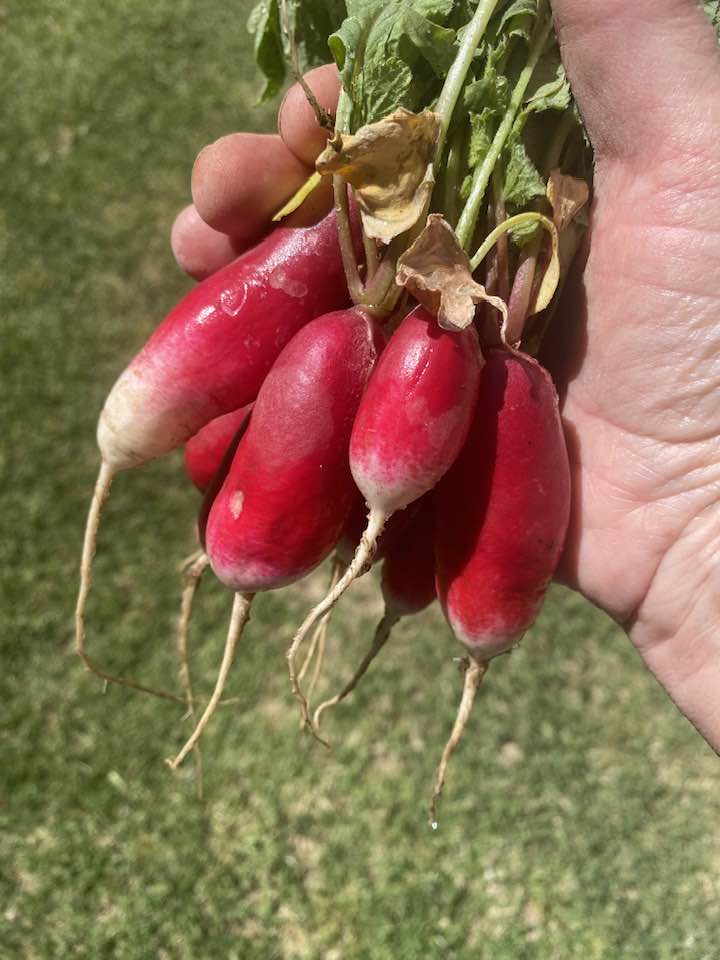
Last year, the Lord used my stubborn green beans to teach me about His timing — and my impatience. For two months, they were lush and green but fruitless. According to the seed packet, they should have been in full fruiting.

I exhausted myself researching ways to amend the soil. I tried everything. Nothing worked. I decided the seeds must have been bad and that I’d pull the vines up when I returned from an eight-day trip.

But when I came home…

🌿 They were loaded with beans.

In my absence —
out of my control —
in God’s perfect timing —
they produced.

It was a humbling revelation of my impatience
and my unrecognized self-reliance.
I had been trusting in my own wisdom and effort
instead of trusting the God who brings forth fruit in His time.

I am humbled by my garden daily.
And grateful.

May God be glorified in all we do.

Robin


Closing Reflection

Robin’s story reminds us that God is still forming His people through the earth He made — through soil and seed, through waiting and weeding, through work and wonder.

Her orchard is a place of discipleship.
Her garden is a mirror of sanctification.
Her life is fruit born of God’s faithful tending.

May her words help you recognize the sacred lessons growing right where God has planted you.
And may you find, like she has, that the God who forms gardens still forms souls — with patience, truth, and immeasurable grace.


Heavenly Father,

Creator of soil and soul,
we thank You for the way You speak through what You have made.

Thank You for roots that grow unseen,
for lessons learned in waiting,
for truth revealed when we can no longer pretend.
Thank You for the holy work of tending — pulling weeds, amending soil,
trusting You when growth feels slow or absent.

Teach us to rest in Your timing
when our efforts feel fruitless.
Guard us from self-reliance,
and draw us back to the truth
that You alone bring forth life.

Where You have planted us,
form us.
Humble us.
Grow us.

May we live rooted in Christ,
connected to one another,
and faithful in the quiet work of obedience —
trusting that in due season,
You will cause fruit to appear.

We place our lives, our labor, and our longing
into Your faithful hands.
Be glorified in us.

In Jesus’ name,
Amen.

Ready. Set. Go! Happy Resurrection Sunday! He lives!

The grave was robbed of its finality. Faith is the finish line.”
— Pastor Burden, First Baptist Lubbock

That line stayed with me because it names a truth we live inside every day: the grave no longer has the last word, and yet faith still requires movement. Obedience alone does not finish the race—faith does.

2 Corinthians 5:7“For we walk by faith, not by sight.”


When Obedience Is Real, but Faith Wavers

I have always believed in God, and when life unsettles me, I turn to Scripture—not to question who He is, but to allow His Word to steady my faith. His existence, His power, and His sovereignty have never been in doubt. What is tested in everyday life is my trust in what He is doing when I cannot yet see the outcome. Scripture calls me to “trust in the Lord with all my heart and not lean on my own understanding,” to acknowledge Him in all my ways, even when His paths feel unfamiliar (Proverbs 3:5–6). Faith teaches me to walk by faith and not by sight (2 Corinthians 5:7), reminding me that God’s ways and thoughts are higher than my own, even when they confuse me (Isaiah 55:8–9). Weariness, unanswered prayer, extended waiting, and obedience without immediate fruit can cause faith to hesitate at the starting line—but it is there, in that honest space, that I listen for God’s voice in Scripture, just as the disciples believed Him, yet had to learn to trust His perfect way.


READY: They Believed—But Were Unprepared

The disciples believed in God.
They believed Jesus was sent from God.
They even confessed Him as the Messiah.

Jesus told them—seven times—who He was:

  • The Bread of Life
  • The Light of the World
  • The Good Shepherd
  • The Resurrection and the Life
  • The Way, the Truth, and the Life
  • The Gate
  • The True Vine

He also told them plainly that He would suffer, be crucified, and rise again.

They heard Him.
They followed Him.
They believed Him.

When the cross came, expectations collapsed. A suffering Messiah did not align with the future they imagined. Obedience had not prepared them for this version of faith.


SET: When Everything Stops Moving

At the crucifixion, the women remained near the cross. The disciples scattered—not because they stopped loving Jesus, but because of fear and confusion. What they lost was not belief in God; what they lost was certainty that God was still in control. They locked themselves away, they waited, and they grieved. The cross felt final. Yet, as Pastor Burden so clearly named it, the grave was robbed of its finality!


The Resurrection

After the resurrection, the women testified—and were doubted. Then Jesus appeared. He showed His wounds, invited their touch, and even ate with them, leaving no question that He was truly alive. What had once confused the disciples became unmistakably real: death had been defeated, and Jesus had risen in victory. Fear gave way to faith, and uncertainty gave way to conviction. In His great grace, Jesus did not rush them forward—He stayed. He taught them about the Kingdom of God, confirmed the truth of the Scriptures, and prepared them for the moment when they would go into the world proclaiming the gospel: that King Jesus is alive, reigns with all authority, and calls all people to follow Him.


GO: When the Spirit Sends

Everything changed at Pentecost. When the Holy Spirit came, Faith moved from internal conviction to outward action. Peter—the one who had denied Jesus—stood publicly and proclaimed the gospel. This was the moment the church moved from

ready…
through set…
to go.


Faith Is the Finish Line

The disciples finished the race because they loved the risen Christ and were empowered by the Holy Spirit. They had no political authority, no social advantage, and no protection from suffering. Yet they went—because faith had crossed the finish line. The grave was robbed of its finality, and Jesus was revealed not only as Savior, but as King. Faith was no longer theoretical; it became active, embodied, and costly as they carried the gospel into the world—proclaiming that King Jesus is alive, reigns with all authority, and invites all people into His kingdom.


Our Turn on the Path

We have faith.
Yet, we struggle to move when the path ahead is unclear. But the story of the disciples reminds us that God meets us right where we are! He teaches us. He waits with us. And when the time is right, He sends us. Because the grave is not the end. And faith is the finish line!

Send us, Lord—ready, set, and willing to go—wherever You lead.
We trust You.

Matthew 28:18-20 NIV
Then Jesus came to them and said, “All authority in heaven and on earth has been given to me. Therefore, go and make disciples of all nations, baptizing them in the name of the Father and of the Son and of the Holy Spirit, and teaching them to obey everything I have commanded you. And surely I am with you always, to the very end of the age.”

Heavenly Father,
We come to You as people who believe—and yet still need You to teach us how to trust. You are faithful, even when the path ahead feels uncertain. Help us to trust You with all our hearts and not lean on our own understanding. In every step we take, teach us to acknowledge You, trusting that You are making our paths straight. When faith hesitates at the starting line, strengthen us to walk by faith and not by sight. When waiting feels long, remind us that Your ways are higher than ours and Your timing is perfect. Thank You that the grave has been robbed of its finality, and that through the risen Christ, faith helps us in our obedience. In Jesus’ name, we pray. Amen.

Silent Saturday and the Song Within

A reflection for Joanna Forbes and the Singing Women of Texas, West Chapter

Dear Joanna,
Dear Singing Women of Texas,

As I have been studying my Bible and preparing for a research project involving singing, community, and Scripture, I found myself unexpectedly pausing in gratitude. Before writing another note or chasing another footnote, I stopped to thank God for the sisterhood He has given me in the Singing Women of Texas. Your voices, your faithfulness, and your shared devotion remind me that singing is never merely sound—it is shared hope.

This pause brought me to Silent Saturday.

Holy Saturday is the day between promise and fulfillment, between the cross and the resurrection. Scripture tells us little about that day, yet it may be the heaviest of all. The disciples faced complete hopelessness after the crucifixion, experiencing God’s presence as a paralyzing absence. Everything they thought they knew about Jesus—about the kingdom, about hope—lay sealed behind a stone.

And yet, hope was already alive.

The sustaining hope of Christ was born in the moment of His deepest anguish—when despair reached its lowest depth and hope its highest peak. This paradox sits at the heart of our faith: hope does not rise from comfort, but from abandonment. God often acts most powerfully when He seems utterly silent.

Lamentations gives language to this experience. In devastation and homelessness, the lamenter declares, “This I call to mind, and therefore I have hope.” Hope is ignited by remembrance—by calling to mind God’s character when circumstances scream otherwise. This sacred act of remembering mirrors what happens in us during Silent Saturday. Nothing changes outwardly, yet something is taking shape within.

And that shaping often sounds like a song.

The Song in the Heart

Paul writes in Ephesians 5:19 that Spirit‑filled believers are “singing and making melody in your heart to the Lord.” This verse has followed me closely. Singing, as we know so well, is not always audible. The melody begins inwardly—sometimes long before it can be voiced aloud.

Silent Saturday demands precisely this kind of singing.

There is no choir, no harmony, no triumphant refrain. Yet the heart carries a melody—a quiet prayer that refuses to die. Singing is not silent, and yet on this holy day, it is. The melody lodges itself deep within us, helping us pray when words fail. The song is not sung because circumstances invite it; it is sung because Christ is worthy, even when His presence feels hidden.

The new song is always born in the heart. Otherwise, it cannot be sung at all. The heart sings because it is overflowing with Christ. That is why all true singing in the church is a spiritual act—shaped by surrender to the Word, incorporation into community, humility before God, and careful discipline. These are not merely musical virtues; they are spiritual postures.

This is why singing together matters so deeply. It forms us.

As Bonhoeffer so beautifully taught, when the church sings, it is not offering performance but praise. On earth, our song is sung by those who believe; in heaven, it is sung by those who see. Until that day, we sing by faith—sometimes loudly, sometimes inwardly, sometimes with tears.

When the Silence Is Pregnant with Song

Silent Saturday does not deny grief. It does not rush toward resurrection. Instead, it teaches us to watch and wait with real hope, trusting that God has already been where we are now. Christ’s death assures us that no darkness is unexplored, no silence unmanned by God’s presence.

Because Christ has entered the grave itself, we are never alone in our waiting.

The inward song transforms Silent Saturday from mere mourning into active hope. The melody is quiet, but it is alive. The silence is heavy, but it is pregnant with song. God is working even when there is no sound.

And so, dear sisters, we continue to sing—sometimes aloud, sometimes only in our hearts—trusting that the God who placed the song within us will one day call it forth in full voice.

With gratitude for this sisterhood and hope that endures even in the silence,

Dee Ann

Prayer

Heavenly Father,
We offer You this silence—the waiting, the ache, the hope we carry unseen.
When words fall away, place Your song within our hearts.
Help us trust You in the quiet, remember who You are,
and wait with faith until joy breaks forth.
We rest in You. In Jesus precious name we pray,
Amen.

The King and His Cross

by Pastor Dee

Good Friday is not merely the day we remember Jesus’ suffering—it is the day we behold the King enthroned in self-giving love. The cross is the doorway into God’s acknowledged reign on earth, and prayer is how we walk through that doorway with repentance, faith, and renewed allegiance.

Mark 15:33–39 — As Jesus breathes his last, the curtain is torn and a centurion confesses, “Truly this man was the Son of God.” Good Friday reveals a paradox: the King conquers not by taking life, but by giving his life to open access to God.

Philippians 2:5–11 — Jesus’ obedience descends “to the point of death—even death on a cross.” This is the shape of his kingship: humility, surrender, and trust in the Father’s will, followed by God’s vindication and exaltation.

Colossians 2:13–15 — At the cross God cancels the record of debt and disarms hostile powers. Good Friday is not defeat; it is the decisive rescue and the public unveiling of God’s victory over sin and all usurping rule.

The Cross and the Kingdom

In covenantal terms, a kingdom (the basileia—God’s rule or reign) is constituted by relationship: a king and a citizenry bound together in loyalty, protection, and shared life. One without the other is not a “kingdom” in that covenant sense. That is why the coming of God’s kingdom is never just a change of circumstances; it is the restoration of rightful relationship under rightful rule.

On Good Friday we see how Jesus brings about God’s acknowledged reign on earth by simultaneously fulfilling, in his own person, God’s requirements of a perfect King and a perfect citizen. He does not merely announce the kingdom; he embodies it—holding together what our sin has torn apart: faithful rule and faithful obedience.

Christ becomes the God-approved King by proving his love for his subjects to the fullest extent—by self-sacrifice for their rescue and restoration. His authority is not asserted by domination, but revealed in mercy. At the cross, the King does what only the true King would do: he bears the cost of reconciliation himself.

And he proves his God-approved citizenship by becoming obedient to his Sovereign to the fullest extent—submitting completely to the Father’s authority and demonstrating loyalty in the face of creaturely (satanic and human) usurpation, rebellion, and compromise. Where Adam grasped, Jesus yielded; where we resist, Jesus trusted.

Jesus accomplishes this supremely on the cross because it is by the kind of death he suffered that both the love (for fallen creation) and obedience (to his sovereign Lord) he consistently demonstrated throughout his life reach their climactic result. Good Friday is the convergence point: perfect love meeting perfect obedience, in public, for us.

Therefore, by fulfilling both requirements of perfect King and perfect citizen in his own person—on the cross, to God’s fullest satisfaction—Jesus inaugurates God’s redemptive rule on earth. He recapitulates and reconstitutes a new covenant community around his own mediatory personhood. And he invites repentant sinners to enter this new sphere of communion with the Triune God for their restoration—and for the redemption of all creation.

Today, the Prayer Path is simple: behold the King, bow as citizens, and belong to the covenant community he purchased.

Prayer

Heavenly Father,

You are the rightful Sovereign—holy, just, and faithful. Jesus, you are the God-approved King whose throne is a cross and whose crown is thorns.

Spirit of God, open my eyes to the glory of this love that does not let me go.

Lord, I confess my divided allegiance. I have wanted the benefits of your kingdom without surrendering my citizenship. I have compromised with rebellion—my own and the world’s—and I have trusted my will over yours. Forgive me through the blood of Christ, and wash me clean. Thank you that at the cross, your love and Jesus’ obedience reached their climactic result for my rescue and restoration. Thank you for canceling my debt, for disarming the powers, and for opening the way into communion with you.

On this Good Friday, I bow to your reign. Teach me to live as a loyal citizen of your kingdom—quick to repent, glad to obey, and courageous in the face of compromise. Form in me the mind of Christ: humility, trust, and steadfast love. Extend your redemptive rule in my home, my church, and my community. Gather a renewed covenant people around Jesus—restored worshipers who reflect the King’s self-giving love. Bring repentance where there is rebellion, healing where there is brokenness, and hope where there is despair, until all creation is made new in Him.

In Jesus name we pray, Amen.