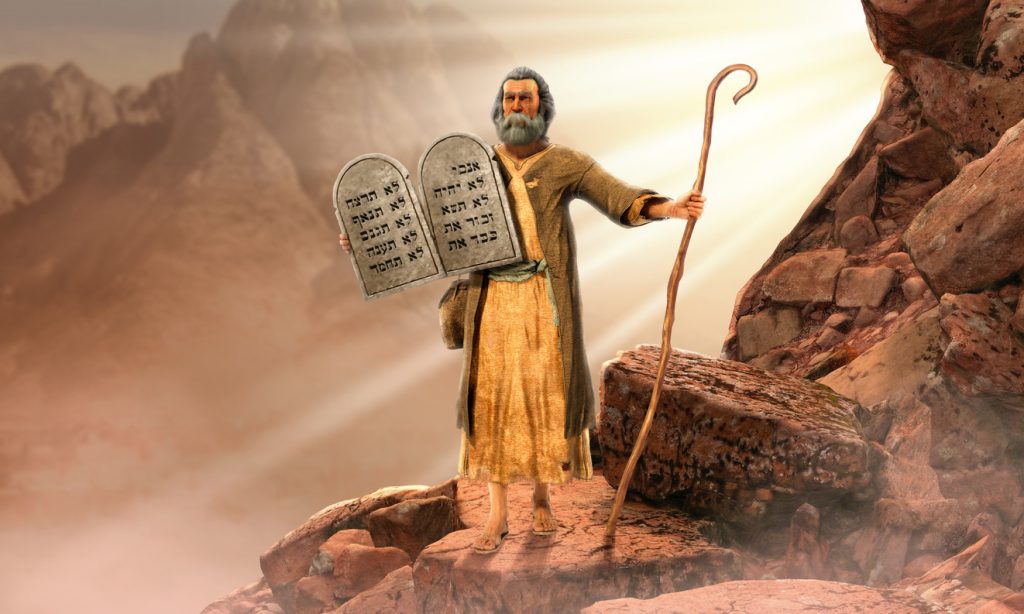
The Author Who Enters His Own Story

by Dee Ann Loving-Tackitt
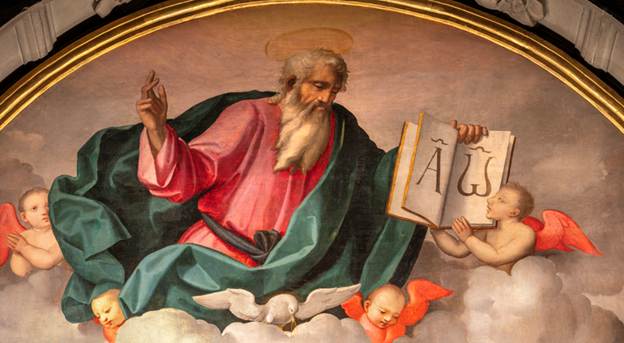
Then God said,“Let us make mankind in our image, in our likeness, so that they may rule over the fish in the sea and the birds in the sky, over the livestock and all the wild animals, and over all the creatures that move along the ground.” So, God created mankind in his own image,
in the image of God he created them; male and female he created them.                               
Genesis 1: 26–27

Yes, we address God our Father with many names. YHWH, Elohim, El Shaddai, Jehovah Rapha. Another way I understand God’s relationship with all of us is as the Author of all creation, His living story. Many of us, through J.R.R Tolkien, read how he shaped Middle-earth with language, imagination, and design. God is THE Creator. The difference between Tolkien and THE Creator is infinite: Tolkien made a fictional world, while God authors reality itself.

The theologian Kevin Vanhoozer discusses God as the Author of His own story, naming it Theodramatic Theology.

What is Authorial Analogy?

A human author writes. God creates.

An author creates with words, while God creates when He speaks.

An author shapes the plot. God creates the plot as He writes our story.

An author writes the story from beginning to end, but God knows the end before our beginning.

God does not need ink; He creates with His Power.

In Genesis, when God speaks, light appears. When He speaks, life begins. Psalm 33 says, “By the word of the Lord were the heavens made.”

Three Types of Divine Authorship

Authorial Analogy can be explained in three ways.

  1. God as our divine author creates with order, beauty, meaning, and life. Authors have that goal as well.
  2. God shapes history by just creating and stepping back. Yet He chooses to join the story. In the Bible, God spoke to Abraham, sent prophets, became Christ, and took part in the story He writes.
  3. By speaking and working through human writers, God has given us Scripture. In this way His voice is heard in many times, places, and styles.

What About Human Freedom?

How can we be free if God is our Creator? This question is often asked. Are we merely puppets? I don’t think so. God does not do all the talking, keeping us silent. He wants to have a conversation. God speaks, and we should respond! Right away! I have experienced this: God calls, convicts, persuades, reveals, and teaches. This is how He heals us. God waits for us to respond. When we choose to listen and talk to God, our hearts soften. But the opposite is true as well: when we choose to resist, our hearts harden. God does not force this conversation; He waits for us to choose to join His story. He holds the whole story in His hands.

  • We are responsible to God and others within the story God writes.
  • God can stand outside His creation, just as an author is physically outside His story.
  • Yet, God IS present within creation. Therefore, he can be compared to the author who steps into His own story.

The Bible

Where can we read God’s story? Open the Bible. We can read how He creates, makes covenants, and gives us shalom (peace) through His Word. Not only does God speak in the Bible, but He is present in the Bible because He is speaking directly to you. That is why I call Him the Author of all Creation. We live God’s story because He speaks, sustains, and guides.

“As Author, God is not limited by his created work … one authorial day is like a character’s thousand years (2 Pet. 3:8). The Author can open the text to any page, flip back and forth at will, and write himself into the drama of human history: God’s Word and Spirit are in created time but not of it.” Kevin Vanhoozer

Shall we pray?

Heavenly Father,

We weave fictions of our lives with words. We create myths without Your authorship. We welcome Your Words that build a holy place in our hearts while turning love into beautiful music. We still do not fully understand Your way. In Christ, the language You put in our hearts illuminates this dim world. May Your love always cleanse our minds and replenish us with joy. In Jesus’ precious name we pray. Amen.

Resources

Freeman, Austin M. “The Author of the Epic: Tolkien, Evolution, and God’s Story.” Zygon 56, no. 2 (2021): 500–516. EBSCOhost.

Hronich, Andrew. 2025. “God and Indiana Jones.” Liberty Theological Review 9, (1). 

Settecase, Parker. “Don’t Write off the Absentee Author: Why the Problems of Divine Hiddenness and Neglect Don’t Destroy Vanhoozer’s Authorial Analogy.” Perichoresis 21, no. 4 (2023): 34–51. https://doi.org/10.2478/perc-2023-0030.


How God Restores What Trauma Breaks

by Dee Ann Loving-Tackitt

“He heals the brokenhearted and binds up their wounds.” — Psalm 147:3

Trauma has a way of breaking life open. It can shatter our sense of safety, silence our voice, and fracture our identity. Neuroscience shows that when people relive traumatic memories, the brain’s language centers go quiet while emotional centers flare with activity. This is why survivors often say, “I don’t have words for what happened.” Trauma steals language.

But God has always been in the business of restoring what was broken—especially the parts of us that feel too shattered to name. And Scripture gives us a powerful pattern: healing often begins when people reclaim their story.

Interestingly, modern research on expressive writing echoes this same truth. When trauma survivors write about their experiences, they re-engage the parts of the brain responsible for language, narrative, and meaning-making. Over time, expressive writing has been shown to reduce anxiety, improve mood, strengthen working memory, and support post-traumatic growth.

Science and Scripture meet in a beautiful place: healing begins when we bring our story into the light.

David’s Psalms: When Pain Finds Its Voice

The Psalms are filled with raw, unfiltered emotion. David writes through fear, betrayal, grief, and despair. He names what feels unspeakable. He puts chaos into language.

This mirrors what expressive writing does today—helping the brain integrate overwhelming experiences and restore emotional balance. David’s writing becomes both prayer and processing, a sacred act of survival.

Joseph’s Redemption: Rewriting a Wounded Story

Joseph endured betrayal, abandonment, false accusation, and imprisonment. Years later, he reframes his story with God’s help:

“You meant evil against me, but God meant it for good.” — Genesis 50:20

This is meaning-making—the same cognitive shift expressive writing often produces. Joseph doesn’t erase the trauma; he integrates it. His identity is rebuilt not by forgetting the pain but by understanding it through God’s lens.

Job’s Lament: Wrestling Toward Understanding

Job’s suffering is overwhelming—loss of family, livelihood, health, and dignity. Much of the book is Job trying to make sense of his pain. He speaks, questions, laments, and reflects. He narrates his trauma in real time.

This mirrors the therapeutic process: naming the pain, exploring its meaning, and slowly reconstructing identity after devastation. Job’s restoration is not only physical; it is deeply narrative.

Israel’s Exile: Remembering, Rebuilding, and Returning

The exile is a national trauma. Israel loses home, identity, and stability. In response, the prophets call the people to remember, write, and tell their story. Lamentations records communal grief. Ezra and Nehemiah describe rebuilding both the city and the people’s identity.

God leads them through a process of naming the loss, narrating the experience, and rebuilding life with new meaning—just as expressive writing helps trauma survivors do today.

The Risen Christ: Scars That Tell a Story

After the resurrection, Jesus appears with His scars still visible. The wounds remain, but they no longer signify defeat—they signify victory, identity, and purpose.

This is the heart of trauma recovery: the wound becomes part of the story, not the end of it.

Where Scripture and Science Meet: Healing Through Story

Modern research shows that expressive writing helps trauma survivors:

  • Re-engage language centers
  • Integrate fragmented memories
  • Reduce distress
  • Improve mood and functioning
  • Rebuild meaning
  • Experience post-traumatic growth

Scripture shows God leading people through the same arc:

  • Naming the trauma (Psalms, Lamentations)
  • Narrating the experience (Job, Joseph)
  • Rebuilding identity (Exile and Return)
  • Finding meaning in suffering (Paul)
  • Transforming wounds into testimony (Jesus)

Both tell the same truth: healing often begins when we reclaim our story.

Trauma may silence us, but God invites us to speak—to write, to remember, to narrate, to rebuild. Expressive writing becomes not just a therapeutic tool but a spiritual practice, a way of joining the long biblical tradition of people who found healing by putting their pain into words.

And in doing so, we discover what Scripture has always promised: our wounds can become part of a redeemed story.

A Prayer for Healing and Restoration

Father, You see every wound, every memory, every moment that felt too heavy to carry. You know the places where trauma has stolen our words and fractured our sense of self. Today, we ask You to gently restore what has been broken. Give us courage to name our pain, strength to write our story, and grace to see Your hand in every chapter. Bind up the wounds that still ache. Bring light to the places that feel dark. And transform our scars into testimonies of Your faithfulness. Amen.

Turning our Hearts to God

by Dee Ann Loving-Tackitt

The Lord is my strength and my song; he has become my salvation.–Exodus 15:2

Our lives are meant for more than what we can see here and now. Deep within every believer is a longing for God—the One who made us, saves us, and leads us toward eternal life. Prayer is one way we answer that longing. Sometimes it is spoken, sometimes silent, and sometimes sung. That is part of the thrill of singing in the choir at First Baptist Lubbock. When we sing together, we are praying with melody, worshiping with friends, and turning our hearts toward God.

Singing has always had a special place in the story of God’s people

The first song recorded in Scripture comes after the Lord delivers Israel through the Red Sea: “Then Moses and the Israelites sang this song to the Lord” (Exodus 15:1). Their song was born out of rescue. Moses declared, “The Lord is my strength and my song; he has become my salvation” (Exodus 15:2). That is still why we sing. We sing because God saves, because He is faithful, and because He brings us through waters we could never cross on our own.

What is remarkable is that the song of Moses echoes all the way to the end of the Bible. In Revelation 15, the victorious people of God sing “the song of God’s servant Moses and of the Lamb” (Revelation 15:3). From the Red Sea to the throne room of heaven, God’s people are still singing. The melody of redemption continues. The God who delivered Israel from slavery has delivered us from sin and death through Jesus Christ, the Lamb. Christian singing is not merely emotional expression; it is gospel proclamation. We sing because Christ has redeemed us, gathered us, and made us a worshiping people.

The Psalms keep that song alive for every generation. “Sing to the Lord a new song” (Psalm 96:1). “Serve the Lord with gladness; come before him with joyful songs” (Psalm 100:2). “Let everything that has breath praise the Lord” (Psalm 150:6). Singing belongs to everyone who has breath. Paul says we sing so that “the word of Christ” may dwell in us richly, teaching and encouraging one another with “psalms, hymns, and spiritual songs” (Colossians 3:16). Our songs carry truth, form our faith, and help the church remember God’s character, promises, holiness, mercy, and victory.

Benefits of Choir

 Choir gives us a place to belong and a way to serve. It teaches us to listen more than we speak and reminds us that no single voice carries the whole song. Sopranos, altos, tenors, and basses each bring something different, but together create harmony. That is a beautiful picture of the church, the body of Christ: many members, one body, called to glorify God and build up His people in love.

Choir also strengthens our faith. Week after week, the words we sing get planted in our hearts. Long after a sermon outline has faded from memory, a hymn or anthem can rise up in a hospital room, on a difficult morning, or in a moment of thanksgiving. Music helps Scripture settle into the soul and gives language to our joy, grief, hope, and surrender.

Choir is Worship

 When we sing, we are not filling time in a service; we are offering praise to the living God, the One who first spoke, first saved, and first called us to Himself. Worship is our grateful response to grace. We are joining Moses, Miriam, David, the saints in Revelation, and believers around the world who lift their voices to the Lord.

The 11:00 Choir is back!

The Kindness of God: When Words Point Beyond Themselves

by Dee Ann Loving-Tackitt

“The Lord is good to all; he has compassion on all he has made.”
Psalm 145:9 (NIV)

Have you ever wondered whether our words about God are big enough?

The longer we walk with Christ, the more we realize that human language struggles to describe divine reality. We speak of God as Father, Shepherd, King, Redeemer, and Friend. Scripture provides us with these images, yet none of them fully captures the mystery of who God is.

This is not a weakness of faith. It is a reminder of God’s greatness.

Why We Need Metaphors

Much of our language about God is metaphorical. We call God our Rock, yet we do not mean that He is a literal stone. We describe Him as our Shepherd, though He does not walk behind flocks carrying a staff.

These images help us understand aspects of God’s character. They are gifts that enable finite people to speak about an infinite God.

Metaphors do more than decorate language. They help us see truth. They create bridges between what we know from everyday life and what we are trying to understand about God’s nature.

The Importance of Careful Language

The words we use matter because language shapes perception.

If we reduce God to a single image or description, we risk creating a picture that is too small. Scripture itself employs a rich variety of images and descriptions because no single metaphor can contain the fullness of God.

Good theology is not merely about choosing the correct words. It is about recognizing both the power and limitations of those words.

God’s Kindness Revealed

One of the most beautiful truths in the Christian faith is that God is not distant from humanity. The biblical story reveals a God who creates, calls, redeems, forgives, and restores.

When we speak of the kindness of God, we are speaking of His gracious movement toward His creation. We see this kindness in the Incarnation, in the Cross, and in the daily mercies that sustain us.

God’s kindness is not sentimental. It is active. It reaches into broken lives and offers hope, healing, and renewal.

Humility in Theology

There is a certain humility required when talking about God.

We must speak because God has revealed Himself. Yet we must also remember that our words can never exhaust the mystery of the One we worship.

Theologians, pastors, and everyday believers share the same responsibility: to use language faithfully while remaining open to wonder.

A Final Reflection

Perhaps the goal of theological language is not to place God neatly inside our definitions but to draw us deeper into relationship with Him.

Every biblical image, every metaphor, and every doctrine ultimately points beyond itself to the living God.

And when our words fall short, His kindness remains greater than our ability to describe it.

“Now we see only a reflection as in a mirror; then we shall see face to face” (1 Corinthians 13:12).

Resource

Soskice, Janet Martin. The Kindness of God : Metaphor, Gender, and Religious Language. Oxford ; Oxford University Press, 2007.

When Worship Needs Repentance

by Dee Ann Loving-Tackitt

A blog reflection on hollow religion, true repentance, and the mercy of God

Isaiah 1:10–18 (NIV)

10 Hear the word of the Lord, you rulers of Sodom; listen to the instruction of our God, you people of Gomorrah!
11 “The multitude of your sacrifices— what are they to me?” says the Lord. “I have more than enough of burnt offerings, of rams and the fat of fattened animals; I have no pleasure in the blood of bulls and lambs and goats.
12 When you come to appear before me, who has asked this of you, this trampling of my courts?
13 Stop bringing meaningless offerings! Your incense is detestable to me. New Moons, Sabbaths and convocations— I cannot bear your worthless assemblies.
14 Your New Moon feasts and your appointed festivals I hate with all my being. They have become a burden to me; I am weary of bearing them.
15 When you spread out your hands in prayer, I hide my eyes from you; even when you offer many prayers, I am not listening. Your hands are full of blood!
16 Wash and make yourselves clean. Take your evil deeds out of my sight; stop doing wrong.
17 Learn to do right; seek justice. Defend the oppressed. Take up the cause of the fatherless; plead the case of the widow.
18 “Come now, let us settle the matter,” says the Lord. “Though your sins are like scarlet, they shall be as white as snow; though they are red as crimson, they shall be like wool.”

The Shock of the Opening Address

The passage begins with a jolt: “Hear the word of the LORD, you rulers of Sodom; listen to the instruction of our God, you people of Gomorrah!” Isaiah is not speaking to pagan cities, but to Judah. By using Sodom and Gomorrah, he strips away false security based on covenant identity, temple worship, or religious tradition.

God Rejects Worship That Covers Injustice

The sacrifices were not inherently wrong; God had given Israel a sacrificial system. The problem was that Judah had turned worship into a substitute for repentance. They were bringing offerings while continuing in violence, oppression, and neglect of the vulnerable.

God’s language is intense: “I have more than enough,” “I have no pleasure,” “Stop bringing meaningless offerings,” “Your incense is detestable to me,” and “I hate with all my being” your appointed festivals. This is divine revulsion toward worship that has become a mask for sin.

Verse 15 gives the sharpest image: “When you spread out your hands in prayer, I hide my eyes from you… Your hands are full of blood!” The posture of prayer cannot erase injustice. Hands lifted in worship are unacceptable when those same hands tolerate oppression.

The Call: Wash, Turn, Learn, Seek

Isaiah does not leave the people with condemnation alone. God commands them to wash, become clean, remove evil, stop doing wrong, and learn to do right. Repentance is not merely feeling sorry; it is a reorientation of life.

That reorientation is concrete: “seek justice. Defend the oppressed. Take up the cause of the fatherless; plead the case of the widow.” For Isaiah, authentic worship produces advocacy for those most likely to be ignored.

The Grace of Verse 18

After such a severe indictment, verse 18 is stunning: “Come now, let us settle the matter,” says the Lord. Though their sins are like scarlet, they shall be “as white as snow.” God exposes sin not to destroy the repentant, but to invite them into cleansing.

How the New Testament Echoes Isaiah 1:10–18

The New Testament carries Isaiah’s concern forward. Jesus confronts religious leaders who are careful about outward observance while neglecting “justice and mercy and faithfulness” (Matthew 23:23). He also says, “I desire mercy, and not sacrifice” (Matthew 9:13; 12:7), echoing the prophetic conviction that religious precision cannot compensate for lovelessness.

James makes the connection even more direct: “Religion that is pure and undefiled before God the Father is this: to visit orphans and widows in their affliction” (James 1:27). Isaiah commands Judah to defend the fatherless and plead the widow’s cause; James names care for the same vulnerable groups as a mark of true religion.

What This Passage Says to Us Today

Isaiah 1:10–18 warns modern readers against measuring spiritual health only by visible religious activity. Church attendance, prayer, giving, Bible study, and public ministry matter, but they cannot replace repentance, humility, justice, and mercy. Isaiah asks not only, “Do I worship?” but, “Is my worship shaping me into someone who reflects God’s compassion?”

The passage is also hopeful. God does not simply say,Go away.” He says, “Come now.” He invites stained people into cleansing, guilty people into forgiveness, and hollow worshipers into transformed obedience.

A Closing Prayer

Heavenly Father, search our hearts and reveal where our worship has become outward performance without inward repentance. Wash us from sin, turn us from evil, and teach us to do what is right. Let our prayers lead to justice, our worship lead to mercy, and our faith become visible in compassion for the vulnerable. Thank you that though our sins are like scarlet, you promise to make them white as snow. Amen.

Joining the Conversation

From Theology to Thesis

by Dee Ann Loving-Tackitt

“Come now, let us reason together, says the Lord.”
—Isaiah 1:18 (ESV)

An Unexpected Writing Lesson

One of the unexpected blessings of my work reviewing student papers at Liberty University is that I get to step into conversations I might never have joined otherwise. In a single week, I may read papers on theology, Shakespeare, police reporting, leadership, education, ministry, history, and any number of subjects in between. Whatever the topic, I find myself discussing the same three things with students: their thesis, the structure of the paper, and the clarity of their writing.

A good paper has a clear destination. A reader should be able to identify the argument, follow the organization, and understand where the writer is leading them. Because of that, I am always looking for the thesis.

So imagine my surprise as I sat working on my own doctoral homework this week. I found myself stopping in the middle of a reading assignment—not because I disagreed with the author, but because the writing was so skillfully constructed that I had to analyze it. The introduction was engaging. The conclusion was memorable. The structure was excellent. Yet something unusual was happening.

The thesis was not in the introduction. That almost never happens. As I tell my students, every paper needs a thesis. I often use what I call the Hamburger Thesis. A purpose statement simply announces a topic: “This paper will discuss hamburgers and their ingredients.” That statement tells the reader the topic, but it does not make a claim. A thesis, however, makes a claim: “Hamburgers are a popular meal because they are convenient, affordable, and customizable.” In that sentence, hamburgers are the topic, and the claim is that they are popular for their convenience, affordability, and customization. The supporting reasons become the body of the paper. In other words, a strong thesis tells readers not only what the writer is discussing, but what the writer believes about it.

That is why this week’s reading stopped me in my tracks. As someone who spends a great deal of time helping students identify thesis statements, I expected to find the author’s central claim near the beginning. Instead, he carefully led his readers through history, challenges, and observations before finally revealing the heart of his argument near the conclusion.

Pulling Up a Chair

And the metaphor was beautiful. The author described theological research as entering an ongoing conversation. I often think about what a privilege it is to sit down and join the conversation.

What conversation? The conversation that began long before us. When we open our Bibles, we enter a conversation that stretches across centuries:

Moses speaks. David sings.

Isaiah proclaims. Matthew testifies.

Paul reasons. John worships.

Then the church fathers join in.

Augustine wrestles with grace.

Luther raises difficult questions.

Calvin examines Scripture.

Countless pastors, missionaries, scholars, and faithful believers add their voices, each attempting to understand and proclaim the Word of God more clearly.

And then, somehow, by God’s grace, we are invited to pull up a chair! What an astonishing thought!

More than Information

Too often, we approach theological study as a task to complete, a class to pass, or a paper to write. We rush toward the assignment and miss the invitation. Theology is not merely collecting information. It is learning to listen carefully to those who have wrestled with Scripture before us while simultaneously listening to the voice of God through His Word.

The Apostle Paul told Timothy:

“What you have heard from me in the presence of many witnesses entrust to faithful men, who will be able to teach others also.”
—2 Timothy 2:2

Notice the pattern. One believer speaks. Another listens. Then that believer teaches the next generation. The conversation continues.

This is discipleship.

It is also scholarship at its best.

Every meaningful theological contribution begins with humility. We do not arrive at the table as experts who have discovered something no one has ever seen. We arrive as learners. We listen. We ask questions. We read. We pray. We wrestle with the text. Then, perhaps, God allows us to offer something useful to the discussion.

A Conversation Across the Centuries

The conversation is bigger than any one denomination, professor, pastor, or student. It spans continents and centuries. It includes believers whose first language was Hebrew, Greek, Latin, German, English, Spanish, and countless others. Some of the voices are brilliant. Some are ordinary. Yet together they testify to the greatness of God.

That is why I love theological study.

Not because I expect to master every subject. Not because I have enough years left to read every book. Certainly not because I think I have all the answers.

The Hidden Thesis

By delaying his central claim until the conclusion, the author invited readers into the conversation before explaining it. Only near the end did he reveal what had been true all along: theological research is not merely about gathering information—it is about joining a discussion that began before we were born and will continue long after we are gone.

So the next time someone wonders why you spend hours reading theology, studying Scripture, writing papers, or researching a difficult biblical question, perhaps the simplest answer is this:

You are joining the conversation.

And what a blessing it is to have a seat at the table.

Prayer

Heavenly Father,

Thank You for inviting us into the great conversation of faith. Thank You for Your Word, for the generations of believers who have faithfully studied it, and for the privilege of learning from them. Give us humble hearts eager to listen, disciplined minds seeking truth, and faithful voices honoring You. Help us not to pursue knowledge for its own sake, but to know You more deeply and to serve others more faithfully. May every book we read, every paper we write, and every discussion we enter draw us closer to Jesus Christ.

May we never take for granted the opportunity to sit at the table with Your people—past and present—and learn together under the authority of Your Word. Teach us to listen well, think deeply, speak graciously, and walk humbly before You. In the name of Jesus, our Teacher, Savior, and Lord,

Amen.

Resource: Kibbe, Michael. From Topic to Thesis : A Guide to Theological Research. Downers Grove, Illinois: InterVarsity Press, 2016.