
Tag Archives: Paul

Joining the Conversation

From Theology to Thesis

by Dee Ann Loving-Tackitt

“Come now, let us reason together, says the Lord.”
—Isaiah 1:18 (ESV)

An Unexpected Writing Lesson

One of the unexpected blessings of my work reviewing student papers at Liberty University is that I get to step into conversations I might never have joined otherwise. In a single week, I may read papers on theology, Shakespeare, police reporting, leadership, education, ministry, history, and any number of subjects in between. Whatever the topic, I find myself discussing the same three things with students: their thesis, the structure of the paper, and the clarity of their writing.

A good paper has a clear destination. A reader should be able to identify the argument, follow the organization, and understand where the writer is leading them. Because of that, I am always looking for the thesis.

So imagine my surprise as I sat working on my own doctoral homework this week. I found myself stopping in the middle of a reading assignment—not because I disagreed with the author, but because the writing was so skillfully constructed that I had to analyze it. The introduction was engaging. The conclusion was memorable. The structure was excellent. Yet something unusual was happening.

The thesis was not in the introduction. That almost never happens. As I tell my students, every paper needs a thesis. I often use what I call the Hamburger Thesis. A purpose statement simply announces a topic: “This paper will discuss hamburgers and their ingredients.” That statement tells the reader the topic, but it does not make a claim. A thesis, however, makes a claim: “Hamburgers are a popular meal because they are convenient, affordable, and customizable.” In that sentence, hamburgers are the topic, and the claim is that they are popular for their convenience, affordability, and customization. The supporting reasons become the body of the paper. In other words, a strong thesis tells readers not only what the writer is discussing, but what the writer believes about it.

That is why this week’s reading stopped me in my tracks. As someone who spends a great deal of time helping students identify thesis statements, I expected to find the author’s central claim near the beginning. Instead, he carefully led his readers through history, challenges, and observations before finally revealing the heart of his argument near the conclusion.

Pulling Up a Chair

And the metaphor was beautiful. The author described theological research as entering an ongoing conversation. I often think about what a privilege it is to sit down and join the conversation.
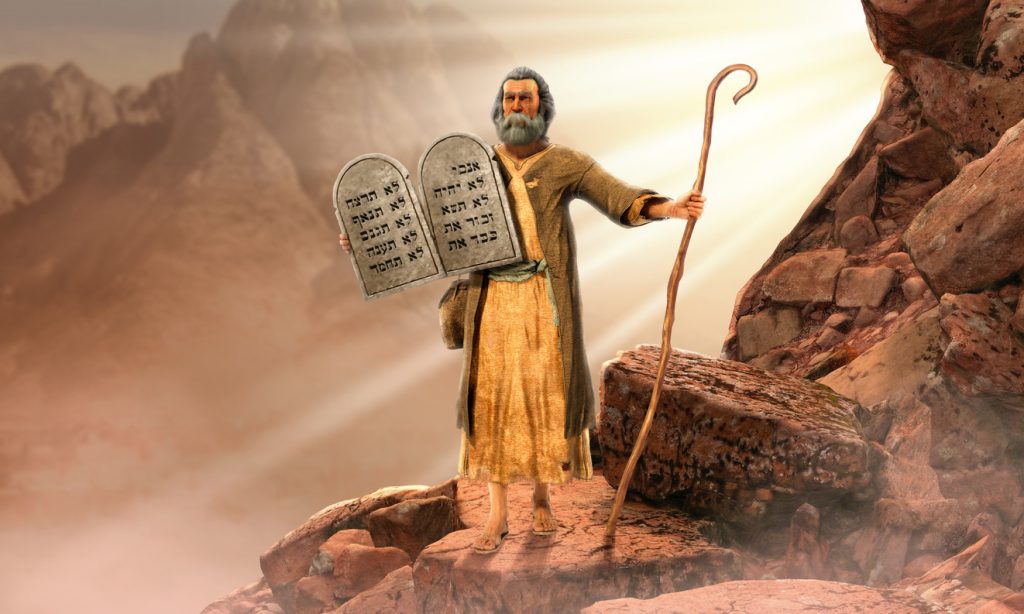
What conversation? The conversation that began long before us. When we open our Bibles, we enter a conversation that stretches across centuries:

Moses speaks. David sings.

Isaiah proclaims. Matthew testifies.

Paul reasons. John worships.

Then the church fathers join in.

Augustine wrestles with grace.

Luther raises difficult questions.

Calvin examines Scripture.

Countless pastors, missionaries, scholars, and faithful believers add their voices, each attempting to understand and proclaim the Word of God more clearly.

And then, somehow, by God’s grace, we are invited to pull up a chair! What an astonishing thought!

More than Information

Too often, we approach theological study as a task to complete, a class to pass, or a paper to write. We rush toward the assignment and miss the invitation. Theology is not merely collecting information. It is learning to listen carefully to those who have wrestled with Scripture before us while simultaneously listening to the voice of God through His Word.

The Apostle Paul told Timothy:

“What you have heard from me in the presence of many witnesses entrust to faithful men, who will be able to teach others also.”
—2 Timothy 2:2

Notice the pattern. One believer speaks. Another listens. Then that believer teaches the next generation. The conversation continues.

This is discipleship.

It is also scholarship at its best.

Every meaningful theological contribution begins with humility. We do not arrive at the table as experts who have discovered something no one has ever seen. We arrive as learners. We listen. We ask questions. We read. We pray. We wrestle with the text. Then, perhaps, God allows us to offer something useful to the discussion.

A Conversation Across the Centuries

The conversation is bigger than any one denomination, professor, pastor, or student. It spans continents and centuries. It includes believers whose first language was Hebrew, Greek, Latin, German, English, Spanish, and countless others. Some of the voices are brilliant. Some are ordinary. Yet together they testify to the greatness of God.

That is why I love theological study.

Not because I expect to master every subject. Not because I have enough years left to read every book. Certainly not because I think I have all the answers.

The Hidden Thesis

By delaying his central claim until the conclusion, the author invited readers into the conversation before explaining it. Only near the end did he reveal what had been true all along: theological research is not merely about gathering information—it is about joining a discussion that began before we were born and will continue long after we are gone.

So the next time someone wonders why you spend hours reading theology, studying Scripture, writing papers, or researching a difficult biblical question, perhaps the simplest answer is this:

You are joining the conversation.

And what a blessing it is to have a seat at the table.

Prayer

Heavenly Father,

Thank You for inviting us into the great conversation of faith. Thank You for Your Word, for the generations of believers who have faithfully studied it, and for the privilege of learning from them. Give us humble hearts eager to listen, disciplined minds seeking truth, and faithful voices honoring You. Help us not to pursue knowledge for its own sake, but to know You more deeply and to serve others more faithfully. May every book we read, every paper we write, and every discussion we enter draw us closer to Jesus Christ.

May we never take for granted the opportunity to sit at the table with Your people—past and present—and learn together under the authority of Your Word. Teach us to listen well, think deeply, speak graciously, and walk humbly before You. In the name of Jesus, our Teacher, Savior, and Lord,

Amen.

Resource: Kibbe, Michael. From Topic to Thesis : A Guide to Theological Research. Downers Grove, Illinois: InterVarsity Press, 2016.

When the Song Follows Us Home: Paul’s Vision of a Living Offering

A Greek Reading of Romans 12 and the Shape of Worship

by Dee Ann Loving-Tackitt

“I appeal to you therefore, brothers and sisters, by the mercies of God, to present your bodies as a living sacrifice, holy and acceptable to God, which is your spiritual worship” (Romans 12:1).

The Rhythm of Worship in Everyday Life

We often assume worship ends when the singing stops. But Paul suggests something far more searching—and far more beautiful. We do not leave our worship behind when we walk out of the sanctuary. It lingers with us, like a melody still echoing after the final note has faded. It follows us into the quiet of our homes, into conversations at the table, into moments of weariness, and into the unseen spaces where faith becomes real. What was lifted in song begins to take shape in service. What was spoken in prayer becomes a posture of the heart throughout the day.

Somewhere between Sunday morning and the ordinary rhythm of the week, we begin to sense that worship was never meant to be something we merely attend, but something we carry—something that continues in how we think, how we love, and how we offer ourselves back to God in the smallest and most sacred ways. It meets us in the hard conversation, in the hidden prayer, in the choice to serve when no one notices. Worship, it seems, refuses to stay contained within walls or schedules—it breathes, it moves, it lives.

It is in this movement—from gathered worship into lived worship—that Romans 12 begins to open with new clarity. What can first feel like a series of separate instructions is, in truth, a deeply connected vision of the Christian life. Paul is not handing us a scattered collection of commands; he is showing us how the mercies of God reshape the whole person. Worship becomes the thread that holds everything together—our minds, our relationships, our service, and our love—until faith is no longer confined to a moment, but expressed through the offering of an entire life.

The Priesthood of Every Believer

Paul begins with the language of offering: to “present your bodies as a living sacrifice” is unmistakably priestly language. It reaches back into the Old Testament, where priests brought offerings before God, yet in Christ that holy calling is no longer limited to a few. Scripture now names the whole church as “a chosen race, a royal priesthood” (1 Peter 2:9), a vision that helps illuminate why Romans 12 speaks of worship in such embodied and daily terms.

Worship, then, is not merely something we attend; it is something we become.

Our lives—our thoughts, actions, relationships, and service—are now the offering. This transforms the ordinary into the sacred. Nothing is outside the reach of worship when it is given back to God.

Transformation Before Expression

Yet Paul does not move from offering straight into outward action. Before he speaks of gifts, relationships, or service, he turns to the inner work that makes true worship possible: “Do not be conformed to this world, but be transformed by the renewing of your mind” (Romans 12:2).

This renewal matters because worship always flows from what shapes our vision. If our minds are formed primarily by the world, our devotion can become shallow, distracted, or distorted. But when truth renews the way we think, we begin to discern the will of God—what is good, acceptable, and perfect—and our lives start to align with what we behold.

True worship begins inwardly before it is ever expressed outwardly.

A Humble and Connected Body

A renewed mind does not remain private for long. It begins to shape the way we see ourselves and the people around us. That is why Paul moves naturally from inward transformation to shared life, calling believers to humility: “not to think of himself more highly than he ought to think” (Romans 12:3).

This is not a call to diminish ourselves, but to see clearly. Each of us belongs to something greater—“we, though many, are one body in Christ, and individually members one of another” (Romans 12:5). Worship dismantles pride because it reorients our identity. Life is no longer about personal prominence; it is about participating in the life of Christ’s body.

Gifts as Acts of Worship

Once Paul has reminded us that we belong to one body, he turns to the grace at work within that body. God has distributed gifts—graciously and intentionally—and each one is meant to serve the life of the whole. Whether we serve, teach, exhort, give, lead, or show mercy, these gifts are not platforms for recognition but expressions of worship.

When we use what God has given us for the good of others, we are offering something holy. Ministry itself becomes an act of devotion. Teaching becomes worship. Serving becomes worship. Giving becomes worship. Every gift, rightly exercised, becomes a living sacrifice before God.

The Heart of It All: Genuine Love

And yet Paul does not allow the chapter to rest in giftedness alone. Beneath every act of service lies a deeper foundation, and at the center of everything he writes is this anchoring truth:
“Let love be genuine” (Romans 12:9).

This is not just one instruction among many—it is the heartbeat of the entire passage. Love is what gives meaning to every gift and every act of service. Without it, even the most impressive expressions of ministry become empty. As Paul teaches elsewhere, “If I… have not love, I gain nothing” (1 Corinthians 13:3).

Genuine love is not surface-level kindness. It is rooted in truth. It “abhors what is evil” and “holds fast to what is good” (Romans 12:9). It is both discerning and devoted.

A Life Overflowing With Worship

Once love takes root, it does not remain an idea for long—it becomes visible in everyday life. It is expressed in devotion to others, in honoring them above ourselves, in diligence, in spiritual fervor, and in faithful service to the Lord. It rejoices in hope, endures through trials, and perseveres in prayer. It sees needs and responds with generosity. It opens doors in hospitality, welcoming others into grace-filled spaces. It is present when we choose patience instead of sharpness, forgiveness instead of resentment, or quiet faithfulness in work that feels unseen.

What emerges here is not a checklist, but a portrait—a lived-out theology. These are not isolated commands meant to weigh us down, but living expressions of what it looks like when worship fills a life.

Not a Checklist, but an Invitation

That is why Romans 12 is best received not as a ledger of spiritual performance, but as an invitation into a way of life. When we read it only as a list of requirements, it can feel overwhelming, and we may quietly think, “I don’t measure up.” But Paul’s intention is not to crush us under impossible standards; it is to draw us more deeply into the life made possible by God’s mercy.

Instead of asking, “Am I doing all of this perfectly?” we begin to ask, “How is God inviting me to worship today?” Perhaps it is through encouraging a weary heart, persevering in unseen prayer, opening our home even when it feels inconvenient, or choosing humility in a moment that tempts us toward self-protection.

Seen this way, Romans 12 gently but powerfully expands our understanding of worship far beyond gathered moments. It reminds us that worship happens in quiet places, in difficult seasons, in ordinary conversations, and in faithful obedience—in the hospital room, in the classroom, in the kitchen, and in the stillness of prayer. It is found wherever a life is surrendered to God.

A Living Offering

In the end, this passage is not about striving harder but about surrendering more fully. Because of God’s mercy, our lives become the altar, and upon that altar we offer ourselves—not once, but continually. The song of worship does not end when the service closes; it follows us into the world as a living offering.

Living. Breathing. Serving. Loving.

And in that offering, God is pleased.

Prayer
Heavenly Father, teach us to worship You not only with our songs, but with our lives. Renew our minds, humble our hearts, and make us faithful in the ordinary places where devotion is quietly formed. Let love be genuine in us. Shape our service, our words, our work, and our rest into a living offering that is pleasing to You. And when the music fades and the week unfolds before us, may the song of Your mercy continue in us—living, breathing, serving, and loving for Your glory. In Jesus name we pray.  Amen.

Culy, Martin M. “Romans 12:9-13: Greek Grammar and How to Worship God.” Journal of the Evangelical Theological Society 65, no. 4 (2022): 719–32.