
by Dee Ann Loving-Tackitt
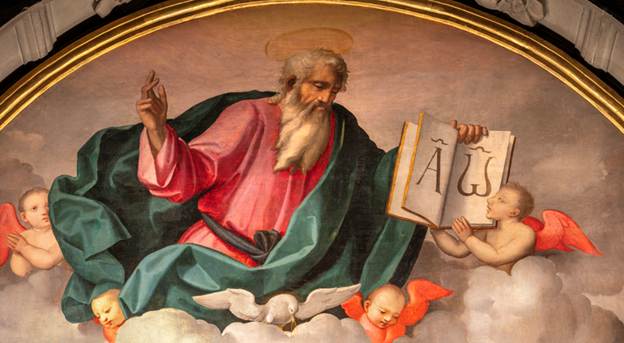
Then God said,“Let us make mankind in our image, in our likeness, so that they may rule over the fish in the sea and the birds in the sky, over the livestock and all the wild animals, and over all the creatures that move along the ground.” So, God created mankind in his own image,
in the image of God he created them; male and female he created them. Genesis 1: 26–27
Yes, we address God our Father with many names. YHWH, Elohim, El Shaddai, Jehovah Rapha. Another way I understand God’s relationship with all of us is as the Author of all creation, His living story. Many of us, through J.R.R Tolkien, read how he shaped Middle-earth with language, imagination, and design. God is THE Creator. The difference between Tolkien and THE Creator is infinite: Tolkien made a fictional world, while God authors reality itself.
The theologian Kevin Vanhoozer discusses God as the Author of His own story, naming it Theodramatic Theology.
What is Authorial Analogy?
A human author writes. God creates.
An author creates with words, while God creates when He speaks.
An author shapes the plot. God creates the plot as He writes our story.
An author writes the story from beginning to end, but God knows the end before our beginning.
God does not need ink; He creates with His Power.
In Genesis, when God speaks, light appears. When He speaks, life begins. Psalm 33 says, “By the word of the Lord were the heavens made.”
Three Types of Divine Authorship
Authorial Analogy can be explained in three ways.
- God as our divine author creates with order, beauty, meaning, and life. Authors have that goal as well.
- God shapes history by just creating and stepping back. Yet He chooses to join the story. In the Bible, God spoke to Abraham, sent prophets, became Christ, and took part in the story He writes.
- By speaking and working through human writers, God has given us Scripture. In this way His voice is heard in many times, places, and styles.
What About Human Freedom?
How can we be free if God is our Creator? This question is often asked. Are we merely puppets? I don’t think so. God does not do all the talking, keeping us silent. He wants to have a conversation. God speaks, and we should respond! Right away! I have experienced this: God calls, convicts, persuades, reveals, and teaches. This is how He heals us. God waits for us to respond. When we choose to listen and talk to God, our hearts soften. But the opposite is true as well: when we choose to resist, our hearts harden. God does not force this conversation; He waits for us to choose to join His story. He holds the whole story in His hands.
- We are responsible to God and others within the story God writes.
- God can stand outside His creation, just as an author is physically outside His story.
- Yet, God IS present within creation. Therefore, he can be compared to the author who steps into His own story.
The Bible
Where can we read God’s story? Open the Bible. We can read how He creates, makes covenants, and gives us shalom (peace) through His Word. Not only does God speak in the Bible, but He is present in the Bible because He is speaking directly to you. That is why I call Him the Author of all Creation. We live God’s story because He speaks, sustains, and guides.
“As Author, God is not limited by his created work … one authorial day is like a character’s thousand years (2 Pet. 3:8). The Author can open the text to any page, flip back and forth at will, and write himself into the drama of human history: God’s Word and Spirit are in created time but not of it.” Kevin Vanhoozer
Shall we pray?
Heavenly Father,
We weave fictions of our lives with words. We create myths without Your authorship. We welcome Your Words that build a holy place in our hearts while turning love into beautiful music. We still do not fully understand Your way. In Christ, the language You put in our hearts illuminates this dim world. May Your love always cleanse our minds and replenish us with joy. In Jesus’ precious name we pray. Amen.
Resources
Freeman, Austin M. “The Author of the Epic: Tolkien, Evolution, and God’s Story.” Zygon 56, no. 2 (2021): 500–516. EBSCOhost.
Hronich, Andrew. 2025. “God and Indiana Jones.” Liberty Theological Review 9, (1).
Settecase, Parker. “Don’t Write off the Absentee Author: Why the Problems of Divine Hiddenness and Neglect Don’t Destroy Vanhoozer’s Authorial Analogy.” Perichoresis 21, no. 4 (2023): 34–51. https://doi.org/10.2478/perc-2023-0030.