
All posts by Dee

Pastor Dee Loving‑Tackitt is a follower of Christ, devoted wife of forty‑three years, mother of three, and grandmother of five grandsons. She is the founding and Lead Pastor of The House of Prayer, a Spirit‑led ministry focused on grace, intercession, outreach, and creative discipleship. Her work includes international prayer initiatives, two national podcasts, street preaching, ministry in retirement communities, and Creative Discipling Classes for Women. She authors a daily Christian blog with an international readership. A lifelong worshiper through music, she sings with the Sweet Adelines, Hub City Harmony, and the Singing Women of Texas, West Chapter. Pastor Dee is pursuing her Doctor of Ministry in Biblical Studies at Liberty University, where she also earned her Master of Arts in Christian Ministry. She also holds a Bachelor of Music Education from West Texas A&M University.

Consider the Lilies: Walking the Prayerful Path of Trust

Matthew 6:28

I spent a beautiful afternoon with the Lubbock Christian Women’s Connection, and from the moment I walked in, I knew it would be special. One of our fearless leaders greeted me with such kindness, looked straight into my eyes, and said, “Dee Ann, we need you to be a table hostess.”

Now I will be honest with you—there is an old fear that sometimes tries to rise up in moments like that. It grabs hold of my words and makes them want to dance into a stutter. For just a second, I felt it coming. But instead of letting fear speak, I quietly reached for Jesus’ hand and said, “Of course.”

And oh, how the Lord provides.

Karen Wood became my buddy for the day. By God’s grace, I managed to get us both safely to the Country Club, and we were ready to celebrate sisterhood. But what meant the most was this—Karen leaned in and said so gently, “I’ve been a hostess before… we can do it together.”

Isn’t that just like Jesus?

I whispered a quiet thank-you to Him in that moment—for a sweet friend, for His steadying presence, and for the courage to step into a responsibility I might have once avoided.

The afternoon itself was rich with beauty. Lindy Woods filled the room with songs that seemed to settle right into our hearts, preparing us for what God had in store. Then we heard from Leana Neagle of Willis, Texas, whose message, “On the Heels of Grace,” felt like holy ground.

Her story of miraculous healing was truly unforgettable.

After surviving a horrific wreck—something she should not have lived through—she faced the very real possibility of losing her legs. Doctors doubted. Healing seemed uncertain. Even walking again felt out of reach. And yet, in that place of deep trial, she encountered a word she had never fully understood before: testify.

Through the power and mercy of God, not only did she keep her legs, but she went on to do what once seemed impossible—she walked a marathon. And there she stood before us, whole, strong, and full of faith, declaring the goodness of God.

It was more than a testimony—it was a living picture of grace in motion.

The theme of our gathering was flowers, and as I sat at the table, my heart turned to Scripture:

“And why are you anxious about clothing? Consider the lilies of the field, how they grow: they neither toil nor spin.”
— Matthew 6:28

At Table 4, we gathered as women carrying responsibilities, hopes, and even quiet burdens. And Jesus, knowing hearts like ours, pointed us to something as tender as a flower to teach us about trust.

Throughout Scripture, flowers quietly preach truth:

God’s Provision
Lilies do not strive or strain, yet God clothes them in beauty. If He tends to something so fleeting, how much more will He care for you?

Human Frailty
We are like flowers of the field—here for a moment, then gone. Yet the Word of our God stands forever.

Restoration and Hope
God causes deserts to bloom again. Dry places are never beyond His reach.

Love and Delight
Flowers in Song of Solomon remind us that we are not simply sustained—we are cherished and delighted in.

Flowers bloom for a season, but they return again and again. Their rhythm mirrors our own lives—flourishing, fading, and blooming again through the faithful hand of God.

And after hearing Leana’s story, those flowers seemed to say even more:

God restores what seemed lost.
God strengthens what seemed broken.
God brings life where there was once only fear.

So as I looked at the flowers on our table—and at the women gathered around it—I sensed the Lord gently whispering:

You are seen.
You are sustained.
You are deeply loved.

To the Lubbock Christian Women’s Connection, thank you for such a lovely afternoon, for your warm welcome, and for creating a space where faith and sisterhood bloom so beautifully.

May we all continue walking this Prayerful Path… learning to trust the One who tends every petal.


Prayer

Heavenly Father,

thank You for the gentle lessons You place all around us. In flowers, in friendships, and in testimonies of grace, You remind us that You are always at work.Help us to trust You the way the lilies do—without striving, without fear, simply resting in Your care. Thank You for stories like Leana’s that remind us You still heal, You still restore, and You still call us to testify to Your goodness.For every woman reading this, let Your peace settle deeply.
Where there is weariness, bring rest.
Where there is fear, bring courage.
Where there is dryness, bring new life.Teach us to bloom in every season and to walk faithfully wherever Your grace leads.We love You, Lord.
Amen.


The Moment Good News Broke In

The House of Prayer Bible Commentary

Bernie and I are so excited to begin a new journey together—we are writing a Bible commentary for The House of Prayer. We’re starting where our hearts always seem to go first: the Gospels, and especially the fast-moving, powerful account of Mark. What you’re reading here is a “commentary on the commentary,” a glimpse into our very first entry, Mark 1:1. Our prayer is that these reflections will not only inform but draw others closer to Jesus as His Word comes alive line by line.

The beginning of the gospel of Jesus Christ, the Son of God.

Mark 1:1

Some beginnings simply introduce a story, but others announce that everything is about to change. Mark wastes no time easing his readers in. With striking clarity and urgency, he opens: “The beginning of the gospel of Jesus Christ, the Son of God” (Mark 1:1). In a single line, he sets the tone, declares his purpose, and invites us to step into something far greater than a narrative—a divine revelation unfolding in real time.

From the earliest words of Scripture, we see how powerful a beginning can be. Genesis 1:1 tells us who God is and what He has done with sweeping authority. Likewise, Mark follows this pattern of clarity, but with remarkable brevity. He answers the essential questions immediately. The “who” is Jesus Christ. The “what” is the gospel—the good news. Yet, even in this simplicity, there is depth that cannot be contained in one sentence. Mark does not aim to say everything at once; instead, he opens a doorway into a story that will reveal its fullness as it unfolds.

The phrase “the Son of God” carries both theological weight and a sense of mystery. Some early manuscripts omit it, yet the Gospel itself resounds with its truth. From the voice of the Father at Jesus’ baptism to the confession at the cross, Mark consistently reveals Jesus’ divine identity. Even when Jesus does not frequently speak the title Himself, His actions, authority, and obedience testify to it. He is not merely a teacher or prophet—He is the One through whom God’s power is made known, the obedient Son who walks the path of suffering and surrender for the sake of the world.

What is especially striking is Mark’s use of the phrase “the beginning.” This is not just a starting point in time; it is the launch of something eternal. It reaches back into the promises spoken by the prophets, now coming into fulfillment. It stands firmly in the present moment, where God’s redemptive plan is actively unfolding. And it stretches into the future, where the full impact of this good news will be realized. Mark’s beginning is not confined to a moment—it is the inauguration of a kingdom.

And then there is the word “gospel.” Mark introduces it without explanation, allowing its meaning to emerge through the life, ministry, death, and resurrection of Jesus. The good news is not delivered as a definition, but as a living reality. It is seen in healing, heard in teaching, and ultimately revealed in sacrifice and victory. Mark invites us not just to understand the gospel, but to encounter it.

As readers, we are not positioned as distant observers. From the very first verse, we are drawn in. We are invited to recognize who Jesus is, to receive the good news He brings, and to follow where this beginning leads. Mark’s Gospel reminds us that when God begins something, it is never small. It carries the weight of eternity and the power to transform every life it touches.

This is where the good news begins—and it is where our salvation begins as well.

Prayer
Heavenly Father,

thank You for the power and clarity of Your Word. Thank You for sending Jesus, the Son of God, as the good news our hearts long for. Help us to see beyond the surface and recognize the depth of what You have begun. Draw us into Your story, and give us faith to follow where You lead. Let Your truth shape us, and let Your gospel come alive in our lives each day. In Jesus’ name, amen.

Resources:

Broadman Bible Commentary, vol. 8. Nashville, TN: Broadman Press, 1969.

Rydelnik, Michael, and Michael Vanlaningham, eds. The Moody Bible Commentary. Chicago, IL: Moody Publishers, 2014.

Further Reading

  • Genesis 1:1 – “In the beginning, God created the heavens and the earth.”
  • Isaiah 40:3 – “A voice of one calling: ‘In the wilderness prepare the way for the Lord…’”
  • Malachi 3:1 – “I will send my messenger, who will prepare the way before me…”
  • Mark 1:11 – “And a voice came from heaven: ‘You are my Son, whom I love; with you I am well pleased.’”

Cast It Anyway: Trusting God in the Unknown

by Dee Tackitt

Most mornings, I grind wheat berries and begin making homemade bread. It is a long process. The grain has been planted, grown, harvested, ground, mixed, and kneaded—long before it ever reaches my kitchen table. And even then, I still have to trust the process. I place the dough aside, not rushing it, not forcing it… just waiting.

There is a letting go in breadmaking.
You do your part—and then you trust what you cannot see.

Ecclesiastes 11 speaks to that same kind of faith.


Ecclesiastes 11:1-6

Ship your grain across the sea;
    after many days you may receive a return.
Invest in seven ventures, yes, in eight;
    you do not know what disaster may come upon the land.

If clouds are full of water,
    they pour rain on the earth.
Whether a tree falls to the south or to the north,
    in the place where it falls, there it will lie.
Whoever watches the wind will not plant.
    Whoever looks at the clouds will not reap.

As you do not know the path of the wind,
    or how the body is formed[a] in a mother’s womb,
so you cannot understand the work of God,
    the Maker of all things.

Sow your seed in the morning,
    and at evening let your hands not be idle,
for you do not know which will succeed,
    whether this or that,
    or whether both will do equally well.


🌊 Cast Your Bread (vs. 1)

“Cast your bread upon the waters…”

At first, it sounds like a loss. Like letting go of something valuable without a guarantee of return.

But this is not waste—it is trust.

The bread we cast is the Word of God.
The waters are the movement of the Holy Spirit.

And here is the quiet promise:
When the Word is released into the current of the Spirit, God carries it where it needs to go.

You may not see the result today.
You may not even recognize it when it returns.

But it will not be wasted.


🌱 Don’t Hold Back (vs. 2)

“Invest in seven ventures, yes, in eight…”

Live open-handed.

Love more than feels safe.
Serve in more places than feel comfortable.
Speak truth even when you don’t know how it will be received.

Seven reminds us of God’s perfect work.
Eight reminds us of resurrection—new life where none seemed possible.

When we sow into the gospel—Jesus Christ and Him crucified—we are sowing into eternal life.

And you don’t know which seed will take root…
or if God will cause many to flourish at once.


🌧️ Trust Where It Lands (vs. 3)

“If clouds are full of water, they pour rain…
If a tree falls… there it will lie.”

Some outcomes are simply not yours to control.

Life does not always unfold neatly.
Ministry does not always land where you hoped.
People do not always respond the way you prayed they would.

And yet—God is not hindered by where things fall.

Wherever the seed lands,
wherever the rain pours,
God is still able to bring life.


🌬️ Don’t Wait for Perfect Conditions (vs. 4)

“Whoever watches the wind will not plant…”

If we wait until everything feels certain, we will never begin.

There will always be:

  • One more reason to hesitate
  • one more unknown
  • one more “what if”

But faith does not wait for perfect weather.

Faith plants anyway.
Faith sows anyway.
Faith trusts anyway.


👶 Rest in the Mystery (vs. 5)

“As you do not know… how the body is formed in a mother’s womb…”

There are sacred things only God understands.

A baby growing in secret.
The movement of the wind.
The quiet work of God beneath the surface of your obedience.

You may not see it forming.
You may not feel progress.

But something holy is happening.

God is working—deep, unseen, and sure.


🌅 Keep Sowing (vs. 6)

“Sow your seed in the morning, and at evening let your hands not be idle…”

This is steady faith.

Not rushed.
Not anxious.
Just faithful.

Morning—sow.
Evening—sow again.

Pray.
Encourage.
Speak truth.
Show up.

Because you do not know which effort will bear fruit…

“…or whether both will do equally well.”

And sometimes—
in the kindness of God—
Both do.

A Prayer for the Path

Heavenly Father,

We come to You with open hands.
So much of what we do feels like casting—releasing what we love into places we cannot control.

Teach us to trust You in the letting go.

When we sow Your Word, remind us that it is never wasted.
When we feel uncertain, steady our hearts in Your promises.
When we are tempted to wait for perfect conditions, give us courage to act in faith.

Lord, we confess—we like to understand everything.
But You are the Maker of all things, and Your ways are higher than ours.

So help us rest in the mystery of Your work.

As a child is formed in the womb, unseen but full of life,
let Your purposes grow in ways we cannot yet see.

Give us diligence to sow in the morning and in the evening.
Keep our hands from becoming idle and our hearts from growing weary.

And when the harvest comes—whether soon or after many days—
remind us that every good thing has come from You.

We trust You with the seed.
We trust You with the outcome.
We trust You with the waiting.

In Jesus’ name,
Amen.

Resources:

Beetham, Christopher A., and Nancy L. Erickson, eds. The NIV Application Commentary on the Bible. NIV Application Commentary. Grand Rapids, MI: Zondervan Academic, 2024.

Everett, Gary H. The Book of Ecclesiastes. Study Notes on the Holy Scriptures. 2011.

Hale, Thomas. The Applied Old Testament Commentary. Colorado Springs, CO; Ontario, Canada; East Sussex, England: David C. Cook, 2007.

Scripture for Further Reflection

  • Proverbs 11:24–25 – The principle of generous sowing and return
  • Isaiah 55:10–11 – God’s Word accomplishing His purpose
  • Hosea 10:12 – Sowing righteousness and reaping steadfast love
  • Matthew 13:3–9, 18–23 – The parable of the sower
  • Luke 16:10 – Faithfulness in small things
  • 1 Corinthians 3:6–7 – God gives the increase
  • 2 Corinthians 9:6–8 – Sowing generously
  • Galatians 6:7–9 – Reaping in due season
  • James 1:5 – Trusting God’s wisdom
  • Hebrews 11:1 – Faith in what we do not see

A Threefold Cord: A Prayer Path for Marriage

by Dee Tackitt

Ecclesiastes 4:9–12

April 17 marks Bernie’s and my 44th wedding anniversary.

Forty‑four years of marriage is not marked by perfection, but by perseverance. It is a sacred testimony to commitment, mutual care, and God’s sustaining presence. Scripture speaks directly to couples walking the long road of shared life, and few passages do so as practically and tenderly as Ecclesiastes 4:9–12.

Ecclesiastes 4:9-12 New International Version (NIV)

Two are better than one,
    because they have a good return for their labor:
10 If either of them falls down,
    one can help the other up.
But pity anyone who falls
    and has no one to help them up.
11 Also, if two lie down together, they will keep warm.
    But how can one keep warm alone?
12 Though one may be overpowered,
    two can defend themselves.
A cord of three strands is not quickly broken.

This passage moves beyond romance into the enduring strength of authentic partnership. It describes marriage not as a fleeting feeling, but as a shared life—stronger, steadier, and far more resilient when God Himself is woven into the bond.

This prayer path invites you to pause, reflect, and pray through marriage—your own, or those you hold up before the Lord.


Step One: Gratitude for Partnership

“Two are better than one…”

Marriage begins with God’s design for partnership. From the first days, marriage is about shared work, shared burdens, and shared joy. Over time, the meaning of “together” becomes richer and more layered than we ever imagined.

Forty‑four years ago, Bernie and I said yes to a journey we could not fully see. Today, I understand more deeply what Ecclesiastes affirms: two truly are better than one—not because life is easier, but because it is shared.

Prayer

Lord,
Thank You for the gift of partnership.
Thank You for the one You have placed beside me—
to walk, to work, to endure, and to rejoice with me.
Help us never take for granted the strength that comes from walking together.
Amen.


Step Two: Spiritual Oneness as the Foundation

“…a threefold cord is not quickly broken.”

Marriage is more than physical union; it is a spiritual oneness formed as both husband and wife surrender to God and to one another. Scripture describes marriage as becoming “one flesh”—a union of soul, purpose, and direction.

Over decades, this oneness deepens. “Me and my” quietly shifts into “us and our.” Decisions, prayers, losses, and hopes become shared holy ground.

Prayer

God,
Bind our lives together with Your presence.
Teach us to be one in heart, in mind, and in purpose.
Where selfishness creeps in, replace it with surrender.
Be the third strand that strengthens and steadies our union.
Amen.


Step Three: Mutual Commitment Through Every Season

“If one falls, the other lifts them up…”

Lasting marriage is sustained by covenant commitment. Scripture teaches that the marriage bond endures until death, and couples who walk together faithfully often share this quiet resolve: we do not speak the language of escape.

Forty‑four years includes seasons of joy and seasons that test sincerity. Surviving those seasons does not diminish love—it proves its authenticity.

Prayer

Faithful God,
Thank You for the gift of commitment.
Help us stand firm when life is difficult
and gentle with one another when weakness shows.
Teach us to lift one another when one stumbles,
and to remain faithful in every season.
Amen.


Step Four: Intentional Love in Daily Practice

“They have a good reward for their labour…”

Love that lasts is love that is practiced. Scripture reminds us to treat one another as we wish to be treated—to watch out for one another’s good, and to keep love active, not assumed.

Simple acts sustain great marriages:

  • time together
  • kind words
  • affection
  • forgiveness
  • laughter
  • remembering to say, “I love you”

These practices are not small; they are sacred.

Prayer

Lord,
Teach us to love intentionally.
Help us choose kindness, patience, and forgiveness every day.
May our words build, our actions protect,
and our love reflect Yours.
Amen.


Step Five: Growing Companionship Over Time

One of the quiet surprises of long marriage is this: your spouse becomes more interesting, not less. Shared history, mutual endurance, and God’s shaping work deepen companionship in ways no early romance can yet imagine.

Decades together reveal strengths, wisdom, humor, and grace that only time can uncover.

Prayer

God of all seasons,
Thank You for the gift of growing companionship.
Help us continue to see one another with curiosity, honor, and gratitude.
May time deepen our love rather than dull it.
Amen.


The Vertical Anchor: God at the Center

Marriage flourishes when the vertical relationship with God anchors the horizontal relationship between husband and wife. God promised to walk with us from the day of our vows. When we lean into Him together, our unity becomes steady and God‑honoring.

The threefold cord—your love, your spouse’s love, and God’s faithful presence—is indeed not easily broken.


Closing Blessing & Reflection

Forty‑four years of marriage testify to what Scripture promises:
that spiritual oneness, mutual commitment, intentional love, growing companionship, and God’s sustaining presence create something increasingly beautiful with time.

May every marriage placed before the Lord—young or seasoned—be strengthened by His grace, anchored in His truth, and woven together by His faithful hand.

When Foxes Find a Home and Jesus Does Not

Two foxes have made their home right here on 93rd Street in the middle of Lubbock, Texas. City streets, traffic, porch lights, barking dogs — none of it has discouraged them. They trot across our yards with confidence, slipping between fences as if they’ve lived here forever. And honestly, they probably have. (picture by Ricardo Martinez)

Foxes are astonishingly adaptable creatures. The red fox — the most widespread fox species in the world — thrives in environments ranging from Arctic tundra to deserts, and even in major cities and suburbs. They are small, swift, clever mammals with pointed ears, narrow snouts, and long bushy tails that help them balance and stay warm.

Watching Foxes in the Middle of the City

Watching them here, in the middle of a city, stirred something deep in me. Because Jesus once said something about foxes — and it wasn’t about their cleverness or beauty. It was about home.

“Foxes have dens and birds of the air have nests, but the Son of Man has nowhere to lay his head.” — Matthew 8:20

Jesus and the Cost of Following

This statement wasn’t poetic sadness. It was a challenge — a response to a scribe who boldly declared, “I will follow you wherever you go.” Jesus didn’t applaud his enthusiasm. Instead, He warned him: You don’t know what you’re asking.

Scholars note that Jesus wasn’t merely talking about physical homelessness. He was revealing the deeper reality of His mission — rejection by the very people who should have welcomed Him as Messiah-King. His lack of a place to lay His head was part of His humiliation as the Son of Man, the Lord of creation who walked the earth as a wanderer. Following Him meant embracing that same dispossession, that same reversal of worldly priorities.

Feeling Unmoored When Jesus Calls

And that’s where this touched my heart. Because when Jesus called my name, I didn’t feel homeless — but I did feel unmoored. The things that once felt important no longer held me. The places where I used to “lay my head” — emotionally, spiritually, socially — didn’t fit anymore. My heart started following Jesus in a way that loosened my grip on everything else.

So here I am, watching two foxes who have found a home in the middle of Lubbock, while the One I follow had none. And somehow, that makes sense to me.

What Home Really Is

Because the more I follow Him, the more I realize: Home isn’t where I live. Home is who I follow.

And like those foxes slipping through the fences on 93rd Street, I’m learning to move lightly through this world — not rootless, but free.

A Moment of Invitation

Maybe as you read this, something in your own heart stirred — the same way those foxes stirred mine. Maybe you’ve felt that gentle pull, that holy disconnection from what used to define you. Maybe you’ve sensed Jesus calling your name, inviting you into a life where “home” is no longer a place you build but a Person you follow.

If so, hear this clearly: Jesus still calls disciples the same way He always has — personally, directly, lovingly, and with purpose. He doesn’t ask you to clean yourself up first. He doesn’t ask you to prove anything. He simply says, “Follow Me.”

And following Him will change you. It will loosen your grip on what once felt important. It will reorient your priorities. It will give you a new kind of belonging — not rooted in geography or status, but in grace.

If you sense that call today, don’t ignore it. Open your heart. Say yes. Let Him lead you into the kind of life where even if you have “nowhere to lay your head,” you are never without a home.


Closing Prayer

Heavenly Father,

We love you, Jesus. You are the One who calls us out of what is familiar and into what is eternal. You are the One who walked this world without a place to lay Your head, so that we could find our true home in You.

Today, I lift up every heart reading these words — the searching heart, the restless heart, the weary heart, the heart that feels the tug of Your voice. Draw them close. Speak their name. Give them courage to follow wherever You lead.

Loosen our grip on what cannot save us, and anchor us in the love that never lets go. Make us disciples who walk lightly in this world, but deeply in Your presence.

In Jesus holy name we pray,

Amen.

Related Scriptures

These verses echo the themes of discipleship, surrender, following Jesus, and the cost of leaving behind what once felt like “home.”

• Matthew 8:19–20 — Then a teacher of the law came to him and said, “Teacher, I will follow you wherever you go.” Jesus replied, “Foxes have dens and birds have nests, but the Son of Man has no place to lay his head.”

• Luke 9:57–62 — Jesus calls His followers to radical, immediate obedience.

• Matthew 16:24–25 —Then Jesus said to his disciples, “Whoever wants to be my disciple must deny themselves and take up their cross and follow me. For whoever wants to save their life will lose it, but whoever loses their life for me will find it.”

• Philippians 3:7–8 — Paul counts all things as loss compared to knowing Christ.

• Hebrews 13:14 — “For here we have no lasting city, but we seek the city that is to come.”

• 1 Peter 2:11 — Believers are “sojourners and exiles” in this world.

• John 10:27–28 — “My sheep listen to my voice; I know them, and they follow me. I give them eternal life, and they shall never perish; no one will snatch them out of my hand.”

• Psalm 84:1–4 — Blessed are those who dwell in God’s presence; He is our true home.

• Psalm 90:1 — “Lord, You have been our dwelling place in all generations.”

• Revelation 21:3 — God will dwell with His people; home is ultimately with Him.


Resources

Bruce, F. F. Hard Sayings of Jesus: The Hard Sayings Series. Downers Grove, IL: IVP Academic, 2025.

Chamblin, J. Knox. Matthew: A Mentor Commentary. Ross-shire, Great Britain: Mentor, 2010. Boring, M. Eugene.

“The Gospel of Matthew.” In New Interpreter’s Bible, edited by Leander E. Keck, Vol. 8. Nashville: Abingdon Press, 1994–2004.

Empowered, United, Sent

When the Spirit Comes and the Church Goes

Opening Scripture

“But you will receive power when the Holy Spirit has come upon you, and you will be my witnesses in Jerusalem and in all Judea and Samaria, and to the end of the earth.”
Acts 1:8 (ESV)


After Jesus rose from the grave and ascended into heaven, the disciples entered a new and unfamiliar season. They were no longer walking beside the Teacher they loved, nor hearing His voice face to face. Instead, they were told to wait.

Jesus instructed them to remain in Jerusalem for “the promise of the Father,” assuring them they would soon be “baptized with the Holy Spirit” (Acts 1:4–5). What they were waiting for was not clarity of plans, political restoration, or earthly power—but divine empowerment. The mission would continue, but not by their strength.

The Day Everything Changed

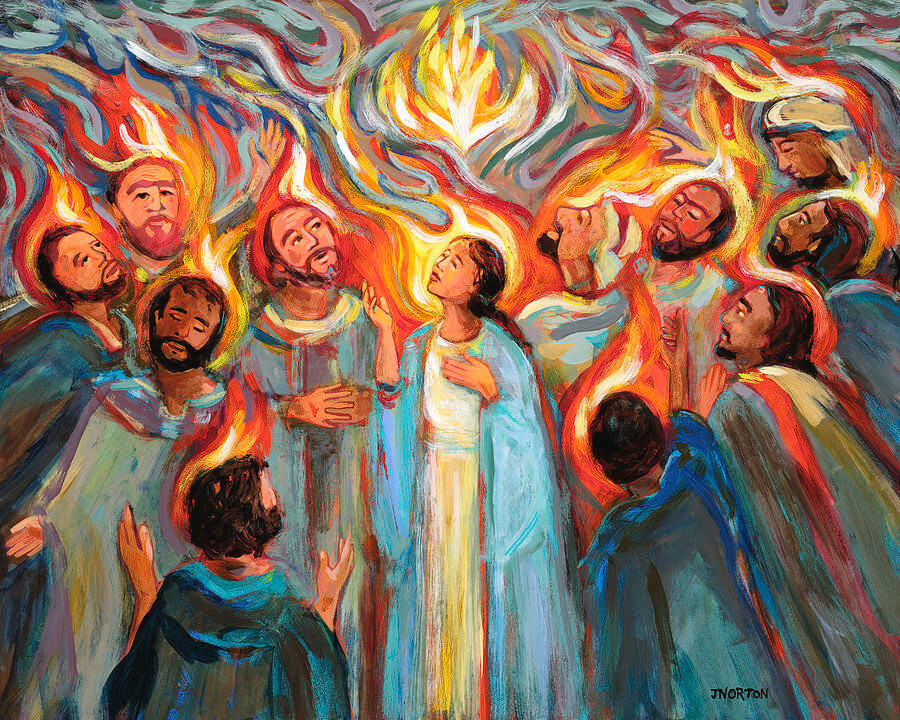
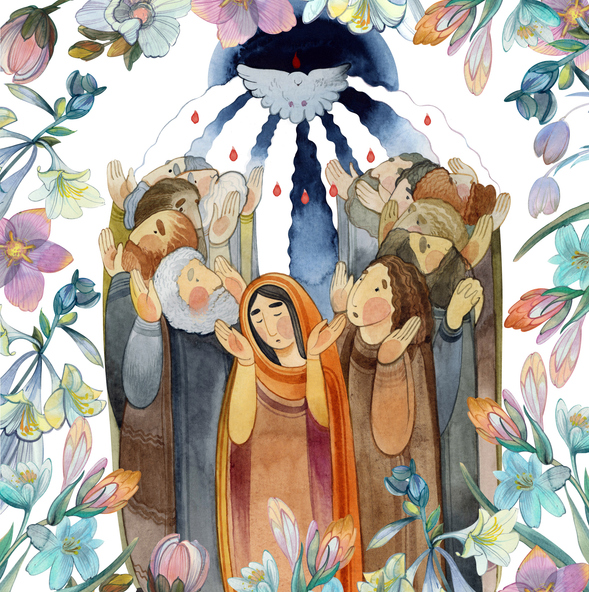
When Pentecost arrived, Scripture tells us the disciples were gathered together when “a sound like a mighty rushing wind” filled the house, and divided tongues of fire rested on each one of them (Acts 2:1–3). They were all filled with the Holy Spirit and began to speak as the Spirit enabled them (Acts 2:4).

What began quietly in prayer erupted into public witness. The sound drew a crowd, and the miracle of many languages proclaimed a single truth: God was doing something new. The Church was being born—not by organization or strategy, but by the Spirit’s power.

Peter stood and explained that what was happening fulfilled the ancient promise spoken through the prophet Joel—that God would “pour out my Spirit on all flesh” (Acts 2:16–18). Sons and daughters, young and old, servants and free—this gift was no longer limited to a few. God’s Spirit was now being poured out on all who believed.

From “With” to “In”

This moment did not happen without preparation. Jesus had spoken often about the coming Spirit. He promised the disciples a Helper—the Spirit of truth—who would be with them and, soon, in them (John 14:16–17). The Spirit would teach them, remind them of Jesus’ words, convict the world of sin and righteousness, and guide believers into truth (John 14:26; John 16:8, 13).

Pentecost marks the shift from temporary visitation to permanent indwelling. Where the Spirit once came upon select individuals for specific moments, He now took up residence in every believer. The Church’s identity was no longer tied to a location or a leader walking on earth, but to the abiding presence of God Himself.

One Body, One Spirit

This gift was not limited to Jerusalem. As the gospel moved outward, the Holy Spirit fell upon Gentile believers as well, confirming that God’s promise extended beyond cultural and ethnic boundaries (Acts 10:44–48). Scripture declares that “in one Spirit we were all baptized into one body”—Jew and Greek, slave and free (1 Corinthians 12:13).

Those who believed were sealed with the Holy Spirit, who became the guarantee of their inheritance in Christ (Ephesians 1:13–14). The Spirit did not merely empower the Church for mission—He united it, marked it, and secured it.

Living Clothed with Power

The same Spirit poured out at Pentecost dwells in believers today. We are not called to live the Christian life on memory alone—remembering what Jesus once did—but on power from heaven, alive and active within us.

The Church does not move forward by confidence in itself, but by surrender to the Spirit. We testify not because we are sufficient, but because God has made us His witnesses. Clothed with power, we live, speak, and serve for the glory of Christ who reigns.


Closing Prayer

Father God,
We thank You for the promise fulfilled at Pentecost, when You poured out Your Holy Spirit and birthed the Church. Thank You that we are not left to walk this life alone or in our own strength. Clothe us again with power from on high. Teach us to listen, to wait, and to walk in step with Your Spirit. Make us faithful witnesses—at home, in our communities, and wherever You send us. May our lives give evidence that Jesus reigns and that Your Spirit lives within us. We pray this in the name of Jesus, our risen and enthroned King.
Amen.


Bible Referenced

Acts 1:4–8
Jesus instructs the disciples to wait for the promise of the Father and promises power through the Holy Spirit to be His witnesses.

Acts 2:1–13
The Holy Spirit comes at Pentecost with wind and fire, filling the disciples and marking the birth of the Church.

Acts 2:16–18
Peter explains Pentecost as the fulfillment of Joel’s prophecy that God would pour out His Spirit on all people.

John 14:16–17
Jesus promises the Helper, the Spirit of truth, who would move from dwelling with believers to living in them.

John 14:26
Jesus teaches that the Holy Spirit would teach believers and remind them of everything Christ said.

John 16:7–15
Jesus explains the Spirit’s role in convicting the world and guiding believers into all truth.

Acts 10:44–48
The Holy Spirit is poured out on Gentile believers, confirming their inclusion in God’s redeemed people.

1 Corinthians 12:13
All believers are baptized by one Spirit into one body, uniting them across divisions.

Ephesians 1:13–14
Believers are sealed with the Holy Spirit, who serves as the guarantee of their inheritance in Christ.

References

Fruchtenbaum, Arnold G. The Messianic Bible Study Collection. Tustin, CA: Ariel Ministries, 1983. Pages 160:5–6.

Longenecker, Richard N. “The Acts of the Apostles.” In The Expositor’s Bible Commentary: John and Acts, edited by Frank E. Gaebelein, 231–352. Grand Rapids, MI: Zondervan Publishing House, 1981. Page 271.

Risen, Seated, Reigning

Why the Throne of Christ Changes Everything

“God raised him from the dead and seated him at his right hand in the heavenly places, far above all rule and authority and power and dominion, and above every name that is named, not only in this age but also in the one to come.”
Ephesians 1:20–21 (ESV)

The resurrection proclaims that Jesus is alive.
The ascension declares where he is—and what that means for the world, the church, and every believer.

The reign of King Jesus does not end at the empty tomb. It moves upward—to the throne of heaven—where the risen Jesus is now seated at the right hand of the Father, reigning, interceding, and securing the future of God’s people. The ascension is not a theological footnote; it is the crowning moment of Christ’s redeeming work and the hinge upon which Christian hope turns.


The Ascension: From Resurrection to Enthronement

Luke describes the ascension of Jesus in Acts 1:9–11, where Christ is lifted up and taken from the disciples’ sight by a cloud. Two angels immediately reframe the moment: “This Jesus, who was taken up from you into heaven, will come in the same way as you saw him go.” The ascension is not Jesus’ disappearance—it is his exaltation.

After his resurrection, Jesus declares, “All authority in heaven and on earth has been given to me” (Matthew 28:18). That authority is not merely promised; it is exercised. The ascension marks the moment when the risen Christ takes his place as the installed King over creation.

Paul describes this cosmic enthronement in Ephesians 1:19–23, proclaiming that God seated Christ “far above all rule and authority and power and dominion.” Jesus is not waiting to reign—he is reigning now.


Enthroned King, Present Lord

The throne of Christ reveals that redemption has moved from accomplishment to application. Acts 2:32–36 presents Jesus as the fulfillment of Psalm 110: the Davidic King exalted to God’s right hand until his enemies are fully subjected.

This kingship is not symbolic. Philippians 2:9–11 announces that God has exalted Jesus and bestowed on him the name above every name. His reign is already established, though not yet universally acknowledged. Resistance to Jesus, therefore, is not legitimate rebellion but futile denial—his authority is already settled by God.

To confess “Jesus is Lord” is to affirm that the decisive victory has already been won.


Seated—and Still Praying: Christ’s Ongoing Intercession

Crucially, the enthroned Christ is not distant or passive. Scripture repeatedly insists that Jesus reigns as an interceding High Priest.

Romans 8:34 affirms that Christ “is at the right hand of God, who indeed is interceding for us.” Hebrews 4:14–16 presents Jesus as the great High Priest who has passed through the heavens and invites believers to draw near to the throne of grace.

Jesus does not cease being compassionate when he ascends. The one who prayed for his followers in John 17 continues that priestly ministry in heaven. Whether understood as active petition, covenantal representation, or both, the biblical witness is clear: the throne of Christ is a throne of intercession.

Believers approach a living Savior who speaks on their behalf.


United with the Ascended Christ

The ascension reshapes not only Christology but Christian identity. Paul declares that God has raised believers up and seated them with Christ in the heavenly places (Ephesians 2:4–7). Union with Christ does not stop at the cross or the resurrection—it extends into his exaltation.

Colossians 3:1–4 calls believers to orient their lives around this reality: “Seek the things that are above, where Christ is, seated at the right hand of God.” Even amid suffering, oppression, or weakness, believers belong to a greater reality already secured in Christ’s reign.

Christian hope is participation in the life of the enthroned Lord.


What If Jesus Had Not Taken the Throne?

To imagine Jesus risen but not enthroned exposes just how essential the ascension is to Christian faith. Without the ascension, redemption would remain unfinished and the incarnation incomplete, leaving Christ’s saving work suspended rather than consummated. Humanity would have no glorified representative in heaven, no assurance that our nature has been welcomed into God’s presence. Christ’s victory over sin, death, and evil would remain a future hope rather than a present reality, and the promised outpouring of the Holy Spirit—sent at Christ’s behest after his exaltation (John 16:7; Acts 2)—would not occur. In such a scenario, the church would stand without its living and reigning Head, lacking the authority, confidence, and assurance that flow from the knowledge that Jesus even now rules from the throne of heaven. The ascension confirms that Jesus’ work is not merely past (the cross), nor only future (his return), but present. He reigns now.


Why the Throne of Christ Changes Everything

Because Jesus is risen, death has been decisively defeated; because he is seated at the right hand of the Father, redemption is secure and complete. Because he reigns, evil’s days are numbered, and its power is ultimately limited, and because he intercedes, believers may draw near to God with confidence and hope. Because Jesus will return, history is not aimless but moving toward a promised and glorious end. The ascension, therefore, is not Jesus leaving the world but Jesus taking his rightful place over it, and to live as Christians is to live under the gracious rule of the King who reigns, prays, and promises, “Surely I am with you always, to the end of the age.”

Prayer

Heavenly Father,

We rejoice over Your Son, risen and reigning Lord Jesus,
We confess that you, Jesus, are not only the Savior who died and rose again,
but the King who now sits at the right hand of the Father,
enthroned in glory, authority, and mercy.

We thank you that your throne is not distant or cold,
but a throne of grace—
where you intercede for us,
sustain us in weakness,
and shepherd your people with perfect love.

Help us to live as those who know where our King is seated.
Lift our eyes above fear, injustice, and uncertainty,
and teach us to seek the things that are above,
where our life is hidden with you.

Strengthen your church to trust your present reign,
to rely on your finished work,
and to walk faithfully until the day you return in glory.

Until that day, keep us anchored in hope,
confident in your victory,
and bold in love and obedience.

We pray all this
in the name of Jesus Christ—
our risen, seated, and reigning Lord.
Amen.

Scripture References:

Primary Texts

  • Acts 1:9–11 – Jesus’ ascension and the promise of his return
  • Matthew 28:18–20 – All authority given to the risen Christ
  • Ephesians 1:19–23 – Christ seated above all power and authority
  • Acts 2:32–36 – Peter proclaims Jesus exalted at God’s right hand
  • Philippians 2:9–11 – The exaltation of Christ and universal confession of his lordship

Christ’s Ongoing Intercession

  • Romans 8:34 – Christ interceding at the right hand of God
  • Hebrews 4:14–16 – Jesus, our great High Priest, inviting us to the throne of grace
  • Hebrews 7:25 – Christ always living to make intercession

Union with the Ascended Christ

  • Ephesians 2:4–7 – Raised and seated with Christ
  • Colossians 3:1–4 – Seeking the things above, where Christ is seated

Victory and Hope

  • Colossians 2:15 – Christ’s triumph over rulers and authorities
  • Revelation 1:17–18 – The living One who holds the keys of death and Hades

Theological Resources:

  • Patrick Schreiner, The Ascension of Christ: Recovering a Neglected Doctrine, ed. Michael F. Bird, Snapshots series (Bellingham, WA: Lexham Press, 2020), 88–89.
    (On the ascension as the climactic fulfillment of Davidic kingship and Christ’s cosmic reign.)
  • Matthew Levering, Engaging the Doctrine of Jesus (and Mary): A Traditional, Historical-Critical, and Mariological Christology (New York, NY: Cascade Books, 2025).
    (On the exaltation of Christ within the breadth of classical and historical Christology.)
  • Glenn D. Butner Jr., Christological Dogmatics: A Theological Witness to the Person and Work of Christ (Grand Rapids, MI: Baker Academic, 2026), 256–257.
    (On Christ’s threefold office—prophet, priest, and king—fulfilled and expanded in the ascension.)
  • Stavan Narendra John, Thomas F. Torrance’s Theology of the Ascension: A Constructive Account (New York, NY: Cascade Books, 2025), 50–51.
    (On the ascension as the necessary completion of the incarnation and the exaltation of human nature in Christ.)
  • M. Ovey, “Ascension [and Heavenly Session of Christ],” in New Dictionary of Theology: Historical and Systematic, ed. Martin Davie et al. (London; Downers Grove, IL: Inter-Varsity Press; InterVarsity Press, 2016), 67–68.
    (On the ascension as present victory, the grounding of Christian assurance, and Christ’s ongoing heavenly session.)

Waiting, Whispers, Wind

Remembering Jesus in the Days Between Promise and Power

“All these with one accord were devoting themselves to prayer, together with the women and Mary the mother of Jesus, and his brothers.”
Acts 1:14 (ESV)

There is something holy about waiting.

Waiting strips away our illusion of control. It slows the body and sharpens the heart. And waiting—especially when God has promised something but has not yet revealed how it will arrive—often becomes the place where memory does its deepest work.

After Jesus ascended into heaven, his followers were left with nothing but a promise and ten long days.

Ten days between miracle and mission.
Ten days between “You will receive power” and the moment that power arrived.
Ten days in an upper room, praying, remembering, wrestling, hoping.

Scripture tells us that about 120 believers gathered together during that time, devoting themselves “with one accord to prayer and supplication.” This was not passive silence or polite religious ritual. Their waiting was active, communal, and full of soul-work.

They prayed.
They searched the Scriptures.
They talked.
They made decisions—Peter even stood to address the need to replace Judas, guiding the group through painful reflection and practical obedience.

But beyond what is recorded, we are invited to wonder: What did they talk about when prayers ended and night set in?
What memories of Jesus filled the room when the oil lamps flickered low?
What stories surfaced again and again while they waited for the Spirit he promised?


A Room Filled with Memory

If we could step quietly into that upper room, we might hear whispers of shared remembrance.

Someone would recall how Jesus welcomed them—not as servants earning favor, but as friends invited into his life. He didn’t simply teach theology; he walked with them, ate with them, noticed them. His presence created a space where people felt safe to confess fear, failure, and doubt.

Perhaps Matthew spoke of the day Jesus looked directly at him and said, “Follow me,” while everyone else still saw a traitor. Perhaps Peter sat silently, remembering the look Jesus gave him after the rooster crowed—and later, the breakfast by the sea where grace restored him more deeply than shame ever wounded.

These memories mattered. They were not sentimental nostalgia; they were the soil in which courage would grow.


Remembering His Compassion

The disciples could not forget his compassion—it was impossible to miss. The Gospels describe Jesus being “moved with compassion” again and again, a phrase reserved uniquely for him. They had watched it happen in real time.

They remembered the crowds who were hungry, when Jesus refused to send them away and instead invited his disciples to participate in the impossible. They remembered children climbing into Jesus’ arms while adults looked on in confusion. They remembered the desperate mother who refused to leave, the leper who dared to come close, the weeping sister standing at a sealed tomb.

In the upper room, those stories would have sounded different now.

Jesus wasn’t just compassionate then—his compassion was the pattern they were being shaped to follow.


His Tears, His Anger, His Courage

Someone may have spoken quietly about how Jesus wept—not privately, not behind closed doors, but openly. He cried at Lazarus’s tomb. He wept over Jerusalem. He allowed sorrow to be seen.

For men raised to believe strength meant stoicism, this would have reshaped everything.

They had also seen his righteous anger, his resolve in the face of suffering, his fear in the garden, his surrender on the cross. Waiting for the Spirit did not mean suppressing emotion—it meant learning how God meets us within it.

In those ten days, they were processing their own grief and confusion, measuring it against the emotional truth they had witnessed in Jesus.


Remembering How He Prayed

Prayer filled the upper room because prayer had filled their years with Jesus.

They remembered mornings when he withdrew to pray while they slept. Nights when he prayed so long they struggled to stay awake. The longest prayer of all—the one he prayed before his arrest—ringing in their ears now as they gathered together.

He had prayed for them.
He had prayed for unity.
He had prayed for future believers they had not yet met.

Now they were doing what he had always done: turning toward the Father together.


The Wait Before the Fire

Pentecost itself would bring wind, fire, and languages from heaven—the fulfillment of a feast that once celebrated the first fruits of harvest and now marked the birth of the Church. God would write his law not on stone, but on hearts alive with the Spirit.

But before the fire came, there was memory.

Before the power came, there was prayer soaked in remembrance.

The Church was not born from strategy or urgency, but from a people who knew Jesus—who had walked with him, watched him love, and learned how to wait together.


An Invitation for Us

Their ten days become an invitation for us.

What if waiting is not wasted time?
What if remembrance prepares us for renewal?
What if the Spirit often comes after we sit long enough to remember who Jesus truly is?

As we wait—whether for direction, healing, clarity, or courage—we are not empty-handed. We carry the memories of Jesus with us, just as they did.

And perhaps, even now, he meets us in the waiting—quietly shaping us for what comes next.

Closing Prayer

A Prayer for the Waiting Place

Father God,
We come to You in the quiet spaces between promise and fulfillment,
between what we have seen You do
and what we are still waiting to see.

Teach us to wait as the disciples waited—
not in fear or passivity,
but in faithful prayer, shared remembrance, and holy expectation.

As they remembered Jesus together,
help us remember Him too:
His compassion that never turned anyone away,
His tears that revealed Your heart,
His courage that carried obedience all the way to the cross,
and His prayers that still surround us today.

Write Your Word not on stone, but on our hearts.
Meet us in our upper rooms—
in our questions, our griefs, our hopes, and our longings.
Prepare us for the wind, the fire, and the work You have already promised.

Until Your Spirit moves in fresh power,
keep us united, keep us praying,
and keep our eyes fixed on Jesus.

We wait with expectancy,
trusting that You are never late
and that You always come.

In the name of Jesus,
Amen.

Resources:

Brand, Chad Owen, and David E. Hankins. One Sacred Effort: The Cooperative Program of Southern Baptists. Nashville, TN: Broadman & Holman Publishers, 2005.

Bruce, Alexander Balmain. The Training of the Twelve; Or, Passages out of the Gospels, Exhibiting the Twelve Disciples of Jesus under Discipline for the Apostleship. New York: A. C. Armstrong and Son, 1889.

Cavey, Bruxy, and Wendy Carrington-Phillips. “Adapting the House Church Model.” In The Church, Then and Now, edited by Stanley E. Porter and Cynthia Long Westfall, 153–155. Eugene, OR: Pickwick Publications, 2012.

Fruchtenbaum, Arnold G. The Messianic Bible Study Collection. Tustin, CA: Ariel Ministries, 1983.

Got Questions Ministries. Got Questions? Bible Questions Answered. Bellingham, WA: Logos Bible Software, 2002–2013.

Harvey, John D., and David Gentino. Acts: A Commentary for Biblical Preaching and Teaching. Kerux Commentaries. Grand Rapids, MI: Kregel Ministry, 2023.

James, Carolyn Custis. Malestrom: Manhood Swept into the Currents of a Changing World. Grand Rapids, MI: Zondervan, 2015.

Story, J. Lyle. “Christology and the Relational Jesus.” American Theological Inquiry 1, no. 2 (2008): 100–101.

Could It Be?

But you, Bethlehem Ephrathah,
though you are small among the clans of Judah,
out of you will come for me
one who will be ruler over Israel,
whose origins are from of old,
from ancient times.”

Micah 5:2 (NIV)

Three Who Followed the Promise Before the Star Appeared

Long before a star split the night sky over Bethlehem, long before wise men packed gifts and set their faces toward a small Judean town, there were others who traveled toward the same King. They did not journey by camel or by compass. They traveled by promise, by prophecy, and by faith. Their roads were marked by scrolls and songs, visions and covenant. Yet, like the three Kings who would one day kneel at the manger, they too asked the question that stirs the heart of every seeker:

Could it be?

David: The King Who Looked Beyond His Throne

David knew what it meant to be king. He wore the crown. He sat on the throne. Yet even in his reign, David sensed that another King was coming—One greater than himself. God’s covenant with David spoke of a son whose kingdom would never end. David listened, wondered, waited.

In his psalms, David gave voice to what he could not yet see. “The Lord said to my Lord: ‘Sit at my right hand…’” Who was this Lord greater than David? Who was this descendant worthy of eternal worship? David’s faith journey moved him forward—from shepherd to king to prophet—as he followed the promise of a coming ruler who would reign not by sword, but by righteousness.

David never saw a manger, but he found Jesus in hope. And like the wise men who bowed before a Child-King, David laid his crown down in advance.

Could it be… my Lord?

Isaiah: The Watchman Who Saw the Child

If David sang of the coming King, Isaiah saw Him. In a world trembling with war and exile, Isaiah spoke words that defied logic: a child would be born, a son would be given, and the government would rest on His shoulders. Isaiah proclaimed what seemed impossible—a virgin with child, a suffering servant, a Prince of Peace.

Isaiah’s journey was costly. His message was often rejected. Yet he kept walking the long road of obedience, eyes lifted toward a future filled with light. Like a watchman on the wall scanning the horizon, Isaiah held the promise steady for generations who would come after him.

The wise men followed a star. Isaiah followed the Spirit. Both arrived at the same truth: God would come near, not in power alone, but in human flesh.

Could it be… God with us?

Micah: The Prophet Who Named the Place

Micah’s path was quieter, shorter, yet no less sure. While kings rose and fell, Micah set his gaze on a small village—Bethlehem. Insignificant. Overlooked. Unlikely. Still, Micah declared that from this humble place would come a ruler whose origins were from ancient days.

Micah reminds us that God’s ways are rarely loud. The King would not be born in a palace but in a town too small to matter. Micah trusted what others dismissed. He followed no star, only the whisper of God’s truth guiding him to a place no one expected to look.

The wise men asked, “Where is the one born King of the Jews?” Micah had already answered.

Could it be… here?

Travelers Toward the Same King

David, Isaiah, and Micah never walked side by side, yet their journeys converged at Christ. Each traveled with what they were given—music, vision, words—and each found Jesus by faith. Like the three Kings, they recognized that when God announces a King, the only right response is worship.

They did not arrive on the same night as Mary and Joseph. Yet heaven counts them among those who found Him. Their lives remind us that faith is a journey across time, that prophecy is a road that leads to Christ, and that every generation is invited to ask:

Could it be… the One we’ve been waiting for?

And the answer—written in Scripture, sung in psalm, spoken by prophets, and held in a manger—is yes.

Closing Prayer

Lord God,
Before there was a manger, You planted hope in the hearts of Your servants.
Through songs, visions, and whispered prophecies, You taught them to watch, to wait, and to wonder.

Thank You for David, Isaiah, and Micah—
for faith that traveled centuries ahead of sight
and trusted that You would keep every promise.

Help us to be people who look for Jesus with the same holy expectancy.
Give us eyes to recognize Him in humble places
and hearts ready to bow when the answer is finally clear.

May our lives, like theirs, quietly proclaim:
Could it be?
Yes—He has come, and He is with us still.

Amen.

🌿 PART 2 — In God’s Good Time

By Guest Contributor: Robin Grimes

Then God said, “I give you every seed-bearing plant on the face of the whole earth and every tree that has fruit with seed in it. They will be yours for food. Genesis 1:29


Introduction

In Part 1, Robin invited us into the honesty of the garden — a place where the soil tells the truth and where God uses the land to shape the soul.

Today, she returns with a story that is not only practical and unforgettable, but profoundly biblical. Her green-bean vines became a classroom of the Holy Spirit, teaching her about timing, trust, and the futility of striving in her own strength.

I pray you feel the Lord’s gentle conviction and comfort through her words.


🌱 In God’s Good Time

There is a time for everything, and a season for every activity under the heavens. Ecclesiastes 3:1

By Robin Grimes

There’s a story from my garden last year that I still carry with me — a story about green beans, impatience, and the perfection of God’s timing.

I had planted my beans with high hopes and careful attention. The vines grew beautifully — thick, lush, leafy, and full of promise. But that promise seemed hollow. Week after week they produced nothing.

According to the seed packet, they should have been full of beans by then.
In fact, everything should have been working.
But nothing was.

And like any impatient gardener (or impatient child of God), I went into problem‑solving mode.

I amended the soil.
I researched endlessly.
I stared at those vines as if I could will them into fruiting.

I exhausted myself trying to make something happen that simply was not ready to happen.

I finally concluded the seeds must have been bad.

So I made up my mind:
When I return from this eight‑day trip, I will rip them up and start over.

But when I returned — sunburned, tired, dusty, and already reaching for my garden gloves — I stopped in my tracks.

The vines were loaded with beans.

Not a few.
Not barely starting.
Covered.

In eight days of my absence —
out of my controlling influence,
beyond my analyzing,
outside of my striving —
the Lord had done what I could not.

They fruited when I let go.

They produced when I stopped hovering.

They yielded in God’s good time, not mine.

It humbled me.
It exposed me.
It revealed a self‑reliance I did not know I carried.

I had trusted more in:

  • my knowledge
  • my opinion
  • my effort
  • my timing

than in the God who brings forth fruit from the earth.

There is a rhythm to God’s work that my anxious heart wants to rush.
But I cannot rush what only God can grow.

Sometimes the greatest spiritual growth happens
when I stop digging my hands into everything
and trust Him to do the hidden work beneath the soil.

My green beans taught me this:

God is never late.
God is never idle.
God is never dependent on my striving.

He is quietly, faithfully bringing forth fruit
—in beans,
in orchards,
and in me—
exactly when He wills.

I am learning to rest in that.

Robin


Closing Reflection — Pastor Dee

Robin’s experience echoes the parables of Jesus — seeds hidden, work unseen, growth happening under the surface while we sleep and rise, night and day (Mark 4:26–29).

Her green-bean vines preach this truth:
God’s timing is not slow. It’s perfect.
And His timing is often revealed most clearly in the things we cannot control.

As you read this today, maybe there is something in your own life:

  • a prayer unanswered,
  • a hope deferred,
  • a child you’re waiting on,
  • a dream that seems stagnant,
  • a season that feels fruitless.

Take heart.
The God who brought beans in Robin’s absence is the same God who is working beneath the surface in you.

May this story help you loosen your grip, release your worry, and trust the One who brings fruit in His time — and never a moment too late.

Closing Prayer

Gracious Father,

We thank You for being the God who works beneath the surface when we cannot see, measure, or control what You are doing. Thank You for the seeds You plant, the soil You tend, and the fruit You bring forth in Your perfect time.

Forgive us for the moments when impatience replaces trust, when striving overshadows surrender, and when we believe our effort matters more than Your faithfulness. Teach us to loosen our grip on outcomes and rest our hope in You.

For every heart reading today who feels weary from waiting—
for the prayer that seems unanswered,
the season that feels barren,
the promise that appears delayed—
remind us that You are never late, never idle, and never dependent on our own strength.

Do Your quiet work in us, Lord.
Grow what only You can grow.
Bring forth fruit that lasts, not by our labor, but by Your grace.

Help us trust the hidden work of Your hands and rest in the truth that what You begin, You will surely complete—in our lives, in our families, and in Your time.

We receive Your peace today, and we wait with hope.

In Jesus’ name,
Amen.