
Resonance, purity, and the call to continue the music of Christ.
“The women fled from the tomb, trembling and bewildered, and they said nothing to anyone because they were afraid.” Mark 16:8
Resonance and Truth
When a crystal goblet is struck, it sings only one pure note. That clarity comes from the way it was created: every goblet has a natural frequency, a pitch woven into its very shape, and the purity of the crystal allows the sound to linger long after the touch is gone. Its rim vibrates in delicate standing waves, and when a wet finger circles the edge, each tiny slip adds just enough energy to awaken the goblet’s true voice. It reminds me of the way our barbershop chorus, The Pride of West Texas Show Chorus, begins every song with the soft, steady tone of the electronic pitch pipe — the single note that gathers scattered voices and tunes us into one purpose.
Mark opens his Gospel in the same way. His first words strike the pitch that sets everything else in motion, and John the Baptist becomes that first vibration in the wilderness — the clear, resonant sound preparing us to hear the Good News of Jesus.
The Pure Note of the Gospel
Jesus Christ serves and suffers, and He is the Son of God, our Savior who lives and gives life. This truth is the truest and purest note of grace the world has ever known. Even in the “plunk” of crosses dropping into the ground, there is beautiful music: the voices of believers who refuse to give up the faith. From the dreariest Roman dungeons, the night air once came alive with hymns. Mark is telling us that if we listen closely, we can still hear the sound of that music.
The Men Behind the Message
And then there are the two men behind this Gospel — Peter and Mark. One a denier, the other a dropout. Yet together, carried by the wind of the Holy Spirit, they give us a Gospel written with compassion, precision, urgency, and hope. Mark did not know he was writing Scripture for the ages; he only knew he was writing “the beginning of the gospel of Jesus Christ, the Son of God.”
The Unfinished Gospel
Some theologians call Mark “The Unfinished Gospel,” because the most ancient manuscripts end at 16:8:
“The women fled from the tomb, trembling and bewildered, and they said nothing to anyone because they were afraid.”
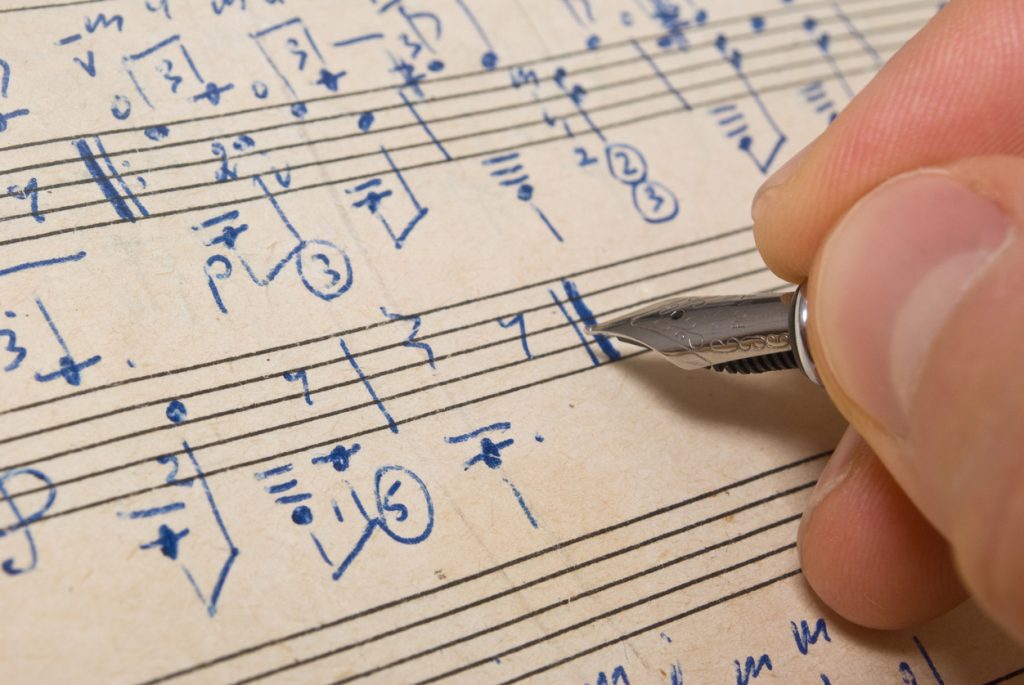
The chord is not resolved. It is as if the Composer set down His pen and the Holy Spirit carried the melody into our hearts to complete. Mark gives us the beginning — the opening pitch, the first vibration, the pure note of truth — and then hands the song to us.
The ending is up to us.
A Closing Prayer
Heavenly Father,
tune our hearts to Your truth. Let Your Gospel be the pure note that steadies our steps, aligns our desires, and calls us into harmony with Your Spirit. As Mark handed the unfinished melody to the early church, help us carry it faithfully in our own generation. Give us courage like John, humility like Peter, and clarity like Mark. May our lives ring with the sound of Your grace, resonating in every place You send us. In Jesus name we pray,
Amen.
Reflection Question
Where is the Holy Spirit inviting you to continue the “unfinished Gospel” this week — through your words, your worship, or your witness?
Resource
Wessel, Walter W. The Communicator’s Commentary: Mark. Vol. 2. Waco, TX: Word, 1982.
Further Reading
If you’d like to meditate further on the themes in this post, spend time with these passages from Mark’s Gospel:
- Mark 1:1–8 — The beginning of the Good News and the voice in the wilderness
- Mark 8:27–30 — Peter’s confession of Christ
- Mark 10:45 — The Son of Man who came to serve and give His life
- Mark 14:27–31 — Peter’s denial foretold
- Mark 15:33–39 — The crucifixion and the centurion’s confession
- Mark 16:1–8 — The “unfinished” ending that invites us to continue the story