All posts by Dee

Pastor Dee Loving‑Tackitt is a follower of Christ, devoted wife of forty‑three years, mother of three, and grandmother of five grandsons. She is the founding and Lead Pastor of The House of Prayer, a Spirit‑led ministry focused on grace, intercession, outreach, and creative discipleship. Her work includes international prayer initiatives, two national podcasts, street preaching, ministry in retirement communities, and Creative Discipling Classes for Women. She authors a daily Christian blog with an international readership. A lifelong worshiper through music, she sings with the Sweet Adelines, Hub City Harmony, and the Singing Women of Texas, West Chapter. Pastor Dee is pursuing her Doctor of Ministry in Biblical Studies at Liberty University, where she also earned her Master of Arts in Christian Ministry. She also holds a Bachelor of Music Education from West Texas A&M University.

Rooted: Lessons From the Garden

🌿 PART 1 — Rooted Lessons

By Guest Contributor: Robin Grimes

(Introduction and closing reflection by Pastor Dee)


Introduction

Every so often, the Lord allows us to meet someone whose everyday life becomes a living parable of His goodness. My friend and sister in Christ, Robin Grimes, is that kind of gift.

Robin is a master gardener — not by title alone, but by heart. Her orchard, her soil, her compost, her flowers and vegetables… all of them preach sermons. And she shares these glimpses of God’s grace daily through videos and reflections that bless so many of us.

Today, I’m humbled to feature her writing.
May her testimony speak to your soul as deeply as it has spoken to mine.


🌱 Rooted: Reflections From My Garden and Orchard

By Robin Grimes

I’ve been thinking today about why gardening means so much to me.

I did not grow up a “rooted” child. My family moved frequently — Army life — and our home was fractured at best, with an absentee father who wasn’t interested in us even when he was there.

We lived in base housing, apartments, and trailer parks until I was ten. I never had a home or a yard to call my own.

I believe that has much to do with my grown-up desire to plant, tend, and harvest my own piece of ground.
And God, who always saw me and knew my heart, provided.

“Then the Lord God took the man and put him in the garden of Eden to tend and keep it.” — Genesis 2:15

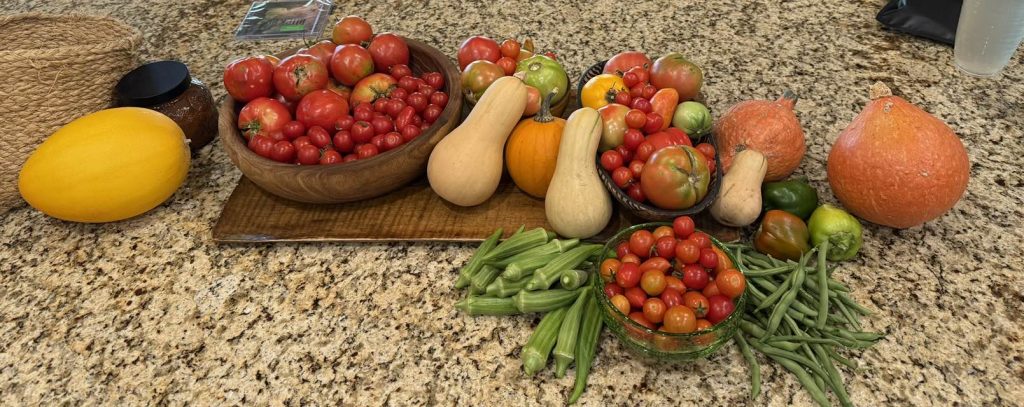
He placed me on an acre and an eighth of stickers, weeds, and dirt — not a tree or shrub in sight! Who says God doesn’t have a sense of humor?

This was ground untouched by a woman’s or man’s hand. But of course, He created this very ground in the beginning — along with the good works He prepared for me to walk in.

As a child, I spent a lot of time lying about my circumstances. Being raised by wildly unhappy, eventually divorced parents carried a stigma, and I wanted to escape that shame.

But what I found about gardening is this:

🌾 Gardening is a truthful endeavor.
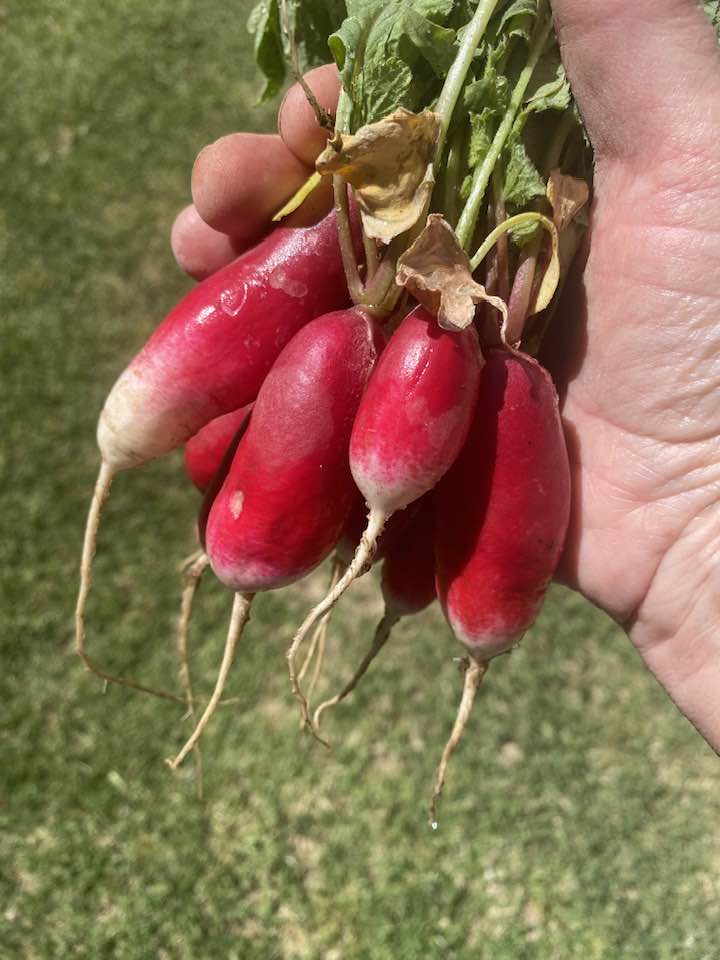
The soil itself tells the truth.
It was cursed with us at the fall,
and the work required to bring life from it
reminds me daily of my own sin nature.

I cannot hide my weakness from the garden.
I cannot pretend my laziness doesn’t exist.
My orchard and garden reflect exactly who I am
and what I do — or fail to do.

A garden cannot be managed by image.
An orchard cannot thrive on pretense.

Trees need timely, protective care.
Compost and fertilizer must be applied regularly.
Weeds must be pulled relentlessly.
“Friendly plants” must be placed close together so they can strengthen and protect each other.

The garden humbles me.
And it points me to the community of Christ — the church —
and to God alone, who brings forth fruit in ground and in people.

Last year, the Lord used my stubborn green beans to teach me about His timing — and my impatience. For two months, they were lush and green but fruitless. According to the seed packet, they should have been in full fruiting.

I exhausted myself researching ways to amend the soil. I tried everything. Nothing worked. I decided the seeds must have been bad and that I’d pull the vines up when I returned from an eight-day trip.

But when I came home…

🌿 They were loaded with beans.
In my absence —
out of my control —
in God’s perfect timing —
they produced.

It was a humbling revelation of my impatience
and my unrecognized self-reliance.
I had been trusting in my own wisdom and effort
instead of trusting the God who brings forth fruit in His time.

I am humbled by my garden daily.
And grateful.

May God be glorified in all we do.

Robin


Closing Reflection

Robin’s story reminds us that God is still forming His people through the earth He made — through soil and seed, through waiting and weeding, through work and wonder.

Her orchard is a place of discipleship.
Her garden is a mirror of sanctification.
Her life is fruit born of God’s faithful tending.

May her words help you recognize the sacred lessons growing right where God has planted you.
And may you find, like she has, that the God who forms gardens still forms souls — with patience, truth, and immeasurable grace.


Heavenly Father,

Creator of soil and soul,
we thank You for the way You speak through what You have made.

Thank You for roots that grow unseen,
for lessons learned in waiting,
for truth revealed when we can no longer pretend.
Thank You for the holy work of tending — pulling weeds, amending soil,
trusting You when growth feels slow or absent.

Teach us to rest in Your timing
when our efforts feel fruitless.
Guard us from self-reliance,
and draw us back to the truth
that You alone bring forth life.

Where You have planted us,
form us.
Humble us.
Grow us.

May we live rooted in Christ,
connected to one another,
and faithful in the quiet work of obedience —
trusting that in due season,
You will cause fruit to appear.

We place our lives, our labor, and our longing
into Your faithful hands.
Be glorified in us.

In Jesus’ name,
Amen.

Ready. Set. Go! Happy Resurrection Sunday! He lives!

The grave was robbed of its finality. Faith is the finish line.”
— Pastor Burden, First Baptist Lubbock

That line stayed with me because it names a truth we live inside every day: the grave no longer has the last word, and yet faith still requires movement. Obedience alone does not finish the race—faith does.

2 Corinthians 5:7“For we walk by faith, not by sight.”


When Obedience Is Real, but Faith Wavers

I have always believed in God, and when life unsettles me, I turn to Scripture—not to question who He is, but to allow His Word to steady my faith. His existence, His power, and His sovereignty have never been in doubt. What is tested in everyday life is my trust in what He is doing when I cannot yet see the outcome. Scripture calls me to “trust in the Lord with all my heart and not lean on my own understanding,” to acknowledge Him in all my ways, even when His paths feel unfamiliar (Proverbs 3:5–6). Faith teaches me to walk by faith and not by sight (2 Corinthians 5:7), reminding me that God’s ways and thoughts are higher than my own, even when they confuse me (Isaiah 55:8–9). Weariness, unanswered prayer, extended waiting, and obedience without immediate fruit can cause faith to hesitate at the starting line—but it is there, in that honest space, that I listen for God’s voice in Scripture, just as the disciples believed Him, yet had to learn to trust His perfect way.


READY: They Believed—But Were Unprepared

The disciples believed in God.
They believed Jesus was sent from God.
They even confessed Him as the Messiah.

Jesus told them—seven times—who He was:

  • The Bread of Life
  • The Light of the World
  • The Good Shepherd
  • The Resurrection and the Life
  • The Way, the Truth, and the Life
  • The Gate
  • The True Vine

He also told them plainly that He would suffer, be crucified, and rise again.

They heard Him.
They followed Him.
They believed Him.

When the cross came, expectations collapsed. A suffering Messiah did not align with the future they imagined. Obedience had not prepared them for this version of faith.


SET: When Everything Stops Moving

At the crucifixion, the women remained near the cross. The disciples scattered—not because they stopped loving Jesus, but because of fear and confusion. What they lost was not belief in God; what they lost was certainty that God was still in control. They locked themselves away, they waited, and they grieved. The cross felt final. Yet, as Pastor Burden so clearly named it, the grave was robbed of its finality!


The Resurrection

After the resurrection, the women testified—and were doubted. Then Jesus appeared. He showed His wounds, invited their touch, and even ate with them, leaving no question that He was truly alive. What had once confused the disciples became unmistakably real: death had been defeated, and Jesus had risen in victory. Fear gave way to faith, and uncertainty gave way to conviction. In His great grace, Jesus did not rush them forward—He stayed. He taught them about the Kingdom of God, confirmed the truth of the Scriptures, and prepared them for the moment when they would go into the world proclaiming the gospel: that King Jesus is alive, reigns with all authority, and calls all people to follow Him.


GO: When the Spirit Sends

Everything changed at Pentecost. When the Holy Spirit came, Faith moved from internal conviction to outward action. Peter—the one who had denied Jesus—stood publicly and proclaimed the gospel. This was the moment the church moved from

ready…
through set…
to go.


Faith Is the Finish Line

The disciples finished the race because they loved the risen Christ and were empowered by the Holy Spirit. They had no political authority, no social advantage, and no protection from suffering. Yet they went—because faith had crossed the finish line. The grave was robbed of its finality, and Jesus was revealed not only as Savior, but as King. Faith was no longer theoretical; it became active, embodied, and costly as they carried the gospel into the world—proclaiming that King Jesus is alive, reigns with all authority, and invites all people into His kingdom.


Our Turn on the Path

We have faith.
Yet, we struggle to move when the path ahead is unclear. But the story of the disciples reminds us that God meets us right where we are! He teaches us. He waits with us. And when the time is right, He sends us. Because the grave is not the end. And faith is the finish line!

Send us, Lord—ready, set, and willing to go—wherever You lead.
We trust You.

Matthew 28:18-20 NIV
Then Jesus came to them and said, “All authority in heaven and on earth has been given to me. Therefore, go and make disciples of all nations, baptizing them in the name of the Father and of the Son and of the Holy Spirit, and teaching them to obey everything I have commanded you. And surely I am with you always, to the very end of the age.”

Heavenly Father,
We come to You as people who believe—and yet still need You to teach us how to trust. You are faithful, even when the path ahead feels uncertain. Help us to trust You with all our hearts and not lean on our own understanding. In every step we take, teach us to acknowledge You, trusting that You are making our paths straight. When faith hesitates at the starting line, strengthen us to walk by faith and not by sight. When waiting feels long, remind us that Your ways are higher than ours and Your timing is perfect. Thank You that the grave has been robbed of its finality, and that through the risen Christ, faith helps us in our obedience. In Jesus’ name, we pray. Amen.

Silent Saturday and the Song Within

A reflection for Joanna Forbes and the Singing Women of Texas, West Chapter

Dear Joanna,
Dear Singing Women of Texas,

As I have been studying my Bible and preparing for a research project involving singing, community, and Scripture, I found myself unexpectedly pausing in gratitude. Before writing another note or chasing another footnote, I stopped to thank God for the sisterhood He has given me in the Singing Women of Texas. Your voices, your faithfulness, and your shared devotion remind me that singing is never merely sound—it is shared hope.

This pause brought me to Silent Saturday.

Holy Saturday is the day between promise and fulfillment, between the cross and the resurrection. Scripture tells us little about that day, yet it may be the heaviest of all. The disciples faced complete hopelessness after the crucifixion, experiencing God’s presence as a paralyzing absence. Everything they thought they knew about Jesus—about the kingdom, about hope—lay sealed behind a stone.

And yet, hope was already alive.

The sustaining hope of Christ was born in the moment of His deepest anguish—when despair reached its lowest depth and hope its highest peak. This paradox sits at the heart of our faith: hope does not rise from comfort, but from abandonment. God often acts most powerfully when He seems utterly silent.

Lamentations gives language to this experience. In devastation and homelessness, the lamenter declares, “This I call to mind, and therefore I have hope.” Hope is ignited by remembrance—by calling to mind God’s character when circumstances scream otherwise. This sacred act of remembering mirrors what happens in us during Silent Saturday. Nothing changes outwardly, yet something is taking shape within.

And that shaping often sounds like a song.

The Song in the Heart

Paul writes in Ephesians 5:19 that Spirit‑filled believers are “singing and making melody in your heart to the Lord.” This verse has followed me closely. Singing, as we know so well, is not always audible. The melody begins inwardly—sometimes long before it can be voiced aloud.

Silent Saturday demands precisely this kind of singing.

There is no choir, no harmony, no triumphant refrain. Yet the heart carries a melody—a quiet prayer that refuses to die. Singing is not silent, and yet on this holy day, it is. The melody lodges itself deep within us, helping us pray when words fail. The song is not sung because circumstances invite it; it is sung because Christ is worthy, even when His presence feels hidden.

The new song is always born in the heart. Otherwise, it cannot be sung at all. The heart sings because it is overflowing with Christ. That is why all true singing in the church is a spiritual act—shaped by surrender to the Word, incorporation into community, humility before God, and careful discipline. These are not merely musical virtues; they are spiritual postures.

This is why singing together matters so deeply. It forms us.

As Bonhoeffer so beautifully taught, when the church sings, it is not offering performance but praise. On earth, our song is sung by those who believe; in heaven, it is sung by those who see. Until that day, we sing by faith—sometimes loudly, sometimes inwardly, sometimes with tears.

When the Silence Is Pregnant with Song

Silent Saturday does not deny grief. It does not rush toward resurrection. Instead, it teaches us to watch and wait with real hope, trusting that God has already been where we are now. Christ’s death assures us that no darkness is unexplored, no silence unmanned by God’s presence.

Because Christ has entered the grave itself, we are never alone in our waiting.

The inward song transforms Silent Saturday from mere mourning into active hope. The melody is quiet, but it is alive. The silence is heavy, but it is pregnant with song. God is working even when there is no sound.

And so, dear sisters, we continue to sing—sometimes aloud, sometimes only in our hearts—trusting that the God who placed the song within us will one day call it forth in full voice.

With gratitude for this sisterhood and hope that endures even in the silence,

Dee Ann

Prayer

Heavenly Father,
We offer You this silence—the waiting, the ache, the hope we carry unseen.
When words fall away, place Your song within our hearts.
Help us trust You in the quiet, remember who You are,
and wait with faith until joy breaks forth.
We rest in You. In Jesus precious name we pray,
Amen.

The King and His Cross

by Pastor Dee

Good Friday is not merely the day we remember Jesus’ suffering—it is the day we behold the King enthroned in self-giving love. The cross is the doorway into God’s acknowledged reign on earth, and prayer is how we walk through that doorway with repentance, faith, and renewed allegiance.

Mark 15:33–39 — As Jesus breathes his last, the curtain is torn and a centurion confesses, “Truly this man was the Son of God.” Good Friday reveals a paradox: the King conquers not by taking life, but by giving his life to open access to God.

Philippians 2:5–11 — Jesus’ obedience descends “to the point of death—even death on a cross.” This is the shape of his kingship: humility, surrender, and trust in the Father’s will, followed by God’s vindication and exaltation.

Colossians 2:13–15 — At the cross God cancels the record of debt and disarms hostile powers. Good Friday is not defeat; it is the decisive rescue and the public unveiling of God’s victory over sin and all usurping rule.

The Cross and the Kingdom

In covenantal terms, a kingdom (the basileia—God’s rule or reign) is constituted by relationship: a king and a citizenry bound together in loyalty, protection, and shared life. One without the other is not a “kingdom” in that covenant sense. That is why the coming of God’s kingdom is never just a change of circumstances; it is the restoration of rightful relationship under rightful rule.

On Good Friday we see how Jesus brings about God’s acknowledged reign on earth by simultaneously fulfilling, in his own person, God’s requirements of a perfect King and a perfect citizen. He does not merely announce the kingdom; he embodies it—holding together what our sin has torn apart: faithful rule and faithful obedience.

Christ becomes the God-approved King by proving his love for his subjects to the fullest extent—by self-sacrifice for their rescue and restoration. His authority is not asserted by domination, but revealed in mercy. At the cross, the King does what only the true King would do: he bears the cost of reconciliation himself.

And he proves his God-approved citizenship by becoming obedient to his Sovereign to the fullest extent—submitting completely to the Father’s authority and demonstrating loyalty in the face of creaturely (satanic and human) usurpation, rebellion, and compromise. Where Adam grasped, Jesus yielded; where we resist, Jesus trusted.

Jesus accomplishes this supremely on the cross because it is by the kind of death he suffered that both the love (for fallen creation) and obedience (to his sovereign Lord) he consistently demonstrated throughout his life reach their climactic result. Good Friday is the convergence point: perfect love meeting perfect obedience, in public, for us.

Therefore, by fulfilling both requirements of perfect King and perfect citizen in his own person—on the cross, to God’s fullest satisfaction—Jesus inaugurates God’s redemptive rule on earth. He recapitulates and reconstitutes a new covenant community around his own mediatory personhood. And he invites repentant sinners to enter this new sphere of communion with the Triune God for their restoration—and for the redemption of all creation.

Today, the Prayer Path is simple: behold the King, bow as citizens, and belong to the covenant community he purchased.

Prayer

Heavenly Father,

You are the rightful Sovereign—holy, just, and faithful. Jesus, you are the God-approved King whose throne is a cross and whose crown is thorns.

Spirit of God, open my eyes to the glory of this love that does not let me go.

Lord, I confess my divided allegiance. I have wanted the benefits of your kingdom without surrendering my citizenship. I have compromised with rebellion—my own and the world’s—and I have trusted my will over yours. Forgive me through the blood of Christ, and wash me clean. Thank you that at the cross, your love and Jesus’ obedience reached their climactic result for my rescue and restoration. Thank you for canceling my debt, for disarming the powers, and for opening the way into communion with you.

On this Good Friday, I bow to your reign. Teach me to live as a loyal citizen of your kingdom—quick to repent, glad to obey, and courageous in the face of compromise. Form in me the mind of Christ: humility, trust, and steadfast love. Extend your redemptive rule in my home, my church, and my community. Gather a renewed covenant people around Jesus—restored worshipers who reflect the King’s self-giving love. Bring repentance where there is rebellion, healing where there is brokenness, and hope where there is despair, until all creation is made new in Him.

In Jesus name we pray, Amen.

The Glory of King Jesus Revealed in Service

Power through Love on Maundy Thursday

John 13:1–17 NIV

13 It was just before the Passover Festival. Jesus knew that the hour had come for him to leave this world and go to the Father. Having loved his own who were in the world, he loved them to the end.

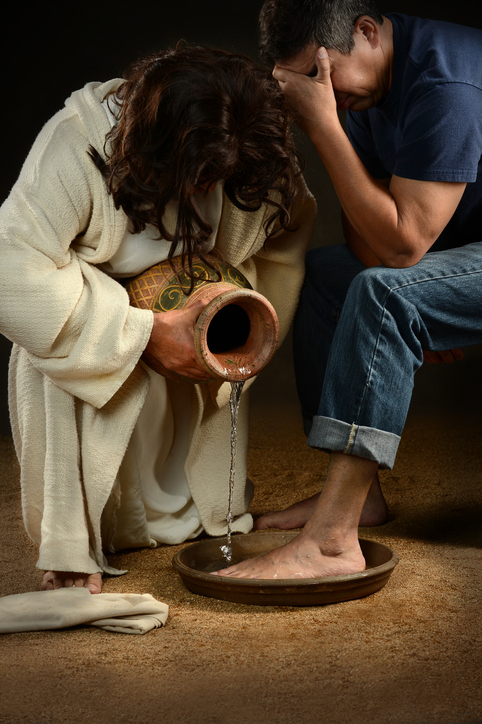
The evening meal was in progress, and the devil had already prompted Judas, the son of Simon Iscariot, to betray Jesus. Jesus knew that the Father had put all things under his power, and that he had come from God and was returning to God; so he got up from the meal, took off his outer clothing, and wrapped a towel around his waist. After that, he poured water into a basin and began to wash his disciples’ feet, drying them with the towel that was wrapped around him.

He came to Simon Peter, who said to him, “Lord, are you going to wash my feet?”

Jesus replied, “You do not realize now what I am doing, but later you will understand.”

“No,” said Peter, “you shall never wash my feet.”

Jesus answered, “Unless I wash you, you have no part with me.”

“Then, Lord,” Simon Peter replied, “not just my feet but my hands and my head as well!”

10 Jesus answered, “Those who have had a bath need only to wash their feet; their whole body is clean. And you are clean, though not every one of you.” 11 For he knew who was going to betray him, and that was why he said not every one was clean.

12 When he had finished washing their feet, he put on his clothes and returned to his place. “Do you understand what I have done for you?” he asked them. 13 “You call me ‘Teacher’ and ‘Lord,’ and rightly so, for that is what I am. 14 Now that I, your Lord and Teacher, have washed your feet, you also should wash one another’s feet. 15 I have set you an example that you should do as I have done for you. 16 Very truly I tell you, no servant is greater than his master, nor is a messenger greater than the one who sent him. 17 Now that you know these things, you will be blessed if you do them.

John 13:31-35 NIV

Jesus Predicts Peter’s Denial

31 When he was gone, Jesus said, “Now the Son of Man is glorified and God is glorified in him. 32 If God is glorified in him,[a] God will glorify the Son in himself, and will glorify him at once.

33 “My children, I will be with you only a little longer. You will look for me, and just as I told the Jews, so I tell you now: Where I am going, you cannot come.

34 “A new command I give you: Love one another. As I have loved you, so you must love one another. 35 By this everyone will know that you are my disciples, if you love one another.”

Imagine the scene.

Jesus knows exactly what is coming. His arrest is hours away. Betrayal is already unfolding. If there were ever a moment for a final sermon, a rallying cry, or a call to resistance, this would have been it.

Instead, John tells us something astonishing: “Having loved His own who were in the world, He loved them to the end.” Knowing that the Father had placed all things into His hands, knowing He had come from God and was returning to God, Jesus does something utterly unexpected.

He rises from the table.
He removes His outer robe.
He wraps a towel around His waist.
And He kneels.

King Jesus begins to wash feet.


Love That Takes the Lowest Place

John 13 does not describe this act as symbolic or ceremonial. It is physical, intimate, and unsettling. In the world of the disciples, foot washing was the task of the lowest servant in the household. It was never the role of the teacher, much less the Lord.

Peter’s resistance reveals how upside‑down this moment feels. “You will never wash my feet,” he says. But Jesus answers with words that cut to the heart of discipleship: “Unless I wash you, you have no share with me.” Maundy Thursday reminds us that participation in the life of Christ begins not with what we offer Him, but with what we are willing to receive.

Before we serve, we must be served. Before we love, we must be loved. Before we kneel for others, we must allow King Jesus to kneel for us and cleanse the places we would rather hide.


“You Also Ought to Wash One Another’s Feet”

When Jesus finishes, He does not leave the moment open to personal interpretation. He explains it plainly. “You call me Teacher and Lord, and you are right,” He says. “If I, your Lord and Teacher, have washed your feet, you also ought to wash one another’s feet.”

This is where Maundy Thursday becomes a command rather than a memory. The call to love is not abstract. Jesus does not redefine love with sentiment or theory. He defines it with posture. Love bends low. Love serves without demanding return. Love takes the place no one else wants.

The command Jesus gives is not simply to admire His humility, but to embody it. His love becomes the pattern by which all Christian love is measured.


Glory Revealed Through Sacrifice

After Judas leaves the room and the shadow of betrayal becomes unmistakable, Jesus speaks again. “Now is the Son of Man glorified.” In John’s Gospel, glory is not found in escape from suffering, but in faithful obedience through it. What the world calls shame, Jesus calls glory. What looks like loss will soon be revealed as victory.

Maundy Thursday stands at the edge of the cross. The towel anticipates the nails. The basin points forward to the blood poured out. The humility of the upper room prepares us for the self‑giving love of Calvary.

King Jesus reveals that true authority is never grasped. It is given. And it is given for the sake of love.


A New Commandment for the Church

Jesus concludes the evening with words that echo into the life of the church. “A new commandment I give to you, that you love one another. Just as I have loved you, you also are to love one another.” The standard is no longer reciprocity or convenience, but Christ Himself.

By this love, Jesus says, the world will recognize His disciples. Not by power. Not by position. Not by persuasion alone. But by a love that kneels, serves, and remains faithful to the end.


From Then to Now

Maundy Thursday refuses to remain safely in the past. It presses into our present lives and asks difficult, necessary questions. Where is Jesus calling us to take the lower place? Who needs to be loved with a love that costs something? In what ways are we being invited to lay aside status, comfort, or control in order to serve?

The night King Jesus took off His robe still speaks. His towel still hangs before us. And His command still stands.

May we be a people who receive His love deeply and live it faithfully.
May we follow King Jesus, even when the way leads us to our knees.

Heavenly Father,
on this holy night, we pause at the basin and the towel.
We remember that You loved Your own to the very end—
not with words alone, but with hands that served
and a heart that poured itself out.

We confess that we often resist this way of love.
We cling to comfort, protect our position,
and hesitate to kneel where You freely knelt.
Forgive us for the times we have preferred power over humility
and distance over devotion.

Wash us again, Lord.
Cleanse the places we try to hide.
Teach us to receive Your love
before we attempt to give it away.

Shape us into a people marked by Your commandment—
a people who love as You have loved us.
Give us eyes to see those we are called to serve,
courage to take the lowest place,
and hearts willing to remain faithful even when love is costly.

As we leave this moment, keep us near Your heart
and prepare us to follow You to the cross,
trusting that Your self‑giving love
will lead us all the way to life.

We pray in the name of King Jesus,
the Servant Lord,
Amen.

Holy Wednesday: A Fish and a Fig Tree – When God Confronts the Heart

Two Warnings. One God. Your Heart.

God always pursues—not to punish, but to transform.

Scripture

Jonah 4:1–4 (ESV)

Jonah’s Anger at the Lord’s Compassion

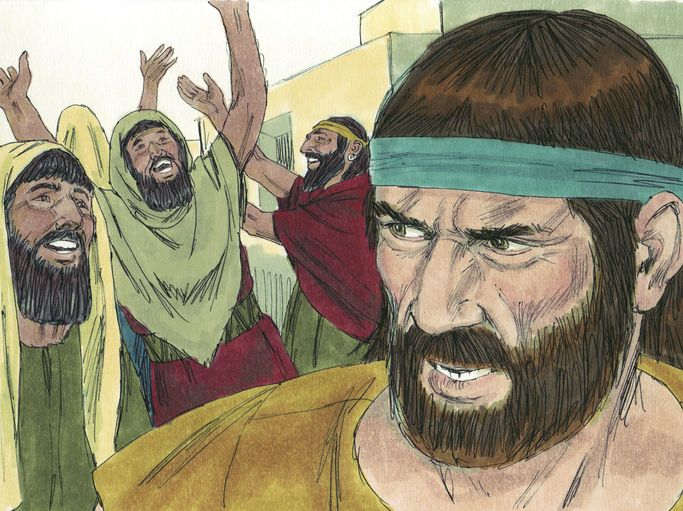
But to Jonah this seemed very wrong, and he became angry. He prayed to the Lord, “Isn’t this what I said, Lord, when I was still at home? That is what I tried to forestall by fleeing to Tarshish. I knew that you are a gracious and compassionate God, slow to anger and abounding in love, a God who relents from sending calamity. Now, Lord, take away my life, for it is better for me to die than to live.”

But the Lord replied, “Is it right for you to be angry?”

Matthew 21:18–22 (ESV)

Jesus Curses a Fig Tree

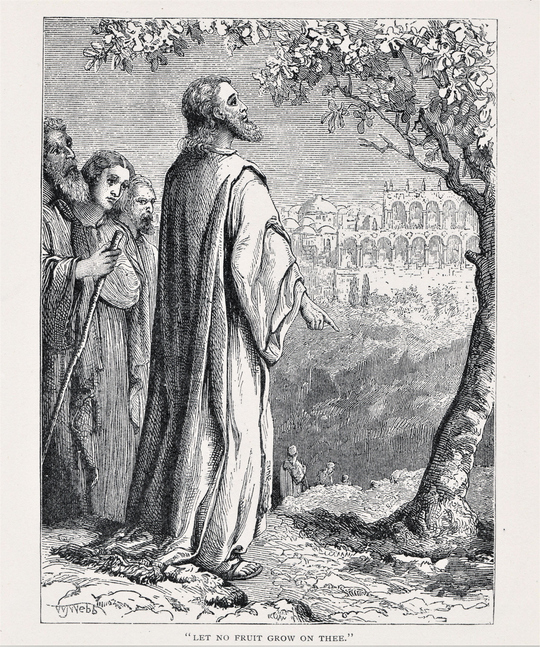
18 Early in the morning, as Jesus was on his way back to the city, he was hungry. 19 Seeing a fig tree by the road, he went up to it but found nothing on it except leaves. Then he said to it, “May you never bear fruit again!” Immediately the tree withered.

20 When the disciples saw this, they were amazed. “How did the fig tree wither so quickly?” they asked.

21 Jesus replied, “Truly I tell you, if you have faith and do not doubt, not only can you do what was done to the fig tree, but also you can say to this mountain, ‘Go, throw yourself into the sea,’ and it will be done. 22 If you believe, you will receive whatever you ask for in prayer.”

Reflection

I don’t know how to explain it, and don’t ask me how—this Holy Wednesday morning, Holy Spirit immediately brought Jonah to mind when I was meditating on Kenyon Draughon’s devotional published on the First Baptist Lubbock’s website (https://open.substack.com/pub/firstbaptistchurchlubbock/p/holy-tuesday-all-leaves-no-fruit?utm_campaign=post-expanded-share&utm_medium=web ). Suddenly the connection between Jonah and the fig tree became so clear: they are the same story told two different ways!!!

Jonah is a prophet with perfect theology on his lips but a withered heart inside. He preached the greatest revival in the Old Testament—an entire pagan city humbled itself before God—yet Jonah stormed off, angry that God was merciful. He looked obedient on the outside, but inside, he was resentful, bitter, and spiritually barren. Jonah had leaves, but no fruit.

Jesus approached it hungry for fruit. Its leaves advertised life, promise, and abundance—but it had nothing to offer. Just like Jonah. Just like Israel in Jesus’ day. Just like us, when we look the part on the outside while resisting transformation on the inside.

The fig tree speaks of pretended spirituality—religion without repentance, leaves without love, performance without heart.

Jonah reveals the same truth. He told God, “I knew You were gracious and compassionate,” yet refused to let that compassion change him. He spoke truth with his mouth but refused to embody it with his life.

Both the fish and the fig tree reveal this:
God is after the heart.
Not polished appearances.
Not reluctant obedience.
Not a religious performance.

He wants people who bear real fruit—humility, repentance, compassion, mercy, and a heart shaped by His grace.

The withered fig tree is a warning.
Jonah’s angry heart is a mirror.
Both invite us to soul‑examination during Holy Week.
And both remind us that God always pursues—not to punish, but to transform.


Prayer

Heavenly Father,
Search my heart today.
Expose the places where I am like Jonah—where I resist Your compassion or cling to my own will.
Reveal the areas where I am like the fig tree—full of leaves yet lacking true spiritual fruit.
Make my heart soft, humble, and responsive to You.
Teach me to love what You love,
to extend the mercy You have extended to me,
and to bear the fruit that honors Your name.
Cleanse me, transform me, and fill me with Your life.
Amen.

The Prayer Path — Following King Jesus, step by step, in prayer

Holy Monday: The Cluttered Temple and the Cluttered Heart

Matthew 21:12-13

by Pastor Dee

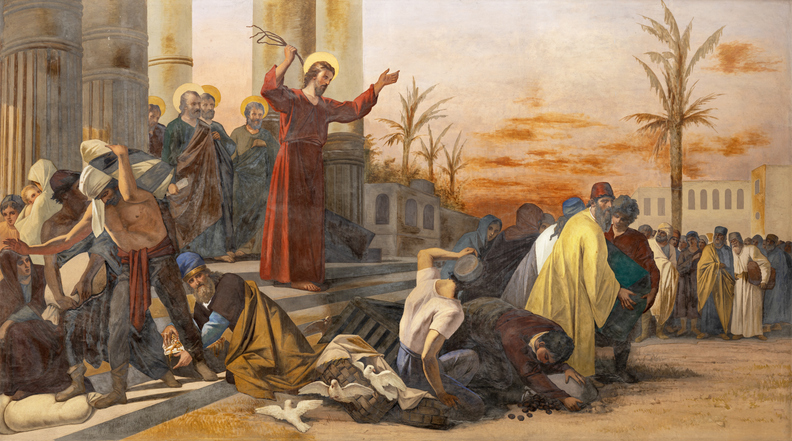
On Holy Monday, we follow Jesus into the temple courts, where He overturns tables, scatters coins, and confronts a system that had drifted far from God’s heart. Matthew tells us:

“Jesus entered the temple and drove out all who sold and bought in the temple, and he overturned the tables of the money‑changers and the seats of those who sold pigeons. He said to them, ‘It is written, My house shall be called a house of prayer, but you make it a den of robbers.’”
—Matthew 21:12–13 (ESV)

Jesus’ actions may seem startling, but they reveal a holy tension: righteous anger and merciful purification. His anger is not impulsive or petty—it is the holy love of God confronting whatever obstructs worship, burdens the vulnerable, and distracts God’s people from their true calling.


The Cluttered Temple and the Cluttered Heart

Life becomes cluttered with distractions. Many of them are good things—work, family, responsibilities, even ministry itself. But good things can quietly overshadow what is best. Slowly, subtly, our hearts become like the temple courts of Jesus’ day: noisy, crowded, and spiritually unfocused.

We do not see ourselves among the merchants, yet we recognize the drift:

  • Priorities become disordered.
  • Busyness replaces devotion.
  • Reputation outweighs righteousness.
  • Ambition begins to define identity.

This is why Jesus’ cleansing of the temple is not just an event to observe; it is an invitation to inner renewal. As Mike Chung notes, purification is part of God’s loving discipline—a cleansing that rescues us from “an overzealous appetite for greed, ambition, prominence, reputation, and fame.”

Holy Monday calls us to open the doors of our hearts and allow Jesus to overturn whatever keeps us from loving God and others wholeheartedly.


A God Who Defends the Vulnerable

The temple marketplace was more than commercial—it was exploitative. During Passover, poor worshippers purchased doves at unjust, inflated prices. The very place designed for prayer—especially for the nations—had become inaccessible to those who most needed God’s presence.

Jesus’ anger is not only toward corruption in worship; it is compassion for the poor.

Holy Monday reminds us:

  • God defends the oppressed.
  • He despises deceit and religious manipulation.
  • Justice is an expression of His holiness.

Throughout Scripture, God calls His people to protect the alien, the poor, and the overlooked. Jesus embodies this truth as He defends the vulnerable right in the temple courts.


After Cleansing Comes Healing

Matthew adds a beautiful detail:

“And the blind and the lame came to him in the temple, and He healed them.”
—Matthew 21:14 (ESV)

Once the noise is cleared and the corruption removed, the temple becomes what it was always meant to be—a place of healing.

This sequence is deeply personal:

  1. Cleansing—Jesus removes what does not belong.
  2. Restoration—He heals what is broken.
  3. Renewal—He restores our capacity for true worship.

This is the spiritual rhythm of Holy Monday: Jesus cleanses us, not to condemn, but to restore.


Holy Monday Invitation

Today, let Jesus walk through the inner courts of your heart.
Let Him overturn what distracts.
Let Him cleanse what has become distorted.
Let Him restore what has grown weak.

And then—let Him heal.


Prayer for Holy Monday

Heavenly Father,
Cleanse the temple of my heart.
Remove the clutter of misplaced priorities, selfish ambition, and quiet sins that dull my love for You.
Drive out anything that hinders worship, burdens the vulnerable, or keeps me from walking in justice and mercy.
Make my heart a true house of prayer—
a place where Your presence is welcomed,
Your Word is honored,
and Your healing flows freely.
As You once restored the temple courts,
restore me today.
Amen.

Holy Week: Palm Sunday — The Redefining of Kingship

By Pastor Dee

Holy Week arrives like a sacred invitation, drawing us into the final days of Jesus’ earthly ministry and inviting us to follow Him with deeper attention and tender devotion. It is a week rich with meaning, prophecy, and fulfillment. Palm Sunday stands at the gateway, not merely as a ceremonial tradition, but as the moment when Jesus steps into His identity as Israel’s promised King. What unfolds in Matthew 21:1–11 is both deliberate and divine, revealing a kingship unlike any the world had ever known.


Jesus Comes to Jerusalem as King (Matthew 21:1-11)

21 As they approached Jerusalem and came to Bethphage on the Mount of Olives, Jesus sent two disciples, saying to them, “Go to the village ahead of you, and at once you will find a donkey tied there, with her colt by her. Untie them and bring them to me. If anyone says anything to you, say that the Lord needs them, and he will send them right away.”

This took place to fulfill what was spoken through the prophet:

“Say to Daughter Zion,
    ‘See, your king comes to you,
gentle and riding on a donkey,
    and on a colt, the foal of a donkey.’”[a]

The disciples went and did as Jesus had instructed them. They brought the donkey and the colt and placed their cloaks on them for Jesus to sit on. A very large crowd spread their cloaks on the road, while others cut branches from the trees and spread them on the road. The crowds that went ahead of him and those that followed shouted,

“Hosanna[b] to the Son of David!”

“Blessed is he who comes in the name of the Lord!”[c]

“Hosanna[d] in the highest heaven!”

10 When Jesus entered Jerusalem, the whole city was stirred and asked, “Who is this?”

11 The crowds answered, “This is Jesus, the prophet from Nazareth in Galilee.”🌿 Prophecy Fulfilled With Purpose

When Matthew tells the story of Jesus’ entry into Jerusalem, he highlights the intentionality of every move Jesus makes. The evangelist goes out of his way to connect the moment to Zechariah’s ancient prophecy, reminding the reader that the Messiah would come “humble and mounted on a donkey, on a colt, the foal of a beast of burden.” Jesus sends His disciples to retrieve the animals. He is the fulfillment of Scripture. He embodies the promised King in a way that is unmistakable to anyone familiar with the prophetic story. This intentional fulfillment reveals layers of messianic meaning. Jesus is declaring that He is indeed the Son of David, the long-awaited King who would come to restore God’s people. Yet He does so with a posture so unexpected—so gentle—that many failed to grasp the fullness of what was happening before their eyes. His kingship is real, but it is not wielded with coercion or conquest. Matthew wants his readers to see that Jesus’ authority is expressed in humility, and His arrival is the quiet unveiling of God’s redemptive plan.


🌿 The Royal Donkey of Peace

The image of Jesus riding into Jerusalem on a donkey is often misunderstood in modern times, yet for ancient audiences it carried unmistakable significance. A donkey was not the mount of a poor man but the mount of a peaceful king. In the ancient world, rulers who approached a city for war rode a horse, signaling strength, aggression, and military intent. But a king who approached on a donkey announced a mission of peace and reconciliation. Zechariah had declared that Israel’s King would come this way, and Jesus’ choice of animal was a theological statement as much as a symbolic one. This also connects Jesus to the story of King David, who left Jerusalem on a donkey during Absalom’s rebellion. Zechariah’s promise that the true King would return to Zion on a donkey served as a reminder that David’s Son, the Messiah, would restore what had been broken. Jesus follows that very path. His entry into Jerusalem is not a political uprising but a peaceful reclaiming of His rightful rule. He brings peace between God and humanity, offering restoration, forgiveness, and the healing of fractured hearts and communities.


🌿 The Cry of the Crowds: “Hosanna!”

As Jesus enters the city, the crowds respond in a way that reveals their recognition of something sacred unfolding. They spread their cloaks across the road, an act of submission historically reserved for royalty. They cut branches from the trees and wave them in celebration, echoing the joyful processions of Israel’s past, such as Solomon’s coronation and the Maccabean rededication of the temple. Their shouts ring with prophetic meaning: “Hosanna to the Son of David! Blessed is He who comes in the name of the Lord!” The word “Hosanna” is a cry derived from Psalm 118, meaning “Save us, Lord.” It is both a plea for deliverance and a declaration of hope. The crowd may not have understood the full nature of Jesus’ mission, but they sensed that God was near and that the long-awaited King had finally arrived. Their voices rise in expectation, longing for salvation, and recognizing Jesus as the One who carries the authority and presence of God.


🌿 Honor and Humility, Triumph and Tragedy

Palm Sunday contains a profound irony that Matthew’s Gospel does not shy away from. Jesus enters Jerusalem in triumph, honored as the Son of David and welcomed as King. Yet the humility of His arrival hints at the path ahead. The same crowds who celebrate Him will later stand silent as He is condemned, or even join the chorus demanding His crucifixion. The One hailed as King on Sunday will be executed under the sign, “This is Jesus, the King of the Jews,” on Friday. The juxtaposition of honor and tragedy emphasizes the kind of Messiah Jesus came to be. He is not a conquering military hero but the suffering servant foretold by the prophets. His victory will not be won by force but by self-giving love, and His throne will first be a cross. Palm Sunday holds together the beauty of His humble arrival and the weight of His sacrificial mission. His gentle entry on a donkey prepares the way for the redemptive power of His death and resurrection.


🌿 A Kingship That Looks Forward

Palm Sunday is not merely the beginning of Holy Week; it is a glimpse into both past promises and future hope. The King who comes in peace will one day return in glory. Revelation describes Jesus’ second coming on a white horse, the mount of a conquering King who brings final justice and perfect peace. The humility of His first entry does not diminish His authority—it reveals the depth of His love. His second entry will reveal the fullness of His reign. Palm Sunday calls us to see Jesus as He truly is: the humble King who came to save, the suffering King who died to redeem, and the victorious King who will return to restore all things. As Holy Week begins, we are invited to welcome Him into our hearts with the same cry the crowds lifted long ago—“Hosanna. Save us, Lord.”

🌿 Why It Is Important to Worship and Understand Holy Week — The King Jesus Gospel

It is important to worship and understand Holy Week because this week reveals the heart of what the New Testament calls the King Jesus Gospel—the good news that Jesus is the long‑awaited King who has come to inaugurate God’s kingdom, redeem His people, and reign over creation with justice, mercy, and everlasting peace. Holy Week is not simply the story of our personal salvation; it is the unveiling of God’s covenant promises stretching from Abraham to David and from the prophets to the apostles. It is the moment in which God’s redemptive plan reaches its climax through the royal mission of Jesus Christ. Palm Sunday shows the King entering His city; the Last Supper reveals the covenant meal of the Kingdom; Good Friday displays the King laying down His life for His subjects; Holy Saturday holds the silence of waiting; and Easter morning announces the King’s victory over death and His enthronement as Lord. To worship during Holy Week is to declare with the early church that Jesus is not merely a teacher or healer, but the crucified, risen, and reigning King whose rule brings salvation to the world. Understanding Holy Week anchors our faith in the full gospel—the grand biblical proclamation that Jesus is King, His kingdom has begun, and all who follow Him are invited to live under His reign. When we worship through the events of this week, we align our hearts with the story God Himself is telling: the story of the King who arrived in humility, conquered through love, triumphed through sacrifice, and lives forever as the world’s true Lord.

Eight Days Later: When Jesus Comes Back for the One Who Missed It

Thomas, Covenant Mercy, and the New Creation Rhythm of God

I’m writing this from Richardson, Texas, in the middle of Your Time to Shine 2026 with Sweet Adelines Region 25. It’s a weekend filled with harmony, community, and the joy of voices rising together. And maybe that’s why this passage from John 20 has been stirring in my heart — because it’s a story about a missing voice, a broken chord, and the God who refuses to let the song resolve without restoring the one who was not in the room. There’s a detail in this story we often overlook: Jesus appears to Thomas eight days later. Not immediately. Not the next morning. Eight days. And in Scripture, eight is never incidental. It carries the weight of covenant, new creation, and God’s unwavering commitment to finish what He begins.

Jesus Appears to Thomas

Scripture — John 20:24–29 (NLT)

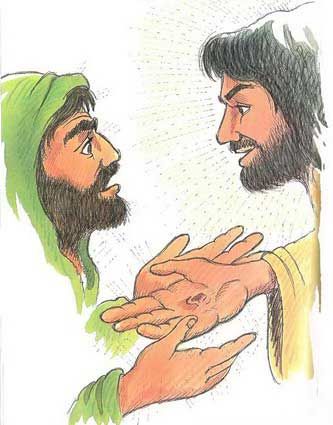
24 One of the twelve disciples, Thomas (nicknamed the Twin),[a] was not with the others when Jesus came. 25 They told him, “We have seen the Lord!” But he replied, “I won’t believe it unless I see the nail wounds in his hands, put my fingers into them, and place my hand into the wound in his side.” 26 Eight days later the disciples were together again, and this time Thomas was with them. The doors were locked; but suddenly, as before, Jesus was standing among them. “Peace be with you,” he said. 27 Then he said to Thomas, “Put your finger here, and look at my hands. Put your hand into the wound in my side. Don’t be faithless any longer. Believe!” 28 “My Lord and my God!” Thomas exclaimed. 29 Then Jesus told him, “You believe because you have seen me. Blessed are those who believe without seeing me.” “One of the twelve disciples, Thomas (nicknamed the Twin), was not with the others when Jesus came. They told him, ‘We have seen the Lord!’ But he replied, ‘I won’t believe it unless I see the nail wounds in his hands, put my fingers into them, and place my hand into the wound in his side.’ Eight days later the disciples were together again, and this time Thomas was with them. The doors were locked; but suddenly, as before, Jesus was standing among them. ‘Peace be with you,’ he said. Then he said to Thomas, ‘Put your finger here, and look at my hands. Put your hand into the wound in my side. Don’t be faithless any longer. Believe!’ ‘My Lord and my God!’ Thomas exclaimed. Then Jesus told him, ‘You believe because you have seen me. Blessed are those who believe without seeing me.’”

Reflection

Thomas missed the first gathering. Scripture doesn’t tell us why. Maybe grief isolated him. Maybe fear kept him away. Maybe he simply couldn’t bear to hope again. But here is the beauty of covenant: God’s faithfulness is not dependent on our flawless presence. Jesus doesn’t shame him. He doesn’t scold him. He doesn’t say, “Thomas, you should’ve been there.” Instead, Jesus returns. And John makes sure we know when He returns: eight days later. In Scripture, the eighth day is the day of new beginnings — the day beyond the completed cycle of seven. It’s the day of covenant identity (circumcision on the eighth day), new creation (eight people stepping out of the ark), and consecration (priests beginning ministry on the eighth day). The early church even called Sunday — the day of resurrection — the Eighth Day, the dawn of God’s new world. So when Jesus appears to Thomas on the eighth day, He is doing more than accommodating a doubter. He is performing a covenant act. He is ushering Thomas into resurrection reality. He is giving Thomas his own “new creation” moment. Thomas’s doubt is not the center of the story. Jesus’s covenant faithfulness is. Thomas sets conditions: “I won’t believe unless…” But covenant doesn’t begin with our belief. It begins with God’s promise. Jesus meets Thomas exactly where his unbelief lives — in the wounds. And Thomas responds with the clearest confession in the Gospel: “My Lord and my God!” The eighth day turns doubt into worship. It turns absence into belonging. It turns unfinished faith into resurrected faith.

Biblical Principle

God completes what He begins — even when we falter, delay, or miss the moment. The eighth day reveals a covenant God who returns for the one who wasn’t in the room, restores the one who struggled to believe, and brings His people into the fullness of new creation. Maybe you feel like Thomas. Maybe you missed a moment. Maybe you feel late to faith, late to healing, late to hope. Maybe you’re watching others rejoice while you’re still trying to breathe. The eighth day tells you this: Jesus comes back for you. He steps into locked rooms. He speaks peace into anxious hearts. He meets you in the very place you’re afraid to look. And He invites you — gently, firmly — into belief, into restoration, into new creation life. The eighth day is not just a date on the disciples’ calendar. It is the rhythm of God’s covenant love. And it is still happening.

Prayer

Heavenly Father, Thank You for being the God who returns for us. Thank You for covenant faithfulness that does not depend on our strength, our timing, or our perfect presence. Meet us in our doubts, our fears, and our locked‑room moments. Breathe Your peace over us. Lead us into the eighth‑day life — the life of new creation, restored faith, and renewed hope. Make us people who believe, not because we see everything clearly, but because You have shown Yourself faithful again and again. Amen.

A Journey Through the Gardens Where God Meets Humanity

From the Garden of Creation to the Garden of Resurrection

By Pastor Dee

House of Prayer Ministry

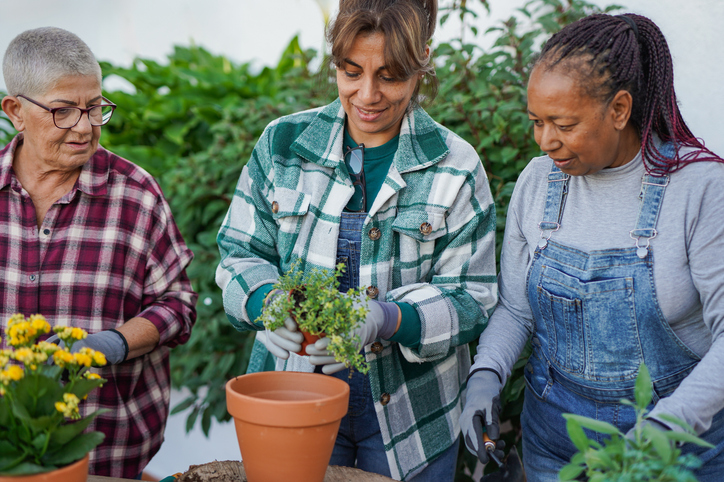
Spring has arrived again, and many of us are stepping outside with our gloves and watering cans, ready to tend the gardens that have been resting all winter. There is something sacred about this yearly ritual. The warming soil carries the scent of life returning, and the tender green shoots remind us that God has woven resurrection into creation itself. As we prepare our flowerbeds and coax new life from the ground, we are participating in a rhythm far older than we are—a rhythm that began in the very first garden where God placed humanity. The turning of seasons becomes a gentle invitation to remember the great biblical story that also begins, meets us again, and ends in a garden.


🌱 The First Garden: Eden and the Presence of God

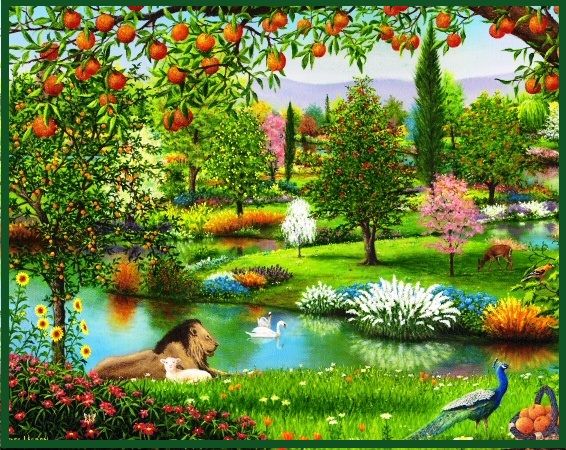
The biblical story opens with God planting a garden in Eden, a place overflowing with His presence, beauty, and harmony. In this garden, God walked with His creation; humanity’s first vocation was not hurried or anxious, but peaceful and attentive. Adam and Eve were invited to cultivate life, to steward what God had lovingly planted, and to enjoy unbroken fellowship with Him. Eden was not merely a location—it was a picture of how life with God was meant to be: flourishing, intimate, and whole. When sin entered the story, exile from the garden was not only a physical departure but a spiritual ache, a deep memory of the communion humanity was formed for. From that moment forward, Scripture becomes a long, tender story of God drawing His people back to that place of life with Him.


🌿 Gardens Along the Way: Echoes of Eden Through Scripture

Even after Eden closed behind humanity, God never stopped whispering garden promises. Throughout the Old Testament, the Tabernacle and Temple were adorned with carvings of flowers, fruit, branches, and blossoms, as if God were saying, “I am preparing a way back to My presence.” The prophets also spoke in garden language—Isaiah described deserts bursting into bloom, and Jeremiah envisioned God’s people becoming “like a well-watered garden.” These images were not poetic accidents; they were signs of hope. They reminded Israel that the God who once walked among the trees of Eden was still moving toward His people, still cultivating life in places that felt barren, still promising restoration in the midst of wilderness. The garden, woven quietly throughout the Scriptures, becomes a symbol of God’s determination to restore what was lost.


🌸 The Garden of Gethsemane: The Second Adam Kneels to Restore What Was Broken

On the night of the Last Supper, Jesus led His disciples to a garden—Gethsemane. This moment is deeply meaningful, for it is in a garden that the first Adam stepped away from God’s will, and it is in a garden that the second Adam fully surrendered Himself to the Father. After singing a hymn, Jesus entered the olive grove to pray, and the weight of the world pressed upon Him. Theologians often describe this scene as “the reversal of Eden,” because here Jesus speaks the words Adam never could: “Not My will, but Yours be done.” In Eden, humanity chose autonomy over obedience, and the ground became cursed. In Gethsemane, Jesus chose obedience over self-preservation, and His submission becomes the seedbed of redemption. Many scholars say that the victory of the cross was already taking root in the soil of Gethsemane, where Jesus resolved to drink the cup of suffering for the sake of the world. In this garden, salvation begins to blossom.


🌼 The Garden of the Resurrection: Mary Meets the Gardener of New Creation

When dawn broke on resurrection morning, John tells us that Jesus’ tomb was in a garden. Mary Magdalene, heartbroken and confused, stood weeping near the empty tomb. When she turned and saw Jesus, she assumed He was the gardener—an assumption that carries more truth than she realized. Jesus is the Gardener: the Restorer of Eden, the One who brings life out of death, the cultivator of new creation. The first Adam’s failure in a garden led to death; the risen Christ, standing in a garden, signals that death has been defeated. Mary becomes the first witness to this new creation, the first voice to announce that Jesus is alive, the first to step into the restored garden of God’s renewing work. This scene is tender and triumphant all at once, a moment when Eden begins to bloom again.


🌳 The Final Garden: Revelation and the Return of Eden

The Bible ends the way it began—with a garden. In Revelation, we see a renewed creation where the river of life flows from the throne of God and the tree of life bears fruit for the healing of the nations. The curse that began in Eden is finally undone. What was once a garden lost becomes a garden restored and expanded—a garden-city where God dwells forever with His people. No more exile, no more brokenness, no more distance. The presence of God fills everything, and life flourishes everywhere He reigns. The long story of Scripture—creation, fall, redemption, and restoration—finds its fulfillment in this final, everlasting garden.


🌷 What This Means for Us as We Tend Our Spring Gardens

As you kneel in your yard this spring, planting flowers or pulling weeds, may your heart remember the God who works in gardens. The story of salvation is rooted in soil, in seeds, in surrender, in resurrection. Christ, the true Gardener, is tending you even now. He is pulling up what harms, planting what brings life, and nurturing growth in places you once thought were barren. Just as the earth bursts forth with new life when the season turns, so does God continue His renewing work in us. Spring becomes more than a season; it becomes a reminder that the Gardener of Gethsemane, the Gardener of the Resurrection, and the Gardener of New Creation is making all things new—starting with the soil of our own hearts.

Heavenly Father,
As I stand in this garden, I thank You for the gift of creation and the privilege of nurturing life from the soil. Bless the seeds I plant and the ground I tend. May each one take root and flourish as a reflection of Your love.Grant me wisdom as I care for this garden—when to water, when to prune, and when to simply trust Your hand at work. Protect these plants and let Your peace rest over this place.As I work the soil, fill my heart with gratitude for the beauty around me. Let the harvest nourish both body and spirit, and teach me patience as I wait for growth in Your perfect timing.Thank You, Lord, for the lessons this garden teaches—life, growth, and the steady nurture that mirrors Your care for us. May this space be a sanctuary of peace and a testament to Your grace.

In Jesus’ holy name, Amen.