Now to him who is able to do immeasurably more than all we ask or imagine, according to his power that is at work within us.Ephesians 3:20–21
Offer Prayers That Match the Size of Your God
Pastor Burden (Dr. Jason) at First Baptist Lubbock recently said, “Offer prayers that are proportionate to the size of your God.” Those words settled deep in my spirit. In fact, the Holy Spirit just wouldn’t leave me alone about it. I felt convicted. Do I really understand how big God is?
I have learned—maybe because of my age, or maybe because of my deepened relationship with Jesus—that when I do not know an answer, I immediately go in prayer and to His Word. This is what I found in the Bible:
God’s Greatness Is Beyond Measure
God’s magnitude transcends human comprehension entirely. God is great with abundant power, and his understanding extends beyond measure. (Ps 147:5) Even heaven and the highest heaven cannot contain God—how much less a human-built structure. (1 Kings 8:27) This isn’t merely poetic language; it describes God’s fundamental nature.
God Is Everywhere Yet Uncontained
God fills heaven and earth, (Jer 23:24) yet this omnipresence doesn’t confine him to space. Whether one ascends to heaven or descends to Sheol, whether one travels to the uttermost parts of the sea, God is present there. (Ps 139:7–12) The paradox is essential: God operates within creation while remaining entirely unconditioned by spatial or temporal limits.
God’s Wisdom Is Unsearchable
God is the everlasting Creator of the earth’s ends, never fainting or growing weary, with understanding that cannot be searched out. (Isa 40:28) God’s depths cannot be discovered, his limits cannot be found—his measure exceeds heaven, Sheol, earth, and sea. (Job 11:7–9) The riches, wisdom, and knowledge of God are unfathomable; his judgments and ways are inscrutable. (Rom 11:33)
God Is Greater Than Our Understanding
This immensity creates a profound tension: God’s thoughts and ways are as far above human thoughts and ways as the heavens exceed the earth. (Isa 55:8–9) God measures waters in his hand, marks the heavens with a span, and treats nations as drops from a bucket and dust on scales. (Isa 40:12–15) God is able to do far more abundantly than all we ask or think. (Eph 3:20–21)
God Is Infinite—Beyond All Limits
The theological tradition captures this through the concept of infinity: God’s being and activity are in no way bound by limitations of time and space. The question of God’s location is not applicable—he brought space and time into being and existed before space was created. God’s size, ultimately, cannot be measured because measurement itself is a finite concept applied to an infinite reality.
In conclusion, Pastor Burden’s words have become both a challenge and an invitation: if God is truly immeasurable, then my prayers should no longer be limited by fear, doubt, or small expectations. My response is to pray with greater faith, greater boldness, and greater trust—believing that the God who is able to do immeasurably more is still working within us.
“Let the words of my mouth and the meditation of my heart be acceptable in Your sight, O Lord, my rock and my redeemer.” —Psalm 19:14
Can good writing be taught? I believe it can, though not in a simple or mechanical way. A teacher can show students how sentences work, how ideas are shaped, and how language becomes clear and powerful. What cannot be handed over so easily is the inward spark behind the work. No one can give another person a true love of words, or the deep urge to say something that matters. That must grow from within.
Even so, writing is not beyond teaching. It can be guided, practiced, strengthened, and refined, even if part of it always remains mysterious. There is both gift and discipline in it—something formed through instruction and something awakened from within.
🌿 Reading Like a Writer
People who want to write often read differently from those who read only for pleasure. Of course, they still care about whether a book is meaningful, moving, or enjoyable, but they also notice something more. They pay attention to how the writing works. They listen for rhythm. They watch how scenes are built, how details are placed, and how a writer creates feeling without explaining too much.
Reading, for a writer, becomes both admiration and study. It is not only a matter of loving a book, but of wondering how such a book was made.
🌿 More Than Correctness
Good writing asks for more than correct grammar, although correctness still matters. Clear and careful language is a form of respect for the reader. When a writer is careless, the reader must work harder than necessary, and the thought itself can lose its strength.
At the same time, correctness alone does not create beauty. A sentence may be proper in every way and still feel flat. Good writing needs life as well as order. It needs grace, energy, and a voice that feels real.
🌿 The Tradition of Teaching Writing
For centuries, people have tried to teach others how to write well. Manuals, essays, and books on style exist because writers have always wanted to pass on what they have learned. That long tradition suggests that writing can, indeed, be taught—at least in meaningful ways.
We may not be able to teach genius, but we can teach attention, patience, form, and discipline. These are not small things. They are the very practices that help a writer grow.
🌿 Writing and the Word: The Moment It Was Written
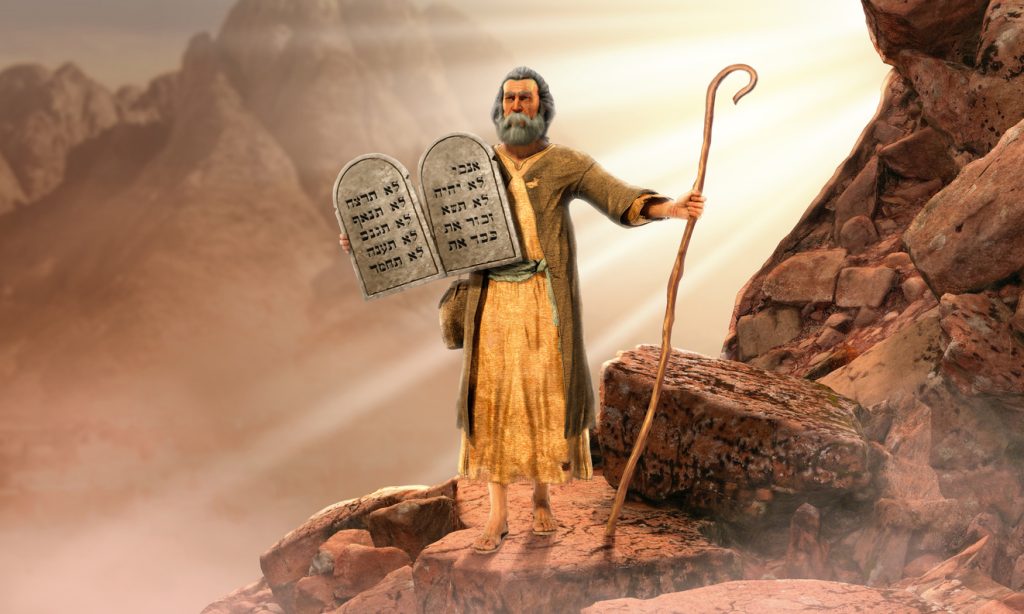
I am reminded of the moment in Scripture when God chose not only to speak, but to write. On Mount Sinai, the Lord gave Moses the commandments, not merely as spoken instruction, but as words inscribed by His own hand on tablets of stone. There is something profoundly significant in that act. God, who could have left His truth in the air as sound, instead fixed it in written form—making His word visible, lasting, and able to be returned to again and again.
Writing, in this sense, becomes more than communication; it becomes preservation, clarity, and testimony. What was written could be read, remembered, taught, and carried forward from one generation to another. It did not depend on memory alone, but on faithful inscription.
🌿 A Tutor’s Calling: Guiding the Voice of Another
My own experience as a reader and my training as a host for the Online Writing Center have convinced me that style matters deeply and that writing can be taught in meaningful ways. In this work, I have the opportunity to encourage other writers, to help them listen more closely to their own sentences, and to show them that clearer, stronger writing often begins with attention.
I cannot give anyone a voice that is not theirs, but I can help them discover it with greater confidence. I have seen that when people feel supported, their writing becomes bolder and more alive. That matters deeply.
I have read Gone With the Wind eleven times, and I know I did not return to it so often by accident. What drew me back was not only the story, but the way Margaret Mitchell told it. Her writing is full, vivid, and alive. She creates a world so rich that it rises off the page. There is drama in her language, but also intimacy. She makes history feel personal and emotion feel expansive.
Because of this, I believe good writing can be taught—even if not every part of it can be explained. Teachers may not be able to create longing, imagination, or style from nothing, but they can help shape them. They can help a writer learn how to carry feeling into language.
In the end, perhaps that is what good writing is: not merely correctness, but a voice strong enough to live in the mind of another person.
🙏 Prayer
Lord, You are the Author of all truth, beauty, and meaning. Teach us to steward our words with care, humility, and purpose.
Give us minds that think clearly, hearts that feel deeply, and voices that reflect Your grace.
Help us, as writers and teachers, to guide others with patience and encouragement, never shaping their voice into our own, but helping them discover the one You have given them.
May our words be honest, our style thoughtful, and our work pleasing in Your sight.
And in all we write, may Your truth be seen and Your love be heard.
“For thus says the Lord… who formed the earth and made it… He established it; He did not create it empty, He formed it to be inhabited: ‘I am the Lord, and there is no other.’” — Isaiah 45:18
There are moments when heaven feels close enough to touch—and this week, we experienced one of them.
God, who formed the earth with purpose and intention, also formed this gathering. It was not случай or convenience, but a quiet, divine invitation. He created the space, filled the room, and drew each heart to the table.
We gathered in the podcast room at in my home, five women in all—one joining us faithfully by Zoom—drawn together by a shared hunger for the Word and a deep love for the presence of God. We sat around the podcast table, not as strangers or spectators, but as sisters. The room felt cozy, wrapped in quiet anticipation, as if the Holy Spirit had already gone ahead of us and was waiting there.
We Began in Prayer
Before a page was turned or a word was spoken, we bowed our hearts in prayer.
And it wasn’t hurried. It wasn’t formal.
It was like lowering a bucket into a deep, living well.
Our voices rose gently—gratitude, surrender, expectancy. Scripture seemed to echo in the silence between our words. We were not just opening a Bible study—we were opening our hearts to be taught, shaped, and softened.
There is something sacred about the first prayer of a gathering. It sets the table. It aligns the room. It reminds us that this is not about information—it is about transformation.
And in that moment, we knew: God was with us.
A Wise Leader and a Beautiful Beginning
We were so blessed to have Doris Haney, a wise and godly woman, lead our study. With a gentle strength and a heart anchored in truth, she guided us into the first chapter with grace and clarity.
We are working through a Stonecroft Bible study written by MeLissa Houdmann—designed to invite questions, encourage conversation, and gently lead hearts toward Jesus Christ.
Chapter 1: A Beginning of Faith
The first chapter opens with foundational questions many carry quietly in their hearts:
Does God exist?
Can we trust the Bible?
Is faith reasonable in a skeptical world?
Rather than overwhelming, the study invites. It draws us into thoughtful reflection, offering both biblical truth and a steady assurance that faith is not blind—but grounded, living, and deeply personal.
Around the table, we didn’t rush. We listened. We leaned in. We made space for each woman to speak, to wonder, to share.
And that is where the beauty began.
The Heart of Stonecroft
Stonecroft Ministries carries a beautiful mission—to bring women together in meaningful relationships where the Gospel is shared naturally and lovingly.
Women gathering, just as we did, asking real questions and discovering that God is not distant—but near, personal, and calling each one into relationship with Him.
How blessed we are in Lubbock to have our own Stonecroft connection (Lubbock Christian Women’s Connection) —women willing to open their homes, extend their tables, and say, “Come sit with us.” Please join us for our monthly Luncheon.
A Room Full of Love
Each woman in that room carried something special. Love for other women. Love for Jesus.
There is a shared heartbeat among them—a desire not just to grow personally, but to reach outward, to bring the Word of God to other women who are searching, hurting, or simply wondering if there is more.
And we know there is more.
There is a Savior who calls. There is grace that meets us. There is truth that sets us free.
We Ended in Prayer… and Began Again
As our time came to a close, we gathered once more in prayer.
But this prayer felt different.
It carried:
Gratitude for what God had already done
Joy for the connections forming
And a quiet excitement for what was ahead
We didn’t leave the room the same way we entered.
There was a lightness… a warmth… an anticipation.
Because something had begun.
And as we stepped out into the late afternoon, each woman carried a spark of expectation—already looking forward to next week, when we will gather again around the table, open the Word, and once more lower our hearts into the deep well of God’s presence.
Closing Prayer
Heavenly Father, You are the One who forms and fills every space with purpose. Thank You for drawing us together, for the sweetness of Your presence, and for the work You have already begun in each heart around this table. Root us in Your truth, deepen our faith, and use us as vessels of Your love to reach others. Let Your Word take living root within us, and may it overflow into every life we touch.
It is time. Yes, for many this season means summer—slower days, travel, or rest—but for me, something new is beginning. In August, I will join the team of the Lubbock Symphony Teaching Artists, and already I can feel my mind coming alive. My files are beginning to fill, my notes are stacking up, and my brain is firing in every direction, connecting ideas faster than I can fully process them. It feels like the beginning of something meaningful—and I want to be ready.
Teuta Halimi Selmani is the author of the article and the developer of the Music Visualization Method, which she created through years of teaching young children.
A Larger Story: Music in Classrooms
The Lubbock Symphony’s Teaching Artist program is part of a larger national movement rooted in a powerful belief: music is not just something children learn—it is something they learn through. Across the country, teaching artists partner with schools to bring music into the classroom not as an “extra,” but as a core pathway to understanding. These programs are built on decades of research showing that music engages multiple areas of the brain simultaneously—supporting memory, attention, pattern recognition, and emotional development. This work is intentional. It is not simply about performing for children, but about designing learning experiences where music becomes the bridge to thinking. And that means preparation matters.
Studying the Child: How Young Minds Learn
As I prepare, I am realizing that my first responsibility is not the lesson—it is the learner. Children ages 5–7 are in a critical developmental stage. Their thinking is transitioning from concrete to early abstract reasoning, but they still rely heavily on sensory input and physical experience to understand new ideas. This is where many traditional approaches fall short. When we explain music in abstract terms—tempo, pitch, dynamics—we are often speaking beyond what a young child can fully grasp. The research on music visualization makes this clear: children understand music more effectively when it is externalized—when it is made visible, physical, and interactive.
Music Visualization: A Structured Way of Seeing Sound
The academic article I’ve been studying emphasizes that music visualization is not random or purely creative—it is actually a structured teaching method. In this approach, musical elements are intentionally mapped to visual or physical representations. Pitch is often shown through vertical space, helping children distinguish high from low. Rhythm can be represented through repeated shapes or movement patterns. Dynamics, such as loud and soft, are connected to size, intensity, or color, while tempo is experienced through speed of motion. This mapping creates what researchers call a cross-modal connection—linking what a child hears to what they see and feel. These connections strengthen neural pathways and make learning more durable. In other words, when a child draws a rising line while hearing a melody climb, they are not just being creative—they are building cognitive structure.
From Passive Listening to Active Processing
One of the most important findings in the research is the shift from passive listening to active processing. Traditional music instruction can sometimes position children as listeners only. But visualization transforms them into: Traditional music instruction can sometimes position children as listeners only. But visualization transforms them into interpreters, responders, and creators, giving them a more active role in the learning process. They are no longer receiving information—they are processing and expressing it. This matters because learning deepens when children are asked to make choices, represent ideas, and explain what they perceive. These actions move them beyond receiving information and into active understanding. These are higher-level cognitive tasks, even at a young age.
Individual Meaning-Making
Another key insight from the research is that music visualization allows for individualized meaning-making. While the teacher may introduce structured connections (such as high/low or fast/slow), children are encouraged to expand beyond those frameworks. This creates a balance between guided learning, which offers structured representation, and creative interpretation, which allows for personal response. That balance is critical. Too much structure limits imagination. Too much freedom removes clarity. But together, they help children develop both understanding and ownership of their learning.
Hidden Skill Development
What fascinates me most is how much learning is happening beneath the surface. Through music visualization, children are developing: Through music visualization, children are developing pattern recognition, which is foundational for math and reading; sequencing skills, which help them understand order and progression; symbolic thinking, which supports connecting one form to another; and emotional literacy, which helps them identify and express feelings. These are not small outcomes. They form the building blocks of academic success across disciplines. And yet, from the child’s perspective, they are simply engaging with music.
The Role of the Teaching Artist
A teaching artist is not just someone who presents music. A teaching artist designs learning experiences, observes how children respond, adjusts in real time, and asks questions that guide thinking. Instead of saying, “This is what this music means,” The role becomes asking,
“What do you notice?” “What do you see?” “How would you show that?”
Preparing with Purpose
So yes—it is summer. But it is also a season of preparation. Practice continues on the ukulele, flute, and piano. Notes are growing, ideas are expanding, and the work of connecting research, creativity, and classroom reality is already underway. Teaching music well requires more than knowing music. It requires understanding how children think, recognizing how learning happens, and using music as a bridge between the two. Because when music enters the classroom intentionally, it becomes more than sound.
“Let the word of Christ dwell in you richly in all wisdom; teaching and admonishing one another…” — Colossians 3:16 (KJV)
Beginning the Journey
One of the most interesting things I’m learning as I attend Writing training sessions for my job at Liberty University is that not every writer thinks about writing in the same way. Some writers want clear rules and the “right” answer. Others are more comfortable with multiple perspectives. Still others see writing as a process of reflection, revision, and discovery. In other words, here are the three types of writers I may be assisting: dualist, relativist, and reflective writers. Each one has strengths, and each one needs a slightly different kind of support.
Calling in Four Famous Writers
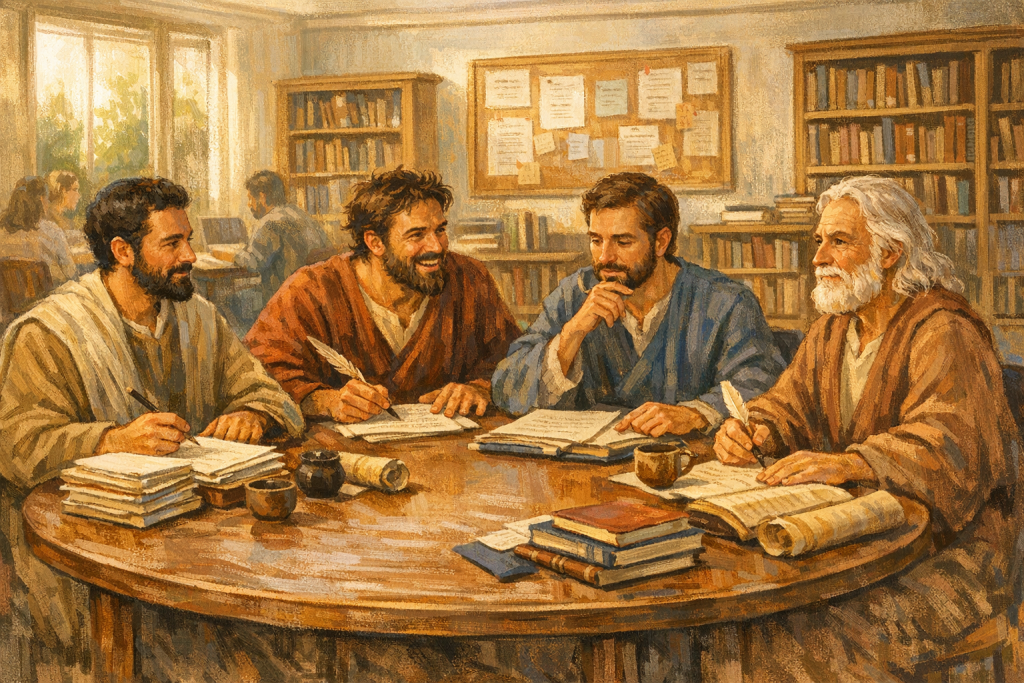
Now for the fun part. Matthew, Mark, Luke, and John have different styles, let’s have some fun and imagine them visiting the Writing Lab.
Matthew: The Structured Writer
Matthew came in first, sat down neatly, and said, “I like structure. I like organization. I like showing how everything connects and fulfills what has already been said.” I nodded and thought, Okay, Matthew definitely wants the assignment sheet, the rubric, and probably a sample paper too. If I were using my Writing Lab categories creatively, I might say Matthew sounds the most like a dualist writer. He values order, clarity, and clear teaching, and he seems very concerned with presenting truth in a direct, purposeful way.
Mark: The Urgent Writer
Then Mark came in, and before I could even offer him a chair, he was already halfway through his explanation. “Immediately,” he seemed to say, “we need to get to the point.” Mark’s style felt urgent, energetic, and fast-moving. He didn’t seem interested in long introductions or unnecessary details. He wanted action. He wanted momentum. Mark was the hardest to classify, but I could imagine him leaning toward a writer who values strong direction and clarity while still pushing forward with intensity, a dualist! He did not seem interested in overthinking the process. He wanted the message on the page.
Luke: The Thoughtful Writer
Luke arrived next with the calm confidence of someone who had actually prepared for the appointment. He opened his notes and explained that he preferred to write in an orderly way, carefully considering details and making sure the account was thorough and understandable. Luke sounded like the kind of writer who understands that ideas need context, explanation, and thoughtful arrangement. He felt much more like a reflective writer to me—careful, balanced, and interested in developing writing with purpose and precision.
John: The Deeply Reflective Writer
Then John walked in, and the entire room changed. John did not seem rushed at all. Instead, he spoke in a way that made me feel like every sentence had layers beneath it. He seemed less interested in simply giving information and more interested in helping the reader see meaning, depth, and truth from a deeper angle. If Matthew brought structure and Mark brought urgency, John brought reflection. He definitely struck me as a reflective writer—the kind of writer who is comfortable with complexity and willing to let ideas unfold thoughtfully.
Back to Studying!
Now that was a fun break, but now it’s back to studying. And if I smile a little longer at my students, it will probably be because I’m thinking of Matthew, Mark, Luke, and John.
Scripture holds together personal holiness, public justice, and divine wisdom.
“Do not be overcome by evil, but overcome evil with good.” Romans 12:21 (ESV)
This week in Dr. Gary May’s BIBL 830 course, The Bible and the Pastor (or Uses of Scripture in Pastoral Ministry), my homework was to think through how Christians should form a biblical response to a contemporary ministry issue. The course examines how Scripture functions in preaching, teaching, counseling, church administration, and the pastor’s own devotional life, with the goal of helping pastors apply the Bible faithfully in real ministry settings. For this assignment, I reflected on John Stott’s treatment of war and peace in Issues Facing Christians Today. As I worked through the material, I was especially struck by the wisdom of Romans 12 and 13 and how those two chapters help Christians think carefully about both peace and justice. While the original discussion was written for class, I realized the subject reaches far beyond the classroom. In a world marked by violence, political division, and deep moral uncertainty, the question of how Christians should think about war is not merely academic. It is pastoral, personal, and public.
Why Stott’s Approach Matters “Mercy triumphs over judgment.” — James 2:13
What I appreciate about John Stott’s approach is that he refuses two extremes. On one side is the idea that peace means never resisting evil in any form. On the other side is the assumption that force is easily justified whenever a nation feels threatened or angry. Stott takes neither path. Instead, he argues that because God is both just and peace-loving, Christians must think carefully and biblically about the use of force. War, in his view, is never something to celebrate. At best, it is a tragic possibility in a fallen world. Yet Stott also insists that civil government has a real responsibility before God to restrain evil and protect the innocent. That tension—between peace and justice—is what makes the discussion so difficult and so important.
A Christian Framework for Thinking About War “Blessed are the peacemakers, for they shall be called sons of God.” — Matthew 5:9
Stott draws heavily from the historic Christian just war tradition. In simple terms, this tradition asks whether war can ever be morally justified, and if so, under what conditions. The answer is not a blank check. According to this framework, a war must have a just cause, be carried out by legitimate authority, and be pursued only after serious alternatives have been exhausted. Even then, the conduct of war must be restrained. Violence cannot be indiscriminate, and every effort must be made to protect those who are not participating in the fighting. Finally, there must be a realistic hope that the use of force will lead to a more just outcome rather than deepen injustice. What makes Stott’s discussion valuable is that he does not treat these ideas as political slogans. He treats them as moral boundaries that place human power under God’s judgment.
Romans 12 and 13 and the Wisdom of God “Never avenge yourselves, but leave it to the wrath of God…” — Romans 12:19
What I find especially compelling in Stott’s discussion is the way he handles Romans 12 and 13 together. At first glance, those chapters may seem to pull in different directions. Romans 12 calls Christians to reject revenge, love their enemies, and overcome evil with good. Romans 13 teaches that governing authorities have a God-given role in restraining evil and punishing wrongdoing. Yet when those chapters are read together, they display the wisdom of God rather than a contradiction in Scripture. Romans 12 shapes the heart and conduct of the Christian disciple. Romans 13 explains the public responsibility of civil authority. In other words, God does not give the same calling to every person or institution in exactly the same way. That distinction matters. Christians are never permitted to indulge personal vengeance, hatred, or triumphalism. At the same time, Stott argues that government may, under limited and morally serious conditions, use force to protect the innocent and restrain evil. Whether or not one agrees with every part of his conclusion, this reading of Romans 12 and 13 shows how Scripture can hold together personal holiness, public justice, and divine wisdom.
Why This Matters Beyond the Classroom “Your word is a lamp to my feet and a light to my path.” — Psalm 119:105
What this assignment reminded me of most is that a Christian view of public life cannot be built on emotion alone. It must be shaped by Scripture. That is why questions about the truthfulness and authority of the Bible matter so much. If Scripture is trustworthy and authoritative, then Christians cannot simply adopt whatever moral position feels most compassionate or most practical in the moment. They must wrestle honestly with the whole witness of the Bible, even when that witness includes difficult tensions. For me, that is one of the enduring strengths of Stott’s work. He shows that serious Christian ethics requires more than strong opinions. It requires humble submission to God’s Word, careful theological reasoning, and a willingness to let Scripture challenge our instincts as well as our politics.
Final Thought “If any of you lacks wisdom, let him ask God, who gives generously to all…” — James 1:5
I started this week’s homework as an academic assignment for Dr. May’s class, but I finished it thinking more deeply about the wisdom of God in Scripture. Romans 12 and 13 do not offer simplistic answers, but they do offer needed guidance. They remind us that Christians are called to humility, enemy-love, and freedom from personal vengeance, while also recognizing that God has given civil authority a role in preserving justice and order. In a time when public arguments about war, justice, and power are often shaped more by outrage than wisdom, that biblical balance matters. Stott’s work offers a helpful reminder that faithful Christian thinking requires both conviction and humility, and that God’s Word remains the surest guide for difficult moral questions.
Prayer Heavenly Father, give us hearts that are shaped by Your Word and not by fear, anger, or pride. Teach us to love our enemies, to walk in humility, and to trust Your wisdom where difficult questions remain. Grant wisdom to those in authority, protection to the innocent, and peace where there is violence. Above all, help us to submit our minds and lives to the truth of Scripture through Jesus Christ our Lord. Amen.
Resource Stott, John R. W. Issues Facing Christians Today. 4th ed. Grand Rapids, MI: Zondervan, 2006.
A Greek Reading of Romans 12 and the Shape of Worship
by Dee Ann Loving-Tackitt
“I appeal to you therefore, brothers and sisters, by the mercies of God, to present your bodies as a living sacrifice, holy and acceptable to God, which is your spiritual worship” (Romans 12:1).
The Rhythm of Worship in Everyday Life
We often assume worship ends when the singing stops. But Paul suggests something far more searching—and far more beautiful. We do not leave our worship behind when we walk out of the sanctuary. It lingers with us, like a melody still echoing after the final note has faded. It follows us into the quiet of our homes, into conversations at the table, into moments of weariness, and into the unseen spaces where faith becomes real. What was lifted in song begins to take shape in service. What was spoken in prayer becomes a posture of the heart throughout the day.
Somewhere between Sunday morning and the ordinary rhythm of the week, we begin to sense that worship was never meant to be something we merely attend, but something we carry—something that continues in how we think, how we love, and how we offer ourselves back to God in the smallest and most sacred ways. It meets us in the hard conversation, in the hidden prayer, in the choice to serve when no one notices. Worship, it seems, refuses to stay contained within walls or schedules—it breathes, it moves, it lives.
It is in this movement—from gathered worship into lived worship—that Romans 12 begins to open with new clarity. What can first feel like a series of separate instructions is, in truth, a deeply connected vision of the Christian life. Paul is not handing us a scattered collection of commands; he is showing us how the mercies of God reshape the whole person. Worship becomes the thread that holds everything together—our minds, our relationships, our service, and our love—until faith is no longer confined to a moment, but expressed through the offering of an entire life.
The Priesthood of Every Believer
Paul begins with the language of offering: to “present your bodies as a living sacrifice” is unmistakably priestly language. It reaches back into the Old Testament, where priests brought offerings before God, yet in Christ that holy calling is no longer limited to a few. Scripture now names the whole church as “a chosen race, a royal priesthood” (1 Peter 2:9), a vision that helps illuminate why Romans 12 speaks of worship in such embodied and daily terms.
Worship, then, is not merely something we attend; it is something we become.
Our lives—our thoughts, actions, relationships, and service—are now the offering. This transforms the ordinary into the sacred. Nothing is outside the reach of worship when it is given back to God.
Transformation Before Expression
Yet Paul does not move from offering straight into outward action. Before he speaks of gifts, relationships, or service, he turns to the inner work that makes true worship possible: “Do not be conformed to this world, but be transformed by the renewing of your mind” (Romans 12:2).
This renewal matters because worship always flows from what shapes our vision. If our minds are formed primarily by the world, our devotion can become shallow, distracted, or distorted. But when truth renews the way we think, we begin to discern the will of God—what is good, acceptable, and perfect—and our lives start to align with what we behold.
True worship begins inwardly before it is ever expressed outwardly.
A Humble and Connected Body
A renewed mind does not remain private for long. It begins to shape the way we see ourselves and the people around us. That is why Paul moves naturally from inward transformation to shared life, calling believers to humility: “not to think of himself more highly than he ought to think” (Romans 12:3).
This is not a call to diminish ourselves, but to see clearly. Each of us belongs to something greater—“we, though many, are one body in Christ, and individually members one of another” (Romans 12:5). Worship dismantles pride because it reorients our identity. Life is no longer about personal prominence; it is about participating in the life of Christ’s body.
Gifts as Acts of Worship
Once Paul has reminded us that we belong to one body, he turns to the grace at work within that body. God has distributed gifts—graciously and intentionally—and each one is meant to serve the life of the whole. Whether we serve, teach, exhort, give, lead, or show mercy, these gifts are not platforms for recognition but expressions of worship.
When we use what God has given us for the good of others, we are offering something holy. Ministry itself becomes an act of devotion. Teaching becomes worship. Serving becomes worship. Giving becomes worship. Every gift, rightly exercised, becomes a living sacrifice before God.
The Heart of It All: Genuine Love
And yet Paul does not allow the chapter to rest in giftedness alone. Beneath every act of service lies a deeper foundation, and at the center of everything he writes is this anchoring truth: “Let love be genuine” (Romans 12:9).
This is not just one instruction among many—it is the heartbeat of the entire passage. Love is what gives meaning to every gift and every act of service. Without it, even the most impressive expressions of ministry become empty. As Paul teaches elsewhere, “If I… have not love, I gain nothing” (1 Corinthians 13:3).
Genuine love is not surface-level kindness. It is rooted in truth. It “abhors what is evil” and “holds fast to what is good” (Romans 12:9). It is both discerning and devoted.
A Life Overflowing With Worship
Once love takes root, it does not remain an idea for long—it becomes visible in everyday life. It is expressed in devotion to others, in honoring them above ourselves, in diligence, in spiritual fervor, and in faithful service to the Lord. It rejoices in hope, endures through trials, and perseveres in prayer. It sees needs and responds with generosity. It opens doors in hospitality, welcoming others into grace-filled spaces. It is present when we choose patience instead of sharpness, forgiveness instead of resentment, or quiet faithfulness in work that feels unseen.
What emerges here is not a checklist, but a portrait—a lived-out theology. These are not isolated commands meant to weigh us down, but living expressions of what it looks like when worship fills a life.
Not a Checklist, but an Invitation
That is why Romans 12 is best received not as a ledger of spiritual performance, but as an invitation into a way of life. When we read it only as a list of requirements, it can feel overwhelming, and we may quietly think, “I don’t measure up.” But Paul’s intention is not to crush us under impossible standards; it is to draw us more deeply into the life made possible by God’s mercy.
Instead of asking, “Am I doing all of this perfectly?” we begin to ask, “How is God inviting me to worship today?” Perhaps it is through encouraging a weary heart, persevering in unseen prayer, opening our home even when it feels inconvenient, or choosing humility in a moment that tempts us toward self-protection.
Seen this way, Romans 12 gently but powerfully expands our understanding of worship far beyond gathered moments. It reminds us that worship happens in quiet places, in difficult seasons, in ordinary conversations, and in faithful obedience—in the hospital room, in the classroom, in the kitchen, and in the stillness of prayer. It is found wherever a life is surrendered to God.
A Living Offering
In the end, this passage is not about striving harder but about surrendering more fully. Because of God’s mercy, our lives become the altar, and upon that altar we offer ourselves—not once, but continually. The song of worship does not end when the service closes; it follows us into the world as a living offering.
Living. Breathing. Serving. Loving.
And in that offering, God is pleased.
Prayer Heavenly Father, teach us to worship You not only with our songs, but with our lives. Renew our minds, humble our hearts, and make us faithful in the ordinary places where devotion is quietly formed. Let love be genuine in us. Shape our service, our words, our work, and our rest into a living offering that is pleasing to You. And when the music fades and the week unfolds before us, may the song of Your mercy continue in us—living, breathing, serving, and loving for Your glory. In Jesus name we pray. Amen.
Culy, Martin M. “Romans 12:9-13: Greek Grammar and How to Worship God.” Journal of the Evangelical Theological Society 65, no. 4 (2022): 719–32.
Opening Scripture “For I desire mercy, not sacrifice, and acknowledgment of God rather than burnt offerings.” (Hosea 6:6; cf. Matthew 9:13)
The Tension Between Legalism and Mercy
Legalism has always been uncomfortable with mercy. It clings tightly to rules, even when God Himself shows that mercy is the deeper law. Yet the New Testament does not erase the Law—it reveals its heart. Jesus does not come to dismantle what God established; He fulfills it (Matthew 5:17), uncovering what the Law was always pointing toward: the mercy of God extended to His people through relationship, not mere regulation. Mercy Woven Throughout the Old Testament
All throughout Scripture, we see that mercy was never an afterthought—it was always central. David, fleeing for his life, ate the consecrated bread reserved for priests, and God did not condemn him (1 Samuel 21:1–6). The Hebrew midwives disobeyed Pharaoh’s command to kill the male infants, preserving life instead of submitting to wicked authority, and Scripture says God blessed them (Exodus 1:17–21). Rahab hid the spies, defying her king and risking her life, and rather than being judged, she was redeemed and woven into the very lineage of Christ (Joshua 2; Matthew 1:5). Again and again, mercy did not break God’s will—it fulfilled it.
Jesus Reveals the Fullness of the Law
Jesus brings this truth into full light. When He walks among the people, He heals on the Sabbath (Mark 3:1–5). He reaches for those labeled “unclean” and restores them (Mark 1:40–42). He sits with sinners and calls them into new life (Luke 5:30–32). And He declares plainly, “I desire mercy, not sacrifice” (Matthew 9:13). In every act, Jesus shows us that the Law was never meant to burden or crush—it was meant to guide hearts toward God, to open the way for redemption, and to reflect His compassion.
The Law Points to Christ
So here is the truth we must hold onto: if a law does not point us to Christ, if it does not reflect His mercy, if it does not move people toward redemption, then it is no longer functioning as God intended. The Law is a signpost—and every signpost must point to Jesus. When we cling to rules without mercy, we miss the destination. But when we walk in mercy, we step into the very heart of God.
Closing Prayer Heavenly Father, thank You for revealing the true heart of Your Law through Jesus. Forgive us for the times we have clung to rules without reflecting Your mercy. Teach us to see people the way You see them—with compassion, grace, and a desire for their redemption. Help us to walk in truth without losing love, and to uphold Your Word in a way that points others to Christ. Let our lives be signposts that lead others to You as we share mercy and Your Truth.
I’ve been scribing the Gospels lately—just twenty verses into Mark chapter 1—and I finally decided it was time. I needed to call Mark into the Writing Center. Yes, that Mark. The one who wrote the shortest, fastest, most breathless Gospel in the New Testament. The one who can’t seem to write a paragraph without sprinting.
So I sat him down, slid the manuscript across the table, and said, “Mark, we need to talk about your grammar.”
He blinked at me, probably wondering how he got here and why a woman from the 21st century was holding a red pen over his sacred text. But I pressed on.
“Mark, About These Sentences…”
“Listen,” I told him, “I know this is translated from your original language. I know Koine Greek doesn’t follow modern English rules. I know your Gospel was meant to be read aloud, fast-paced, urgent, breathless. But let’s not make excuses here.”
I tapped the page.
“You have sentences that run on for half a mile. You start half your paragraphs with ‘And.’ You leave out verbs. You splice commas like you’re trying to knit with punctuation. And honestly, Mark… I love it.”
He looked relieved.
Because the truth is, Mark’s grammar may be chaotic, but his message is not. His Gospel moves like a wildfire—quick, bright, unstoppable. It reads like someone who cannot wait another second to tell you about Jesus. And maybe that’s why his grammar feels like it’s sprinting. His heart is sprinting.
The Gospel That Changed Lives
I leaned back in my chair and said, “Mark, your grammar may give English teachers heart palpitations, but your Gospel has changed the world.”
He nodded, because he knows.
His Gospel has:
called sinners to repentance
revealed Jesus as the Son of God
shown demons fleeing at His voice
displayed the heavens torn open
carried the cross to the center of history
proclaimed resurrection with trembling joy
Mark didn’t write to impress scholars. He wrote to save souls. He wrote so the church—then and now—could hear the good news with urgency and clarity.
And maybe that’s why his grammar feels like a man running out of breath. He wasn’t polishing sentences. He was proclaiming salvation.
Why I Love Mark’s “Bad Grammar”
So I told him, “Mark, your grammar may be questionable, but your theology is flawless.”
He grinned.
Because the Gospel of Mark is not a literary masterpiece—it is a spiritual earthquake. It shakes the ground under our feet. It tears open the heavens. It drives Jesus into the wilderness and drives demons out of people. It calls fishermen from their boats and calls us from our old lives.
Mark writes like a man who has seen the kingdom of God break in and cannot slow down long enough to breathe, much less diagram a sentence.
And honestly? I love it!
Father, Thank You for the gift of Your Word—perfect in truth even when our grammar isn’t. Thank You for inspiring Mark to write with urgency, passion, and Holy Spirit fire, reminding us that the Gospel is not about polished sentences but about a Savior who changes lives. As we read, study, and even laugh our way through these verses, let Your Spirit open our eyes to see Jesus more clearly. Give us hearts that respond as quickly as Mark writes—immediately, joyfully, and obediently. May Your Word run swiftly through our lives, accomplishing everything You send it to do. In Jesus’ name, Amen.
“God is Spirit, and those who worship Him must worship in spirit and in truth.” — John 4:24
Worship begins where Jesus begins—with the Spirit. Before we ever lift a song, raise a hand, or open a hymnal, Jesus sets the foundation: true worship is Spirit‑led. It is not confined to a building, a style, or a tradition. It flows from hearts shaped by the Holy Spirit and anchored in the truth of God’s Word. When we start here, every act of worship becomes more than sound; it becomes surrender.
Why Hymns Matter More Than We Realize
For generations, hymns have been the church’s way of teaching the faith. They were the catechism of the common believer, the seminary of the shepherd and the seamstress, the farmer and the fisherman. When people could not read Scripture, they sang Scripture. When they could not articulate doctrine, they memorized doctrine through melody.
Hymns are not just music; they are memory. They are not just poetry; they are proclamation. They are not just tradition; they are testimony. And when we sing them with hearts yielded to the Holy Spirit, they become a lifeline—carrying truth into places our minds may forget but our spirits remember.
The Cross Teaches Us to Sing
At the cross, sorrow becomes song. At the cross, suffering becomes strength. At the cross, theology becomes doxology.
This is why the church has always sung—not because life is easy, but because Christ is worthy. Not because we have all the answers, but because we know the One who does. When we sing, we preach to ourselves, we preach to one another, and we preach to the watching world. And in that preaching, hope rises.
Paul echoes this when he writes, “Sing and make music from your heart to the Lord” (Ephesians 5:19). Spirit‑led worship is not performance; it is participation in the life of God.
A New Song for a New People
Psalm 40:3 declares, “He put a new song in my mouth, a hymn of praise to our God.” That means the song is not self‑generated—it is Spirit‑given. The melody of redemption is placed in us by the One who redeemed us. When God rescues us, He doesn’t just change our circumstances—He changes our song.
This is why hymns endure. They are not merely human creativity; they are human response to divine revelation. They become Scripture in the heart, shaping us long after the final note fades.
Closing Reflection
Worship is not only something we study—it is something we sing. And every time we lift our voices, we join the great cloud of witnesses who have sung their way through suffering, through joy, through doubt, through faith, and always toward the cross. May every song we sing be Spirit‑breathed, Scripture‑rooted, and Christ‑centered.
Closing Prayer
Heavenly Father, Thank You for giving us a new song—one shaped by Your Spirit and anchored in Your truth. Teach us to worship as Jesus commanded: in spirit and in truth. Let every hymn, every melody, and every whispered prayer draw us closer to the cross. Fill our hearts with gratitude, our mouths with praise, and our lives with the sound of redemption. May our worship honor You and bear witness to Your hope in a world that desperately needs it. In Jesus name we pray. Amen.