Pastor Dee Loving‑Tackitt is a follower of Christ, devoted wife of forty‑three years, mother of three, and grandmother of five grandsons. She is the founding and Lead Pastor of The House of Prayer, a Spirit‑led ministry focused on grace, intercession, outreach, and creative discipleship. Her work includes international prayer initiatives, two national podcasts, street preaching, ministry in retirement communities, and Creative Discipling Classes for Women. She authors a daily Christian blog with an international readership. A lifelong worshiper through music, she sings with the Sweet Adelines, Hub City Harmony, and the Singing Women of Texas, West Chapter. Pastor Dee is pursuing her Doctor of Ministry in Biblical Studies at Liberty University, where she also earned her Master of Arts in Christian Ministry. She also holds a Bachelor of Music Education from West Texas A&M University.
“The Lord is good to all; he has compassion on all he has made.” Psalm 145:9 (NIV)
Have you ever wondered whether our words about God are big enough?
The longer we walk with Christ, the more we realize that human language struggles to describe divine reality. We speak of God as Father, Shepherd, King, Redeemer, and Friend. Scripture provides us with these images, yet none of them fully captures the mystery of who God is.
This is not a weakness of faith. It is a reminder of God’s greatness.
Why We Need Metaphors
Much of our language about God is metaphorical. We call God our Rock, yet we do not mean that He is a literal stone. We describe Him as our Shepherd, though He does not walk behind flocks carrying a staff.
These images help us understand aspects of God’s character. They are gifts that enable finite people to speak about an infinite God.
Metaphors do more than decorate language. They help us see truth. They create bridges between what we know from everyday life and what we are trying to understand about God’s nature.
The Importance of Careful Language
The words we use matter because language shapes perception.
If we reduce God to a single image or description, we risk creating a picture that is too small. Scripture itself employs a rich variety of images and descriptions because no single metaphor can contain the fullness of God.
Good theology is not merely about choosing the correct words. It is about recognizing both the power and limitations of those words.
God’s Kindness Revealed
One of the most beautiful truths in the Christian faith is that God is not distant from humanity. The biblical story reveals a God who creates, calls, redeems, forgives, and restores.
When we speak of the kindness of God, we are speaking of His gracious movement toward His creation. We see this kindness in the Incarnation, in the Cross, and in the daily mercies that sustain us.
God’s kindness is not sentimental. It is active. It reaches into broken lives and offers hope, healing, and renewal.
Humility in Theology
There is a certain humility required when talking about God.
We must speak because God has revealed Himself. Yet we must also remember that our words can never exhaust the mystery of the One we worship.
Theologians, pastors, and everyday believers share the same responsibility: to use language faithfully while remaining open to wonder.
A Final Reflection
Perhaps the goal of theological language is not to place God neatly inside our definitions but to draw us deeper into relationship with Him.
Every biblical image, every metaphor, and every doctrine ultimately points beyond itself to the living God.
And when our words fall short, His kindness remains greater than our ability to describe it.
“Now we see only a reflection as in a mirror; then we shall see face to face” (1 Corinthians 13:12).
Resource
Soskice, Janet Martin. The Kindness of God : Metaphor, Gender, and Religious Language. Oxford ; Oxford University Press, 2007.
A blog reflection on hollow religion, true repentance, and the mercy of God
Isaiah 1:10–18 (NIV)
10 Hear the word of the Lord, you rulers of Sodom; listen to the instruction of our God, you people of Gomorrah! 11 “The multitude of your sacrifices— what are they to me?” says the Lord. “I have more than enough of burnt offerings, of rams and the fat of fattened animals; I have no pleasure in the blood of bulls and lambs and goats. 12 When you come to appear before me, who has asked this of you, this trampling of my courts? 13 Stop bringing meaningless offerings! Your incense is detestable to me. New Moons, Sabbaths and convocations— I cannot bear your worthless assemblies. 14 Your New Moon feasts and your appointed festivals I hate with all my being. They have become a burden to me; I am weary of bearing them. 15 When you spread out your hands in prayer, I hide my eyes from you; even when you offer many prayers, I am not listening. Your hands are full of blood! 16 Wash and make yourselves clean. Take your evil deeds out of my sight; stop doing wrong. 17 Learn to do right; seek justice. Defend the oppressed. Take up the cause of the fatherless; plead the case of the widow. 18 “Come now, let us settle the matter,” says the Lord. “Though your sins are like scarlet, they shall be as white as snow; though they are red as crimson, they shall be like wool.”
The Shock of the Opening Address
The passage begins with a jolt: “Hear the word of the LORD, you rulers of Sodom; listen to the instruction of our God, you people of Gomorrah!” Isaiah is not speaking to pagan cities, but to Judah. By using Sodom and Gomorrah, he strips away false security based on covenant identity, temple worship, or religious tradition.
God Rejects Worship That Covers Injustice
The sacrifices were not inherently wrong; God had given Israel a sacrificial system. The problem was that Judah had turned worship into a substitute for repentance. They were bringing offerings while continuing in violence, oppression, and neglect of the vulnerable.
God’s language is intense: “I have more than enough,” “I have no pleasure,” “Stop bringing meaningless offerings,” “Your incense is detestable to me,” and “I hate with all my being” your appointed festivals. This is divine revulsion toward worship that has become a mask for sin.
Verse 15 gives the sharpest image: “When you spread out your hands in prayer, I hide my eyes from you… Your hands are full of blood!” The posture of prayer cannot erase injustice. Hands lifted in worship are unacceptable when those same hands tolerate oppression.
The Call: Wash, Turn, Learn, Seek
Isaiah does not leave the people with condemnation alone. God commands them to wash, become clean, remove evil, stop doing wrong, and learn to do right. Repentance is not merely feeling sorry; it is a reorientation of life.
That reorientation is concrete: “seek justice. Defend the oppressed. Take up the cause of the fatherless; plead the case of the widow.” For Isaiah, authentic worship produces advocacy for those most likely to be ignored.
The Grace of Verse 18
After such a severe indictment, verse 18 is stunning: “Come now, let us settle the matter,” says the Lord. Though their sins are like scarlet, they shall be “as white as snow.” God exposes sin not to destroy the repentant, but to invite them into cleansing.
How the New Testament Echoes Isaiah 1:10–18
The New Testament carries Isaiah’s concern forward. Jesus confronts religious leaders who are careful about outward observance while neglecting “justice and mercy and faithfulness” (Matthew 23:23). He also says, “I desire mercy, and not sacrifice” (Matthew 9:13; 12:7), echoing the prophetic conviction that religious precision cannot compensate for lovelessness.
James makes the connection even more direct: “Religion that is pure and undefiled before God the Father is this: to visit orphans and widows in their affliction” (James 1:27). Isaiah commands Judah to defend the fatherless and plead the widow’s cause; James names care for the same vulnerable groups as a mark of true religion.
What This Passage Says to Us Today
Isaiah 1:10–18 warns modern readers against measuring spiritual health only by visible religious activity. Church attendance, prayer, giving, Bible study, and public ministry matter, but they cannot replace repentance, humility, justice, and mercy. Isaiah asks not only, “Do I worship?” but, “Is my worship shaping me into someone who reflects God’s compassion?”
The passage is also hopeful. God does not simply say, “Go away.” He says, “Come now.” He invites stained people into cleansing, guilty people into forgiveness, and hollow worshipers into transformed obedience.
A Closing Prayer
Heavenly Father, search our hearts and reveal where our worship has become outward performance without inward repentance. Wash us from sin, turn us from evil, and teach us to do what is right. Let our prayers lead to justice, our worship lead to mercy, and our faith become visible in compassion for the vulnerable. Thank you that though our sins are like scarlet, you promise to make them white as snow. Amen.
“Come now, let us reason together, says the Lord.” —Isaiah 1:18 (ESV)
An Unexpected Writing Lesson
One of the unexpected blessings of my work reviewing student papers at Liberty University is that I get to step into conversations I might never have joined otherwise. In a single week, I may read papers on theology, Shakespeare, police reporting, leadership, education, ministry, history, and any number of subjects in between. Whatever the topic, I find myself discussing the same three things with students: their thesis, the structure of the paper, and the clarity of their writing.
A good paper has a clear destination. A reader should be able to identify the argument, follow the organization, and understand where the writer is leading them. Because of that, I am always looking for the thesis.
So imagine my surprise as I sat working on my own doctoral homework this week. I found myself stopping in the middle of a reading assignment—not because I disagreed with the author, but because the writing was so skillfully constructed that I had to analyze it. The introduction was engaging. The conclusion was memorable. The structure was excellent. Yet something unusual was happening.
The thesis was not in the introduction. That almost never happens. As I tell my students, every paper needs a thesis. I often use what I call the Hamburger Thesis. A purpose statement simply announces a topic: “This paper will discuss hamburgers and their ingredients.” That statement tells the reader the topic, but it does not make a claim. A thesis, however, makes a claim: “Hamburgers are a popular meal because they are convenient, affordable, and customizable.” In that sentence, hamburgers are the topic, and the claim is that they are popular for their convenience, affordability, and customization. The supporting reasons become the body of the paper. In other words, a strong thesis tells readers not only what the writer is discussing, but what the writer believes about it.
That is why this week’s reading stopped me in my tracks. As someone who spends a great deal of time helping students identify thesis statements, I expected to find the author’s central claim near the beginning. Instead, he carefully led his readers through history, challenges, and observations before finally revealing the heart of his argument near the conclusion.
Pulling Up a Chair
And the metaphor was beautiful. The author described theological research as entering an ongoing conversation. I often think about what a privilege it is to sit down and join the conversation.
What conversation? The conversation that began long before us. When we open our Bibles, we enter a conversation that stretches across centuries:
Moses speaks. David sings.
Isaiah proclaims. Matthew testifies.
Paul reasons. John worships.
Then the church fathers join in.
Augustine wrestles with grace.
Luther raises difficult questions.
Calvin examines Scripture.
Countless pastors, missionaries, scholars, and faithful believers add their voices, each attempting to understand and proclaim the Word of God more clearly.
And then, somehow, by God’s grace, we are invited to pull up a chair! What an astonishing thought!
More than Information
Too often, we approach theological study as a task to complete, a class to pass, or a paper to write. We rush toward the assignment and miss the invitation. Theology is not merely collecting information. It is learning to listen carefully to those who have wrestled with Scripture before us while simultaneously listening to the voice of God through His Word.
The Apostle Paul told Timothy:
“What you have heard from me in the presence of many witnesses entrust to faithful men, who will be able to teach others also.” —2 Timothy 2:2
Notice the pattern. One believer speaks. Another listens. Then that believer teaches the next generation. The conversation continues.
This is discipleship.
It is also scholarship at its best.
Every meaningful theological contribution begins with humility. We do not arrive at the table as experts who have discovered something no one has ever seen. We arrive as learners. We listen. We ask questions. We read. We pray. We wrestle with the text. Then, perhaps, God allows us to offer something useful to the discussion.
A Conversation Across the Centuries
The conversation is bigger than any one denomination, professor, pastor, or student. It spans continents and centuries. It includes believers whose first language was Hebrew, Greek, Latin, German, English, Spanish, and countless others. Some of the voices are brilliant. Some are ordinary. Yet together they testify to the greatness of God.
That is why I love theological study.
Not because I expect to master every subject. Not because I have enough years left to read every book. Certainly not because I think I have all the answers.
The Hidden Thesis
By delaying his central claim until the conclusion, the author invited readers into the conversation before explaining it. Only near the end did he reveal what had been true all along: theological research is not merely about gathering information—it is about joining a discussion that began before we were born and will continue long after we are gone.
So the next time someone wonders why you spend hours reading theology, studying Scripture, writing papers, or researching a difficult biblical question, perhaps the simplest answer is this:
You are joining the conversation.
And what a blessing it is to have a seat at the table.
Prayer
Heavenly Father,
Thank You for inviting us into the great conversation of faith. Thank You for Your Word, for the generations of believers who have faithfully studied it, and for the privilege of learning from them. Give us humble hearts eager to listen, disciplined minds seeking truth, and faithful voices honoring You. Help us not to pursue knowledge for its own sake, but to know You more deeply and to serve others more faithfully. May every book we read, every paper we write, and every discussion we enter draw us closer to Jesus Christ.
May we never take for granted the opportunity to sit at the table with Your people—past and present—and learn together under the authority of Your Word. Teach us to listen well, think deeply, speak graciously, and walk humbly before You. In the name of Jesus, our Teacher, Savior, and Lord,
Amen.
Resource: Kibbe, Michael. From Topic to Thesis : A Guide to Theological Research. Downers Grove, Illinois: InterVarsity Press, 2016.
“For He makes His sun rise on the evil and on the good, and sends rain on the just and on the unjust.” —Matthew 5:45
A Simple Question That Opens a Deeper Truth
It is a simple image, yet one that carries a profound truth: rain falls without distinction. It does not pause to measure worthiness or separate the deserving from the undeserving. Instead, it nourishes everything it touches, revealing something essential about the heart of God.
The question often arises in reflection: Did it ever rain on Jesus?Scripture does not record a specific moment when raindrops fell on His shoulders, yet the land in which He lived tells its own story. First-century Palestine had cool, wet winters and hot, dry summers. Jesus walked those roads, taught among those fields, and traveled through Galilee, where storms could rise suddenly. The Gospels place Him in violent weather—winds crashing and waves surging—reminding us that the One who calmed the storm first stepped into it (Mark 4:37–39).
Because Jesus fully entered human experience, it is not difficult to imagine Him beneath darkened skies during the rainy season. This deepens Hebrews 4:15, which reminds believers that Christ sympathizes with human weakness because He lived within it. Even ordinary realities, including changing weather, were not foreign to Him.
Rain and the Sovereignty of God
Yet in Scripture, rain is never merely weather. It reveals God’s character and His relationship with His people. Throughout the Old Testament, rain belongs to the Lord alone. While surrounding nations credited fertility gods such as Baal with precipitation, Israel understood that rain came from Yahweh. Jeremiah 14:22 declares that no false god can bring rain, but only the Lord who created the heavens.
Rain as Blessing and Covenant Care
Rain also functions as a sign of covenant blessing. In Leviticus 26:4, God promises “rains in their season,” so the land would yield produce. Israel depended on early rains that softened the soil and later rains that matured crops. Regular rain testified not only to provision but to God’s faithful care, echoing Psalm 65:9–10, where He waters and enriches the earth.
When the Heavens Close: Rain and Judgment
Conversely, the absence of rain carried powerful meaning. Deuteronomy 11:17 warns that disobedience could cause the heavens to be “shut up,” leaving the land dry. Drought became a sign of spiritual fracture and a reminder that life depends on the One who gives it.
Rain as the Word That Brings Life
Scripture deepens the image by comparing rain to God’s Word. Isaiah 55:10–11 describes rain and snow falling from heaven, watering the earth, and causing it to bring forth life. In the same way, God’s Word never returns empty but accomplishes what He intends, nurturing growth that may not be immediately visible but is always purposeful.
Jesus and the Rain of Common Grace
When Jesus speaks of rain in the Sermon on the Mount, He draws on these layers of meaning and expands them. By teaching that God “sends rain on the just and on the unjust,” Jesus reveals common grace—a generosity that flows to all people regardless of merit.
This does not diminish saving grace or erase the call to faith. Instead, it shows that some of God’s gifts are given freely, not as rewards but as expressions of His nature. The rain that falls on every field reminds us that God’s goodness cannot be confined to human measurements of worthiness.
The One Who Sends Rain… Walked Beneath It
In this light, the simple question about rain takes on greater significance. Whether or not a Gospel writer recorded the moment, Jesus lived beneath the same sky that gives sunshine and rain. The One who created the seasons walked within them, and the One who sends rain embodied that generosity in His life and ministry.
For believers, this reframes the experience of rain. At times, rain may feel like blessing, refreshing the soul and bringing renewal. At other times, it may feel like difficulty, a season where clarity is hidden behind heavy clouds. Yet Scripture invites trust: full clouds eventually pour themselves out upon the earth, turning what appears heavy into something life-giving.
Because of Christ, no moment within that experience is empty of meaning. Emmanuel—God with us—has stepped into every condition of human life, both calm and storm. His presence assures us that nothing we encounter is outside His care.
A Closing Reflection: Standing in the Rain
Rain, then, becomes more than a natural occurrence. It becomes a testimony of God’s sovereignty, provision, discipline, Word, and grace, revealing a goodness that extends beyond human expectations.
And within that truth is a quiet invitation: to trust that, whether standing in sunlight or beneath falling rain, one is held within the care of the God who sends it—and the Savior who once walked beneath it.
Now to him who is able to do immeasurably more than all we ask or imagine, according to his power that is at work within us.Ephesians 3:20–21
Offer Prayers That Match the Size of Your God
Pastor Burden (Dr. Jason) at First Baptist Lubbock recently said, “Offer prayers that are proportionate to the size of your God.” Those words settled deep in my spirit. In fact, the Holy Spirit just wouldn’t leave me alone about it. I felt convicted. Do I really understand how big God is?
I have learned—maybe because of my age, or maybe because of my deepened relationship with Jesus—that when I do not know an answer, I immediately go in prayer and to His Word. This is what I found in the Bible:
God’s Greatness Is Beyond Measure
God’s magnitude transcends human comprehension entirely. God is great with abundant power, and his understanding extends beyond measure. (Ps 147:5) Even heaven and the highest heaven cannot contain God—how much less a human-built structure. (1 Kings 8:27) This isn’t merely poetic language; it describes God’s fundamental nature.
God Is Everywhere Yet Uncontained
God fills heaven and earth, (Jer 23:24) yet this omnipresence doesn’t confine him to space. Whether one ascends to heaven or descends to Sheol, whether one travels to the uttermost parts of the sea, God is present there. (Ps 139:7–12) The paradox is essential: God operates within creation while remaining entirely unconditioned by spatial or temporal limits.
God’s Wisdom Is Unsearchable
God is the everlasting Creator of the earth’s ends, never fainting or growing weary, with understanding that cannot be searched out. (Isa 40:28) God’s depths cannot be discovered, his limits cannot be found—his measure exceeds heaven, Sheol, earth, and sea. (Job 11:7–9) The riches, wisdom, and knowledge of God are unfathomable; his judgments and ways are inscrutable. (Rom 11:33)
God Is Greater Than Our Understanding
This immensity creates a profound tension: God’s thoughts and ways are as far above human thoughts and ways as the heavens exceed the earth. (Isa 55:8–9) God measures waters in his hand, marks the heavens with a span, and treats nations as drops from a bucket and dust on scales. (Isa 40:12–15) God is able to do far more abundantly than all we ask or think. (Eph 3:20–21)
God Is Infinite—Beyond All Limits
The theological tradition captures this through the concept of infinity: God’s being and activity are in no way bound by limitations of time and space. The question of God’s location is not applicable—he brought space and time into being and existed before space was created. God’s size, ultimately, cannot be measured because measurement itself is a finite concept applied to an infinite reality.
In conclusion, Pastor Burden’s words have become both a challenge and an invitation: if God is truly immeasurable, then my prayers should no longer be limited by fear, doubt, or small expectations. My response is to pray with greater faith, greater boldness, and greater trust—believing that the God who is able to do immeasurably more is still working within us.
“Let the words of my mouth and the meditation of my heart be acceptable in Your sight, O Lord, my rock and my redeemer.” —Psalm 19:14
Can good writing be taught? I believe it can, though not in a simple or mechanical way. A teacher can show students how sentences work, how ideas are shaped, and how language becomes clear and powerful. What cannot be handed over so easily is the inward spark behind the work. No one can give another person a true love of words, or the deep urge to say something that matters. That must grow from within.
Even so, writing is not beyond teaching. It can be guided, practiced, strengthened, and refined, even if part of it always remains mysterious. There is both gift and discipline in it—something formed through instruction and something awakened from within.
🌿 Reading Like a Writer
People who want to write often read differently from those who read only for pleasure. Of course, they still care about whether a book is meaningful, moving, or enjoyable, but they also notice something more. They pay attention to how the writing works. They listen for rhythm. They watch how scenes are built, how details are placed, and how a writer creates feeling without explaining too much.
Reading, for a writer, becomes both admiration and study. It is not only a matter of loving a book, but of wondering how such a book was made.
🌿 More Than Correctness
Good writing asks for more than correct grammar, although correctness still matters. Clear and careful language is a form of respect for the reader. When a writer is careless, the reader must work harder than necessary, and the thought itself can lose its strength.
At the same time, correctness alone does not create beauty. A sentence may be proper in every way and still feel flat. Good writing needs life as well as order. It needs grace, energy, and a voice that feels real.
🌿 The Tradition of Teaching Writing
For centuries, people have tried to teach others how to write well. Manuals, essays, and books on style exist because writers have always wanted to pass on what they have learned. That long tradition suggests that writing can, indeed, be taught—at least in meaningful ways.
We may not be able to teach genius, but we can teach attention, patience, form, and discipline. These are not small things. They are the very practices that help a writer grow.
🌿 Writing and the Word: The Moment It Was Written
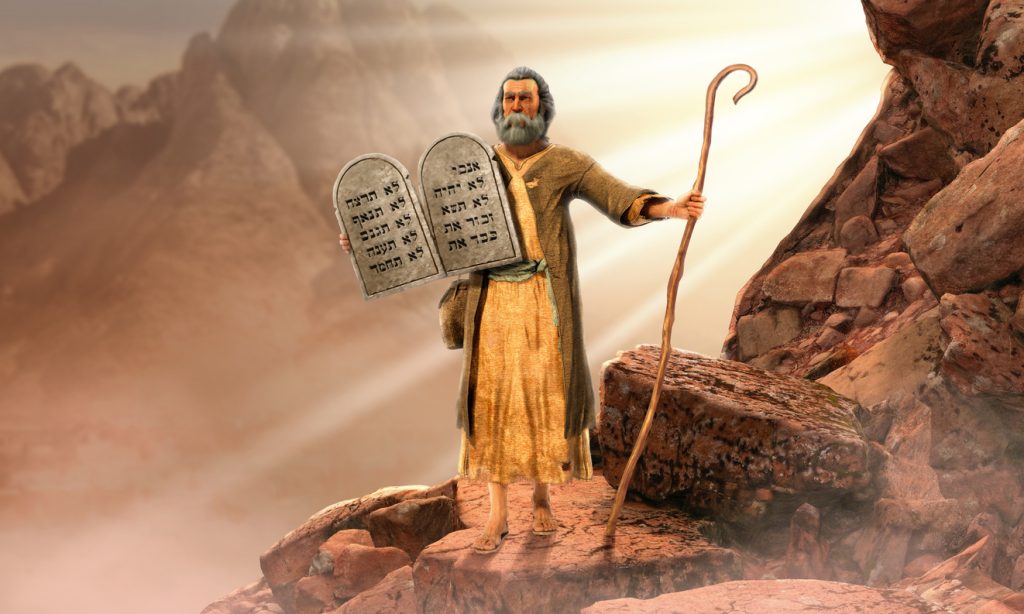
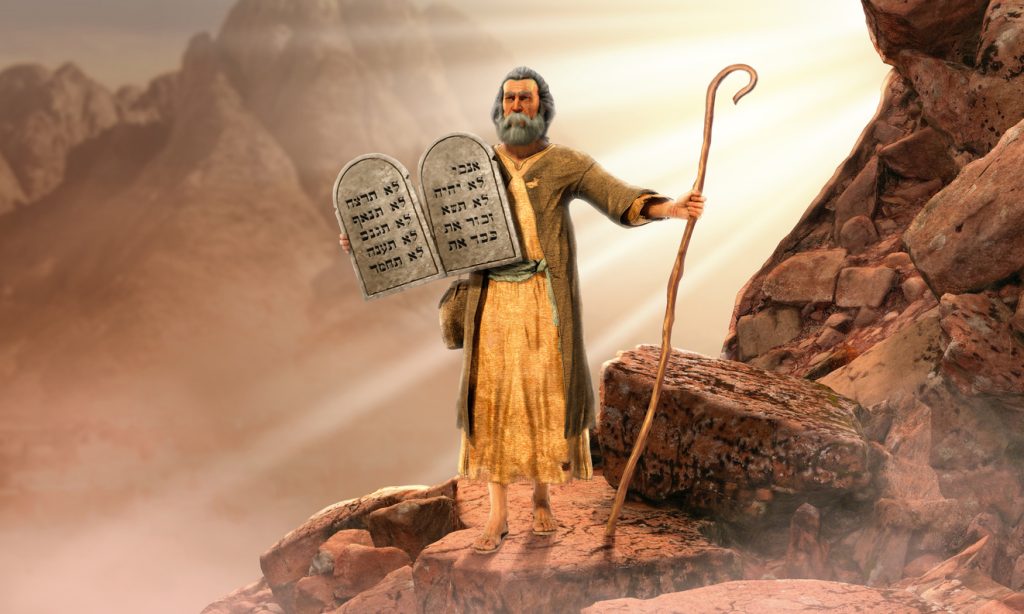
I am reminded of the moment in Scripture when God chose not only to speak, but to write. On Mount Sinai, the Lord gave Moses the commandments, not merely as spoken instruction, but as words inscribed by His own hand on tablets of stone. There is something profoundly significant in that act. God, who could have left His truth in the air as sound, instead fixed it in written form—making His word visible, lasting, and able to be returned to again and again.
Writing, in this sense, becomes more than communication; it becomes preservation, clarity, and testimony. What was written could be read, remembered, taught, and carried forward from one generation to another. It did not depend on memory alone, but on faithful inscription.
🌿 A Tutor’s Calling: Guiding the Voice of Another
My own experience as a reader and my training as a host for the Online Writing Center have convinced me that style matters deeply and that writing can be taught in meaningful ways. In this work, I have the opportunity to encourage other writers, to help them listen more closely to their own sentences, and to show them that clearer, stronger writing often begins with attention.
I cannot give anyone a voice that is not theirs, but I can help them discover it with greater confidence. I have seen that when people feel supported, their writing becomes bolder and more alive. That matters deeply.
I have read Gone With the Wind eleven times, and I know I did not return to it so often by accident. What drew me back was not only the story, but the way Margaret Mitchell told it. Her writing is full, vivid, and alive. She creates a world so rich that it rises off the page. There is drama in her language, but also intimacy. She makes history feel personal and emotion feel expansive.
Because of this, I believe good writing can be taught—even if not every part of it can be explained. Teachers may not be able to create longing, imagination, or style from nothing, but they can help shape them. They can help a writer learn how to carry feeling into language.
In the end, perhaps that is what good writing is: not merely correctness, but a voice strong enough to live in the mind of another person.
🙏 Prayer
Lord, You are the Author of all truth, beauty, and meaning. Teach us to steward our words with care, humility, and purpose.
Give us minds that think clearly, hearts that feel deeply, and voices that reflect Your grace.
Help us, as writers and teachers, to guide others with patience and encouragement, never shaping their voice into our own, but helping them discover the one You have given them.
May our words be honest, our style thoughtful, and our work pleasing in Your sight.
And in all we write, may Your truth be seen and Your love be heard.
“For thus says the Lord… who formed the earth and made it… He established it; He did not create it empty, He formed it to be inhabited: ‘I am the Lord, and there is no other.’” — Isaiah 45:18
There are moments when heaven feels close enough to touch—and this week, we experienced one of them.
God, who formed the earth with purpose and intention, also formed this gathering. It was not случай or convenience, but a quiet, divine invitation. He created the space, filled the room, and drew each heart to the table.
We gathered in the podcast room at in my home, five women in all—one joining us faithfully by Zoom—drawn together by a shared hunger for the Word and a deep love for the presence of God. We sat around the podcast table, not as strangers or spectators, but as sisters. The room felt cozy, wrapped in quiet anticipation, as if the Holy Spirit had already gone ahead of us and was waiting there.
We Began in Prayer
Before a page was turned or a word was spoken, we bowed our hearts in prayer.
And it wasn’t hurried. It wasn’t formal.
It was like lowering a bucket into a deep, living well.
Our voices rose gently—gratitude, surrender, expectancy. Scripture seemed to echo in the silence between our words. We were not just opening a Bible study—we were opening our hearts to be taught, shaped, and softened.
There is something sacred about the first prayer of a gathering. It sets the table. It aligns the room. It reminds us that this is not about information—it is about transformation.
And in that moment, we knew: God was with us.
A Wise Leader and a Beautiful Beginning
We were so blessed to have Doris Haney, a wise and godly woman, lead our study. With a gentle strength and a heart anchored in truth, she guided us into the first chapter with grace and clarity.
We are working through a Stonecroft Bible study written by MeLissa Houdmann—designed to invite questions, encourage conversation, and gently lead hearts toward Jesus Christ.
Chapter 1: A Beginning of Faith
The first chapter opens with foundational questions many carry quietly in their hearts:
Does God exist?
Can we trust the Bible?
Is faith reasonable in a skeptical world?
Rather than overwhelming, the study invites. It draws us into thoughtful reflection, offering both biblical truth and a steady assurance that faith is not blind—but grounded, living, and deeply personal.
Around the table, we didn’t rush. We listened. We leaned in. We made space for each woman to speak, to wonder, to share.
And that is where the beauty began.
The Heart of Stonecroft
Stonecroft Ministries carries a beautiful mission—to bring women together in meaningful relationships where the Gospel is shared naturally and lovingly.
Women gathering, just as we did, asking real questions and discovering that God is not distant—but near, personal, and calling each one into relationship with Him.
How blessed we are in Lubbock to have our own Stonecroft connection (Lubbock Christian Women’s Connection) —women willing to open their homes, extend their tables, and say, “Come sit with us.” Please join us for our monthly Luncheon.
A Room Full of Love
Each woman in that room carried something special. Love for other women. Love for Jesus.
There is a shared heartbeat among them—a desire not just to grow personally, but to reach outward, to bring the Word of God to other women who are searching, hurting, or simply wondering if there is more.
And we know there is more.
There is a Savior who calls. There is grace that meets us. There is truth that sets us free.
We Ended in Prayer… and Began Again
As our time came to a close, we gathered once more in prayer.
But this prayer felt different.
It carried:
Gratitude for what God had already done
Joy for the connections forming
And a quiet excitement for what was ahead
We didn’t leave the room the same way we entered.
There was a lightness… a warmth… an anticipation.
Because something had begun.
And as we stepped out into the late afternoon, each woman carried a spark of expectation—already looking forward to next week, when we will gather again around the table, open the Word, and once more lower our hearts into the deep well of God’s presence.
Closing Prayer
Heavenly Father, You are the One who forms and fills every space with purpose. Thank You for drawing us together, for the sweetness of Your presence, and for the work You have already begun in each heart around this table. Root us in Your truth, deepen our faith, and use us as vessels of Your love to reach others. Let Your Word take living root within us, and may it overflow into every life we touch.
It is time. Yes, for many this season means summer—slower days, travel, or rest—but for me, something new is beginning. In August, I will join the team of the Lubbock Symphony Teaching Artists, and already I can feel my mind coming alive. My files are beginning to fill, my notes are stacking up, and my brain is firing in every direction, connecting ideas faster than I can fully process them. It feels like the beginning of something meaningful—and I want to be ready.
Teuta Halimi Selmani is the author of the article and the developer of the Music Visualization Method, which she created through years of teaching young children.
A Larger Story: Music in Classrooms
The Lubbock Symphony’s Teaching Artist program is part of a larger national movement rooted in a powerful belief: music is not just something children learn—it is something they learn through. Across the country, teaching artists partner with schools to bring music into the classroom not as an “extra,” but as a core pathway to understanding. These programs are built on decades of research showing that music engages multiple areas of the brain simultaneously—supporting memory, attention, pattern recognition, and emotional development. This work is intentional. It is not simply about performing for children, but about designing learning experiences where music becomes the bridge to thinking. And that means preparation matters.
Studying the Child: How Young Minds Learn
As I prepare, I am realizing that my first responsibility is not the lesson—it is the learner. Children ages 5–7 are in a critical developmental stage. Their thinking is transitioning from concrete to early abstract reasoning, but they still rely heavily on sensory input and physical experience to understand new ideas. This is where many traditional approaches fall short. When we explain music in abstract terms—tempo, pitch, dynamics—we are often speaking beyond what a young child can fully grasp. The research on music visualization makes this clear: children understand music more effectively when it is externalized—when it is made visible, physical, and interactive.
Music Visualization: A Structured Way of Seeing Sound
The academic article I’ve been studying emphasizes that music visualization is not random or purely creative—it is actually a structured teaching method. In this approach, musical elements are intentionally mapped to visual or physical representations. Pitch is often shown through vertical space, helping children distinguish high from low. Rhythm can be represented through repeated shapes or movement patterns. Dynamics, such as loud and soft, are connected to size, intensity, or color, while tempo is experienced through speed of motion. This mapping creates what researchers call a cross-modal connection—linking what a child hears to what they see and feel. These connections strengthen neural pathways and make learning more durable. In other words, when a child draws a rising line while hearing a melody climb, they are not just being creative—they are building cognitive structure.
From Passive Listening to Active Processing
One of the most important findings in the research is the shift from passive listening to active processing. Traditional music instruction can sometimes position children as listeners only. But visualization transforms them into: Traditional music instruction can sometimes position children as listeners only. But visualization transforms them into interpreters, responders, and creators, giving them a more active role in the learning process. They are no longer receiving information—they are processing and expressing it. This matters because learning deepens when children are asked to make choices, represent ideas, and explain what they perceive. These actions move them beyond receiving information and into active understanding. These are higher-level cognitive tasks, even at a young age.
Individual Meaning-Making
Another key insight from the research is that music visualization allows for individualized meaning-making. While the teacher may introduce structured connections (such as high/low or fast/slow), children are encouraged to expand beyond those frameworks. This creates a balance between guided learning, which offers structured representation, and creative interpretation, which allows for personal response. That balance is critical. Too much structure limits imagination. Too much freedom removes clarity. But together, they help children develop both understanding and ownership of their learning.
Hidden Skill Development
What fascinates me most is how much learning is happening beneath the surface. Through music visualization, children are developing: Through music visualization, children are developing pattern recognition, which is foundational for math and reading; sequencing skills, which help them understand order and progression; symbolic thinking, which supports connecting one form to another; and emotional literacy, which helps them identify and express feelings. These are not small outcomes. They form the building blocks of academic success across disciplines. And yet, from the child’s perspective, they are simply engaging with music.
The Role of the Teaching Artist
A teaching artist is not just someone who presents music. A teaching artist designs learning experiences, observes how children respond, adjusts in real time, and asks questions that guide thinking. Instead of saying, “This is what this music means,” The role becomes asking,
“What do you notice?” “What do you see?” “How would you show that?”
Preparing with Purpose
So yes—it is summer. But it is also a season of preparation. Practice continues on the ukulele, flute, and piano. Notes are growing, ideas are expanding, and the work of connecting research, creativity, and classroom reality is already underway. Teaching music well requires more than knowing music. It requires understanding how children think, recognizing how learning happens, and using music as a bridge between the two. Because when music enters the classroom intentionally, it becomes more than sound.
“Let the word of Christ dwell in you richly in all wisdom; teaching and admonishing one another…” — Colossians 3:16 (KJV)
Beginning the Journey
One of the most interesting things I’m learning as I attend Writing training sessions for my job at Liberty University is that not every writer thinks about writing in the same way. Some writers want clear rules and the “right” answer. Others are more comfortable with multiple perspectives. Still others see writing as a process of reflection, revision, and discovery. In other words, here are the three types of writers I may be assisting: dualist, relativist, and reflective writers. Each one has strengths, and each one needs a slightly different kind of support.
Calling in Four Famous Writers
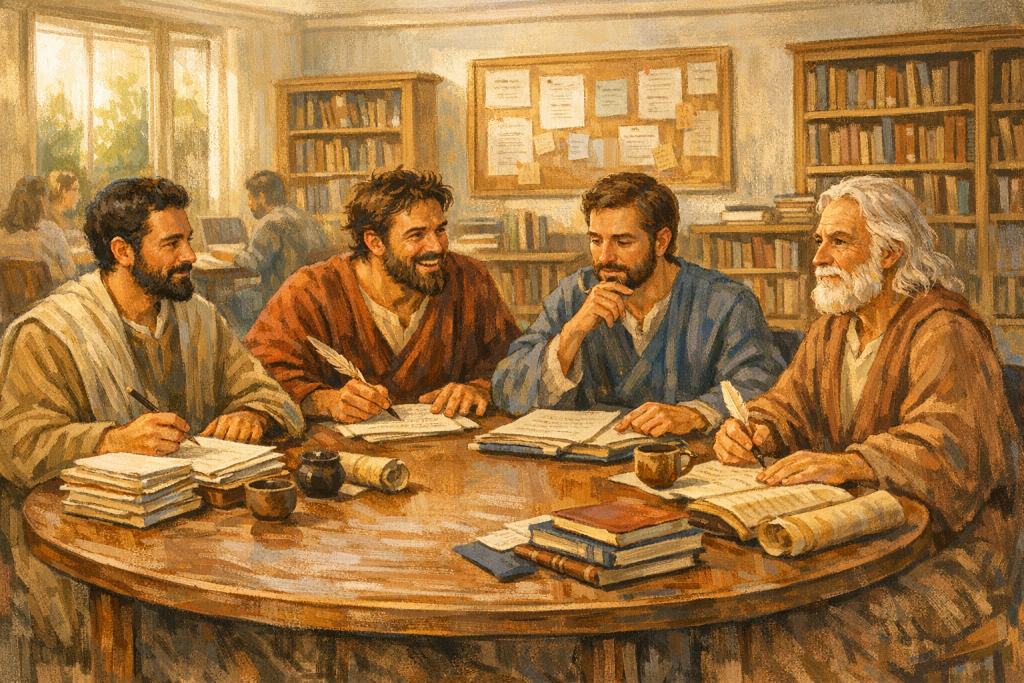
Now for the fun part. Matthew, Mark, Luke, and John have different styles, let’s have some fun and imagine them visiting the Writing Lab.
Matthew: The Structured Writer
Matthew came in first, sat down neatly, and said, “I like structure. I like organization. I like showing how everything connects and fulfills what has already been said.” I nodded and thought, Okay, Matthew definitely wants the assignment sheet, the rubric, and probably a sample paper too. If I were using my Writing Lab categories creatively, I might say Matthew sounds the most like a dualist writer. He values order, clarity, and clear teaching, and he seems very concerned with presenting truth in a direct, purposeful way.
Mark: The Urgent Writer
Then Mark came in, and before I could even offer him a chair, he was already halfway through his explanation. “Immediately,” he seemed to say, “we need to get to the point.” Mark’s style felt urgent, energetic, and fast-moving. He didn’t seem interested in long introductions or unnecessary details. He wanted action. He wanted momentum. Mark was the hardest to classify, but I could imagine him leaning toward a writer who values strong direction and clarity while still pushing forward with intensity, a dualist! He did not seem interested in overthinking the process. He wanted the message on the page.
Luke: The Thoughtful Writer
Luke arrived next with the calm confidence of someone who had actually prepared for the appointment. He opened his notes and explained that he preferred to write in an orderly way, carefully considering details and making sure the account was thorough and understandable. Luke sounded like the kind of writer who understands that ideas need context, explanation, and thoughtful arrangement. He felt much more like a reflective writer to me—careful, balanced, and interested in developing writing with purpose and precision.
John: The Deeply Reflective Writer
Then John walked in, and the entire room changed. John did not seem rushed at all. Instead, he spoke in a way that made me feel like every sentence had layers beneath it. He seemed less interested in simply giving information and more interested in helping the reader see meaning, depth, and truth from a deeper angle. If Matthew brought structure and Mark brought urgency, John brought reflection. He definitely struck me as a reflective writer—the kind of writer who is comfortable with complexity and willing to let ideas unfold thoughtfully.
Back to Studying!
Now that was a fun break, but now it’s back to studying. And if I smile a little longer at my students, it will probably be because I’m thinking of Matthew, Mark, Luke, and John.
Scripture holds together personal holiness, public justice, and divine wisdom.
“Do not be overcome by evil, but overcome evil with good.” Romans 12:21 (ESV)
This week in Dr. Gary May’s BIBL 830 course, The Bible and the Pastor (or Uses of Scripture in Pastoral Ministry), my homework was to think through how Christians should form a biblical response to a contemporary ministry issue. The course examines how Scripture functions in preaching, teaching, counseling, church administration, and the pastor’s own devotional life, with the goal of helping pastors apply the Bible faithfully in real ministry settings. For this assignment, I reflected on John Stott’s treatment of war and peace in Issues Facing Christians Today. As I worked through the material, I was especially struck by the wisdom of Romans 12 and 13 and how those two chapters help Christians think carefully about both peace and justice. While the original discussion was written for class, I realized the subject reaches far beyond the classroom. In a world marked by violence, political division, and deep moral uncertainty, the question of how Christians should think about war is not merely academic. It is pastoral, personal, and public.
Why Stott’s Approach Matters “Mercy triumphs over judgment.” — James 2:13
What I appreciate about John Stott’s approach is that he refuses two extremes. On one side is the idea that peace means never resisting evil in any form. On the other side is the assumption that force is easily justified whenever a nation feels threatened or angry. Stott takes neither path. Instead, he argues that because God is both just and peace-loving, Christians must think carefully and biblically about the use of force. War, in his view, is never something to celebrate. At best, it is a tragic possibility in a fallen world. Yet Stott also insists that civil government has a real responsibility before God to restrain evil and protect the innocent. That tension—between peace and justice—is what makes the discussion so difficult and so important.
A Christian Framework for Thinking About War “Blessed are the peacemakers, for they shall be called sons of God.” — Matthew 5:9
Stott draws heavily from the historic Christian just war tradition. In simple terms, this tradition asks whether war can ever be morally justified, and if so, under what conditions. The answer is not a blank check. According to this framework, a war must have a just cause, be carried out by legitimate authority, and be pursued only after serious alternatives have been exhausted. Even then, the conduct of war must be restrained. Violence cannot be indiscriminate, and every effort must be made to protect those who are not participating in the fighting. Finally, there must be a realistic hope that the use of force will lead to a more just outcome rather than deepen injustice. What makes Stott’s discussion valuable is that he does not treat these ideas as political slogans. He treats them as moral boundaries that place human power under God’s judgment.
Romans 12 and 13 and the Wisdom of God “Never avenge yourselves, but leave it to the wrath of God…” — Romans 12:19
What I find especially compelling in Stott’s discussion is the way he handles Romans 12 and 13 together. At first glance, those chapters may seem to pull in different directions. Romans 12 calls Christians to reject revenge, love their enemies, and overcome evil with good. Romans 13 teaches that governing authorities have a God-given role in restraining evil and punishing wrongdoing. Yet when those chapters are read together, they display the wisdom of God rather than a contradiction in Scripture. Romans 12 shapes the heart and conduct of the Christian disciple. Romans 13 explains the public responsibility of civil authority. In other words, God does not give the same calling to every person or institution in exactly the same way. That distinction matters. Christians are never permitted to indulge personal vengeance, hatred, or triumphalism. At the same time, Stott argues that government may, under limited and morally serious conditions, use force to protect the innocent and restrain evil. Whether or not one agrees with every part of his conclusion, this reading of Romans 12 and 13 shows how Scripture can hold together personal holiness, public justice, and divine wisdom.
Why This Matters Beyond the Classroom “Your word is a lamp to my feet and a light to my path.” — Psalm 119:105
What this assignment reminded me of most is that a Christian view of public life cannot be built on emotion alone. It must be shaped by Scripture. That is why questions about the truthfulness and authority of the Bible matter so much. If Scripture is trustworthy and authoritative, then Christians cannot simply adopt whatever moral position feels most compassionate or most practical in the moment. They must wrestle honestly with the whole witness of the Bible, even when that witness includes difficult tensions. For me, that is one of the enduring strengths of Stott’s work. He shows that serious Christian ethics requires more than strong opinions. It requires humble submission to God’s Word, careful theological reasoning, and a willingness to let Scripture challenge our instincts as well as our politics.
Final Thought “If any of you lacks wisdom, let him ask God, who gives generously to all…” — James 1:5
I started this week’s homework as an academic assignment for Dr. May’s class, but I finished it thinking more deeply about the wisdom of God in Scripture. Romans 12 and 13 do not offer simplistic answers, but they do offer needed guidance. They remind us that Christians are called to humility, enemy-love, and freedom from personal vengeance, while also recognizing that God has given civil authority a role in preserving justice and order. In a time when public arguments about war, justice, and power are often shaped more by outrage than wisdom, that biblical balance matters. Stott’s work offers a helpful reminder that faithful Christian thinking requires both conviction and humility, and that God’s Word remains the surest guide for difficult moral questions.
Prayer Heavenly Father, give us hearts that are shaped by Your Word and not by fear, anger, or pride. Teach us to love our enemies, to walk in humility, and to trust Your wisdom where difficult questions remain. Grant wisdom to those in authority, protection to the innocent, and peace where there is violence. Above all, help us to submit our minds and lives to the truth of Scripture through Jesus Christ our Lord. Amen.
Resource Stott, John R. W. Issues Facing Christians Today. 4th ed. Grand Rapids, MI: Zondervan, 2006.