
The Theological Foundation of a thesis project for the candidacy of The Doctorate of Ministry in Biblical Studies by Dee Ann Loving-Tackitt
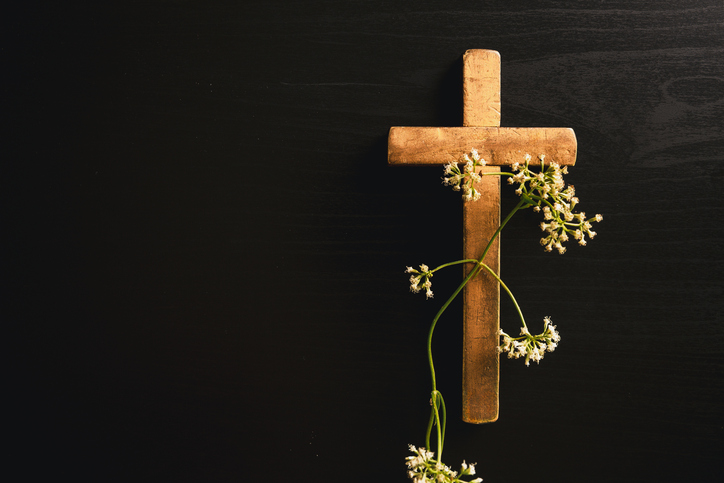
With arms spread wide between heaven and earth, Christ died on the cross (Matt 27:32–50). Standing between death and life, despair and hope—the disciples failed to perceive what God is accomplishing in this rich silence (Matt 27:57-66; 28:1-10). Holy Saturday is a harrowing day, full of profound mystery. Scripture repeatedly portrays this “middle space” in the Easter Triduum as a place of divine activity, the antechamber to the other side of death and the threshold of resurrection. What appears to be an ending becomes transformation for God’s redemptive work. The disciples who wait in confusion and grief soon become witnesses to the risen Christ. Their transformation reflects the broader biblical pattern of God bringing renewal out of suffering and despair. Creation bursts forward into renewed faith, purpose, and mission. This regrowth from renewal provides a theological framework for understanding posttraumatic growth as more than recovery from suffering. Through the death and resurrection of Jesus Christ, wounded believers are invited into restoration, spiritual formation, and discipleship.
Scripture portrays humanity living in the tension between God’s intended flourishing and the reality of a fallen world. Humanity’s rebellion fractures its relationship with God and introduces death, alienation, and suffering into creation.[1] In the garden, man was tempted to bypass God’s blessings and transcend human limitations to claim divine prerogatives.[2] God acknowledges that humanity “has become like one of us in knowing good and evil” (Gen 3:22, English Standard Version). The serpent essentially offers a counterfeit path to divine likeness—one achieved through deception and disobedience rather than obedience and grace. The fall is humanity’s first seduction by false divination—accepting the serpent’s whispered knowledge over God’s explicit command. A profound theological symmetry links Holy Saturday and the fall. God’s patient waiting and suffering of human rebellion begin with the fall and continue through human history. Humanity’s choice of Satan’s divinization mirrors this pattern in reverse—a rebellion that God permits to absorb and ultimately redeem.[3] Humanity’s brokenness becomes, in God’s economy, a kind of Holy Saturday—a space of abandonment and silence where God’s redemptive work operates beneath the surface. The parallel deepens when we consider God’s response. Through His death and resurrection, Christ opens the way into the eternal Sabbath rest promised to the people of God (Heb 4:9-11).
[4] Just as Holy Saturday is theologically understood as the period Christ descends into the underworld to bring salvation to the dead, so too does God’s patience with human rebellion become redemptive.[5] Yet God consistently moves toward humanity in the midst of its woundedness. The Exodus narrative reveals God’s redemptive response to a people living under oppression and despair. When God reveals Himself as “I AM” (אֶהְיֶה) and proclaims His covenant name Yahweh (יהוה), He identifies Himself as the God who is present with His people and committed to their deliverance (Exod 3:14-15). Israel’s deliverance from bondage demonstrates that God does not abandon those who suffer but acts to bring them from captivity into freedom. Throughout Israel’s history, patterns of failure, exile, loss, and restoration continue to reveal both the depth of human brokenness and the persistence of God’s covenant faithfulness. Again and again, God transforms situations marked by despair into opportunities for renewal and renewed participation in His purposes.[6]
The pattern seen throughout Scripture, from humanity’s fall and Israel’s deliverance to the death and resurrection of Christ, is embodied in the disciples themselves as they move from fear and grief to faith, community, and witness. The cross represents the deepest encounter with human suffering and brokenness, while the resurrection reveals God’s power to bring new life out of death.[7] During Holy Saturday, the disciples could not perceive what God was accomplishing through the silence of the tomb. Yet the risen Christ appeared to those same disciples, meeting them in their fear, uncertainty, and grief. Their wounds, doubts, and failures did not exclude them from His purposes. Instead, Christ gathered them into a community of faith and commissioned them to bear witness to His resurrection. Consequently, Christian discipleship rests upon the conviction that woundedness is not the end of the story. Through union with Christ and participation in His body, believers are formed into faithful disciples who bear witness to God’s redeeming work in the world.
The restoration experience began after the disciples encountered the risen Christ. As in Psalm 77, the disciples’ lamentations turns to praise as Christ leads them through the love and power of God’s deliverance. Their doubts turn to comfort. Christ commands them to follow His example and use their suffering to help others.[8] Throughout Scripture, spiritual formation deepens through remembering, reflecting on, and recounting God’s faithfulness. The ultimate result is that God is glorified when his people are delivered from suffering.[9] God’s people are called to preserve His works for future generations through written remembrance and are formed through remembrance and recounting of His faithfulness. Preserving testimony enables future generations to grow in faith as they learn from God’s past redemptive work. Consequently, modern practices of theological reflection and written remembrance are means of discipleship and spiritual formation.[10]
Habakkuk’s wrestling with God is what we might call posttraumatic growth. It shows how suffering becomes redemptive when channeled through obedience and testimony.[11] Habakkuk was not angry with his people’s corruption but with God’s silence. This prompted him to demand divine action. Yet, as God usually does, he answers with imperatives—commanding him to “write the vision.”[12] God is doing something remarkable: converting personal anguish into a communal resource. The writing isn’t merely to preserve the vision from being forgotten, but to enable others to read it and act upon it.[13] This transformation is posttraumatic growth: suffering becomes meaningful when it is integrated into a larger narrative and shared with others.[14] God’s message is clear: it is intended for all people everywhere and must be passed on. Habakkuk’s personal crisis becomes everyone’s spiritual resource.
The New Testament connection emerges through this same pattern. Throughout the Old Testament, a vision denotes God-given revelation about the spiritual significance of present or future events, and God gives greater insight into the spiritual meaning of forthcoming events.[15] This principle—suffering producing clarity and testimony— extends into the New Testament through apostolic witness: persecution producing proclamation and pain producing purpose. The pattern is true for both Testaments and today. When we bring our struggles to God and then articulate them clearly for others, they become invitations rather than isolating experiences. The imperative to “write”—whether literally or metaphorically—transforms private crisis into public witness.
Just as Habakkuk discovered that his cry for justice became an invitation to deeper discipleship through God’s imperative to write, wounded believers today find in Christ’s death and resurrection the same transformative call—to move through suffering into restoration and become witnesses of redemptive hope to others. The new creation has begun. Peter tells believers, “You must worship Christ as Lord of your life. And if someone asks about your hope as a believer, always be ready to explain it” (1 Pet 3:15). The ministry intervention proposed in Royal Beginnings seeks to participate in this biblical pattern by helping women move from brokenness to restoration, from restoration to discipleship, and from discipleship to witness.
[1] Ian M. Duguid, Ronald L. Bergey, Jay R. Sklar, and Christine Palmer, eds., ESV Expository Commentary, vol. 1, Genesis-Numbers (Wheaton, IL: Crossway, 2025), 70.
[2] C. Amos, Birthpangs and Blessings: A Commentary on the Book of Genesis, 1st ed. (York, UK: Sacristy Press, 2022), 48.
[3] J. Paul Tanner, Daniel, Evangelical Exegetical Commentary (Bellingham, WA: Lexham Press, 2020), 769.
[4] Tanner, Daniel, Evangelical Exegetical Commentary, 769.
[5] Clinton E. Arnold, ed., Zondervan Illustrated Bible Backgrounds Commentary: Hebrews to Revelation (Grand Rapids, MI: Zondervan, 2002), 27.
[6] Duguid, Bergey, Sklar, and Palmer, eds., ESV Expository Commentary, 667-69.
[7] R. Alan Culpepper, Matthew: A Commentary (Louisville, KY: Westminster John Knox Press, 2021), 706-07.
[8] Allen P. Ross, A Commentary on the Psalms, vol. 2, Psalms 42–89 (Grand Rapids, MI: Kregel Academic, 2013), 639–40.
[9] Allen P. Ross, A Commentary on the Psalms, vol. 3, Psalms 90–150 (Grand Rapids, MI: Kregel Academic, 2016), 220–21.
[10] Dennis Prager, The Rational Bible: Deuteronomy (Washington, DC: Regnery Faith, 2022), 110–11.
[11] Michelle Panchuk, “What Doesn’t Kill Me Makes Me Stronger?: Post-Traumatic Growth and the Problem of Suffering,” Religious Studies 60, no. 3 (2024): 429.
[12] Booth. Habakkuk: The Christian Standard Commentary. Nashville: B&H Publishing Group, 2024.
[13] Panchuk, “What Doesn’t Kill Me Makes Me Stronger?, 429.
[14] Steven J. Duby, Habakkuk, ed. Michael Allen and Scott R. Swain, The International Theological Commentary on the Holy Scripture of the Old and New Testaments (London: T&T Clark, 2025), 85.
[15] Duby, Habakkuk, 85.