A Journey Through the Gardens Where God Meets Humanity

From the Garden of Creation to the Garden of Resurrection

By Pastor Dee

House of Prayer Ministry
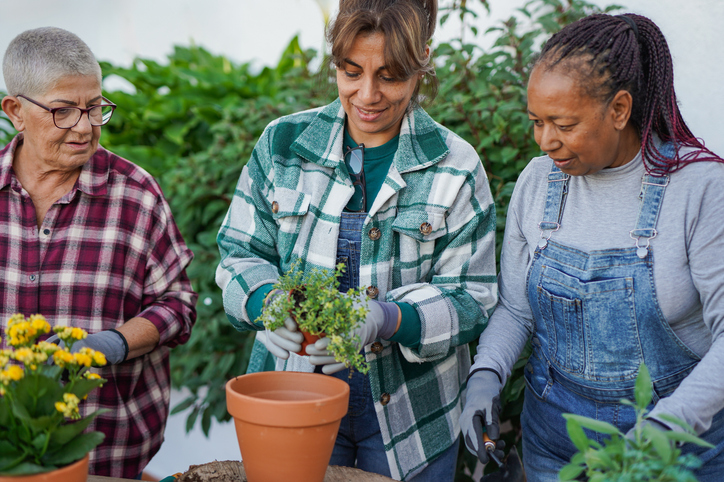
Spring has arrived again, and many of us are stepping outside with our gloves and watering cans, ready to tend the gardens that have been resting all winter. There is something sacred about this yearly ritual. The warming soil carries the scent of life returning, and the tender green shoots remind us that God has woven resurrection into creation itself. As we prepare our flowerbeds and coax new life from the ground, we are participating in a rhythm far older than we are—a rhythm that began in the very first garden where God placed humanity. The turning of seasons becomes a gentle invitation to remember the great biblical story that also begins, meets us again, and ends in a garden.


🌱 The First Garden: Eden and the Presence of God

The biblical story opens with God planting a garden in Eden, a place overflowing with His presence, beauty, and harmony. In this garden, God walked with His creation; humanity’s first vocation was not hurried or anxious, but peaceful and attentive. Adam and Eve were invited to cultivate life, to steward what God had lovingly planted, and to enjoy unbroken fellowship with Him. Eden was not merely a location—it was a picture of how life with God was meant to be: flourishing, intimate, and whole. When sin entered the story, exile from the garden was not only a physical departure but a spiritual ache, a deep memory of the communion humanity was formed for. From that moment forward, Scripture becomes a long, tender story of God drawing His people back to that place of life with Him.


🌿 Gardens Along the Way: Echoes of Eden Through Scripture

Even after Eden closed behind humanity, God never stopped whispering garden promises. Throughout the Old Testament, the Tabernacle and Temple were adorned with carvings of flowers, fruit, branches, and blossoms, as if God were saying, “I am preparing a way back to My presence.” The prophets also spoke in garden language—Isaiah described deserts bursting into bloom, and Jeremiah envisioned God’s people becoming “like a well-watered garden.” These images were not poetic accidents; they were signs of hope. They reminded Israel that the God who once walked among the trees of Eden was still moving toward His people, still cultivating life in places that felt barren, still promising restoration in the midst of wilderness. The garden, woven quietly throughout the Scriptures, becomes a symbol of God’s determination to restore what was lost.


🌸 The Garden of Gethsemane: The Second Adam Kneels to Restore What Was Broken

On the night of the Last Supper, Jesus led His disciples to a garden—Gethsemane. This moment is deeply meaningful, for it is in a garden that the first Adam stepped away from God’s will, and it is in a garden that the second Adam fully surrendered Himself to the Father. After singing a hymn, Jesus entered the olive grove to pray, and the weight of the world pressed upon Him. Theologians often describe this scene as “the reversal of Eden,” because here Jesus speaks the words Adam never could: “Not My will, but Yours be done.” In Eden, humanity chose autonomy over obedience, and the ground became cursed. In Gethsemane, Jesus chose obedience over self-preservation, and His submission becomes the seedbed of redemption. Many scholars say that the victory of the cross was already taking root in the soil of Gethsemane, where Jesus resolved to drink the cup of suffering for the sake of the world. In this garden, salvation begins to blossom.


🌼 The Garden of the Resurrection: Mary Meets the Gardener of New Creation

When dawn broke on resurrection morning, John tells us that Jesus’ tomb was in a garden. Mary Magdalene, heartbroken and confused, stood weeping near the empty tomb. When she turned and saw Jesus, she assumed He was the gardener—an assumption that carries more truth than she realized. Jesus is the Gardener: the Restorer of Eden, the One who brings life out of death, the cultivator of new creation. The first Adam’s failure in a garden led to death; the risen Christ, standing in a garden, signals that death has been defeated. Mary becomes the first witness to this new creation, the first voice to announce that Jesus is alive, the first to step into the restored garden of God’s renewing work. This scene is tender and triumphant all at once, a moment when Eden begins to bloom again.


🌳 The Final Garden: Revelation and the Return of Eden

The Bible ends the way it began—with a garden. In Revelation, we see a renewed creation where the river of life flows from the throne of God and the tree of life bears fruit for the healing of the nations. The curse that began in Eden is finally undone. What was once a garden lost becomes a garden restored and expanded—a garden-city where God dwells forever with His people. No more exile, no more brokenness, no more distance. The presence of God fills everything, and life flourishes everywhere He reigns. The long story of Scripture—creation, fall, redemption, and restoration—finds its fulfillment in this final, everlasting garden.

🌷 What This Means for Us as We Tend Our Spring Gardens

As you kneel in your yard this spring, planting flowers or pulling weeds, may your heart remember the God who works in gardens. The story of salvation is rooted in soil, in seeds, in surrender, in resurrection. Christ, the true Gardener, is tending you even now. He is pulling up what harms, planting what brings life, and nurturing growth in places you once thought were barren. Just as the earth bursts forth with new life when the season turns, so does God continue His renewing work in us. Spring becomes more than a season; it becomes a reminder that the Gardener of Gethsemane, the Gardener of the Resurrection, and the Gardener of New Creation is making all things new—starting with the soil of our own hearts.

Heavenly Father,
As I stand in this garden, I thank You for the gift of creation and the privilege of nurturing life from the soil. Bless the seeds I plant and the ground I tend. May each one take root and flourish as a reflection of Your love.Grant me wisdom as I care for this garden—when to water, when to prune, and when to simply trust Your hand at work. Protect these plants and let Your peace rest over this place.As I work the soil, fill my heart with gratitude for the beauty around me. Let the harvest nourish both body and spirit, and teach me patience as I wait for growth in Your perfect timing.Thank You, Lord, for the lessons this garden teaches—life, growth, and the steady nurture that mirrors Your care for us. May this space be a sanctuary of peace and a testament to Your grace.

In Jesus’ holy name, Amen.

The Quiet War Within

by Pastor Dee

Scripture:
“Do not conform to the pattern of this world, but be transformed by the renewing of your mind.”
Romans 12:2


There are weeks when life stacks itself high—deadlines, projects, ministry tasks, and family commitments—all good, all important, all pressing at once, and last week was one of those weeks. I was preparing a presentation, polishing slides, transferring footnotes, gathering research, and trying to anticipate every question I might be asked. I poured so much of myself into the work that I rushed right past the most important part of my day. I missed my daily Bible reading, my quiet time, and the stillness where my soul usually resets. At first, I didn’t think much of it and told myself I’d catch up tomorrow, but by the end of that long day—and the next one—I could feel the shift. Doubts crept in that hadn’t bothered me in months, small worries grew louder, my confidence wavered in places where I normally feel steady, and my thoughts felt scattered, restless, and unanchored. Nothing in my circumstances had changed—but something in my mind had. And then I realized what had happened: I had filled my schedule, but not my spirit; my hours, but not my heart; my mind with information—but not with truth. The difference was unmistakable.

What C. S. Lewis Helped Me Remember

In that moment, a line from C. S. Lewis came back to me—a quiet truth from one of Christianity’s most influential thinkers. Lewis, an Oxford professor and author of The Chronicles of Narnia, Mere Christianity, and The Screwtape Letters, had a gift for uncovering spiritual realities hidden inside ordinary moments. He once said something to the effect that:

Most of our outward struggles begin as inner whispers.

Those words hit me hard, because I wasn’t acting on truth—I was reacting to noise. Lewis understood the discipline of the mind, how feelings fluctuate, how thoughts drift, and how fears rehearse themselves. He knew the Christian life is not built on spontaneous inspiration but on formation. And formation requires repetition—holy repetition.

Why Missing Scripture Matters More Than We Think

When I skipped my time in the Word, it wasn’t God who moved—it was my mind that wandered. Fear found space to speak, anxiety rehearsed old lines, and insecurity regained volume, not because anything new had happened, but because I hadn’t trained my thoughts that morning. Scripture is more than spiritual reading; it is soul‑defense, mind‑renewal, and the voice that must speak louder than the whispers. The mind is never empty—it is always being formed by something. When I begin my day without God’s Word, other voices rush to fill the silence, but when I begin with Scripture, truth becomes the strongest voice in the room.

A Simple Practice to Strengthen the Inner Life

Here is a simple step—one that changed my week when I returned to it: choose one Scripture for the week and write it, speak it, pray it, return to it, and repeat it. Don’t try to tackle the whole Bible in a morning—just choose one verse that anchors your heart. Maybe it’s “You are with me,” or “Your grace is sufficient,” or “The Lord is my refuge,” or “His mercies are new every morning.” Let that one truth fill the space where fear once rehearsed itself. By the end of the week, you’ll notice clarity, steadiness, and peace—not because your circumstances changed, but because you fed your mind and heart with truth.

A Closing Prayer

Heavenly Father,
thank You for Your Word that steadies my heart and renews my mind.
Forgive me for the moments when I rush past Your voice.
Teach me to start my days with truth,
to fill my mind with Your promises,
and to train my thoughts to follow You, not fear.
Let Scripture become the rhythm of my inner world
and the anchor of my soul.
Renew my mind, Lord,
and through that renewal, reshape my life.
In Jesus’ name, Amen.

When We Fail, God’s Promises Still Stand

Seeing God’s Faithfulness in the Middle of Human Brokenness

I have been spending time reading through the Bible, tracing God’s covenants from the very beginning. And one truth keeps rising to the surface: over and over again, people fail—but God’s promises keep moving forward. As my grandmother used to say, “The proof is in the pudding.” The evidence of His faithfulness is right there in the story.

“The steadfast love of the LORD never ceases;
his mercies never come to an end;
they are new every morning;
great is your faithfulness.”
Lamentations 3:22-23 (ESV)

This truth has been especially grounding for me in a season when Christians sometimes speak past each other, or even against each other, based on worship styles, denominational differences, or questions of calling. I’ve heard sincere believers tell others, “You’re not Christian enough,” or “Your way of worship is wrong,” as if our salvation depends on personality or preference rather than the finished work of Christ. Some churches build elaborate step‑by‑step systems to help people move from brokenness into Jesus’ arms. Others insist they are “not religious,” but still create their own unwritten rules and expectations.

And as a woman (AND a senior citizen!!) who loves Scripture, theology, and the proclamation of the gospel, I’ve felt tension in certain circles. I can study anything in the world, but the moment I love studying the Bible or feel the Holy Spirit stirring me to preach or bear witness to Christ, suddenly that passion is questioned. But when I lift my eyes back to Scripture, I find peace again. No human system—no opinion, structure, or tradition—can stop the forward movement of God’s promises. I have preached on the Old Testament and God’s Covenant so many times, but should we not cease in celebrating His Glory? So here it is again:

The Old Testament: A Story of Human Failure and Divine Faithfulness

Throughout its pages, humanity fails repeatedly, yet God remains faithful. Adam and Eve disobey God in the garden (Genesis 3), but He still seeks them, clothes them, and promises that one day the serpent will be crushed (Genesis 3:15, 21). As wickedness fills the earth in Noah’s time (Genesis 6:5), God preserves Noah’s family and establishes a covenant of mercy symbolized by the rainbow (Genesis 8:20–22; 9:8–17). Abraham lies about Sarah (Genesis 12:10–20; 20:1–18), doubts God’s promise (Genesis 17:17; 18:12), and takes matters into his own hands with Hagar (Genesis 16). Yet God patiently reaffirms His covenant again and again, providing Isaac just as He promised (Genesis 17:19; 21:1–3).

The same pattern continues with Abraham’s descendants. Isaac repeats his father’s mistakes by lying about Rebekah (Genesis 26:6–11). Jacob deceives his father and cheats his brother (Genesis 27). Their household fractures under the weight of favoritism. But God still renews His covenant with Isaac and Jacob (Genesis 26:24; 28:13–15) and even blesses Jacob with a new name—Israel (Genesis 32:28).

Joseph’s brothers betray him and sell him into slavery (Genesis 37), but God works through the injustice, remaining with Joseph in Egypt (Genesis 39:2–3) and turning their evil intent into salvation for many during a famine (Genesis 50:20).

Israel’s story is no different. Delivered from Egypt, the people complain, rebel (Exodus 15–17), melt down their gold for an idol (Exodus 32), and refuse to enter the Promised Land (Numbers 13–14). Yet God keeps providing, forgiving, and leading, ultimately bringing the next generation into the land He promised (Deuteronomy 31:7–8). During the chaotic time of the judges, when “everyone did what was right in his own eyes” (Judges 21:25), God continues sending deliverers. Even when the kings fail—Saul’s disobedience (1 Samuel 15), David’s sin (2 Samuel 11–12), Solomon’s idolatry (1 Kings 11:1–13)—God still preserves the line of David and promises a coming King whose throne will last forever (2 Samuel 7:12–16). And though the people are eventually exiled for persistent rebellion (2 Kings 17; 25), God promises restoration, a new covenant, and a new heart (Jeremiah 31:31–34; Ezekiel 36:26–28).

A Faithful God in a Failing World

The message woven through every page is unchanging: humans fail, but God is faithful. His promises march forward. His covenant stands firm. His redemption story never collapses—not under sin, not under rebellion, not under fear, and not under the judgments of people.

This truth steadies my soul. It invites me—and all of us—to worship, praise, and adore our Father, our Savior Jesus, and the Holy Spirit who forms Christ in us. And as we look ahead to the Kingdom that is coming, we remember that this world is not our home. God’s promises have carried His people from Eden to exile to Christ—and they will carry us, too.

🙏 Closing Prayer

Heavenly Father, thank You for the faithfulness that flows through every page of Scripture and every season of our lives. When we fall short, Your mercy rises to meet us. When we wander, Your covenant love draws us back. Teach us to trust Your promises more than our performance, and to rest in the grace that carries us when we cannot carry ourselves. Holy Spirit, keep our hearts soft, teachable, and open to Your leading. Form Christ within us, even in our weakness. Let Your presence anchor us in every storm and guide us in every step, Lord Jesus. Help us to fix our eyes on You—the fulfillment of every promise and the hope of every generation. As we wait for Your Kingdom, keep us worshiping, loving, and serving with joy. Let our lives reflect Your faithfulness to a world in need. In Jesus holy and precious name, Amen.

From Self-Focused to God-Focused: Getting the Gospel Back

Why God’s Promises Come Before My Story

Somewhere along the way, the modern church began telling the gospel as if the whole thing starts—and ends—with me. My sin. My need. My salvation. My story. My hope.

The gospel doesn’t begin at my crisis; it begins at God’s promise.

But imagine this with me for a moment.
Imagine God, manifested, stepping into the room—glorious, holy, faithful, the Keeper of every promise He has ever made—and all we talked about was me. My feelings. My struggles. My spiritual journey. My testimony.

And we never once mentioned Him.
Never once did we acknowledge that the only reason I even have a testimony is that God keeps His promises.

If that picture feels off, it’s because it is.
We have made ourselves the center of a story that was never about us in the first place.

The Story Begins With God, Not Us

The Bible does not open with human need.
It opens with God’s purpose.
God’s voice.
God’s covenant.
God’s faithfulness.

Long before I ever needed saving, God had already spoken a promise that would shape the entire story of redemption.

The first time God declares, “I will be your God,” is in Genesis 17:7, when He speaks to Abraham:

“I will establish my covenant… to be God to you and to your offspring after you.”

This is the moment the story truly begins—not with Abraham’s faith, not with his obedience, not with his righteousness, but with God’s covenant initiative.

God steps toward humanity and binds Himself to a people.
Not because they were faithful.
Not because they were deserving.
But because He is faithful, and He keeps His word.

Salvation Is Inside the Covenant—But It Is Not the Whole Covenant

We often talk as if the covenant is simply “God saved me.”
But salvation is only one part of a much larger promise.

The covenant includes:

• a people
• a land
• a blessing to the nations
• a Messiah
• a Kingdom
• a restored creation
• and a final return

Salvation is a gift inside the covenant, but the covenant is the entire redemptive story of God’s faithfulness from Genesis to Revelation.

When we reduce the gospel to “I got saved,” we shrink the story down to something far too small.
The covenant is not about my moment of conversion.
It is about God’s eternal commitment to redeem, restore, and reign.

A Covenant That Survived Everything

If the covenant depended on human faithfulness, it would have collapsed before it ever began.
But it depends on God.
And because of that, it has survived everything.

It survived famine.
It survived slavery in Egypt.
It survived the wilderness.
It survived the judges, the kings, and the prophets.
It survived exile in Babylon.
It survived the rise and fall of empires.
It survived dispersion across the nations.
It survived persecution, pogroms, and centuries of wandering.
It survived Hitler.

Even in the darkest chapter of Jewish history—when six million Jews were murdered in an attempt to erase them from the earth—the covenant people were not destroyed.

Why?
Because God had already spoken:
“I will be your God.”

And God does not break His word.

The Covenant Reaches Its Fulfillment in King Jesus

This is where King‑Jesus theology brings the whole story into focus.

Jesus is:

• the Seed of Abraham
• the true Israel
• the Son of David
• the promised Messiah
• the King of the Kingdom
• the One who brings Gentiles into the covenant
• the One who guarantees every promise God ever made

The gospel is not “I accepted Jesus.”
The gospel is Jesus is King, and because He is King, He saves.

His return is not an optional add‑on.
It is the final covenant promise—the moment when God completes what He began with Abraham.

The Covenant in 2026

Here we are, thousands of years after God spoke to Abraham, and the covenant still stands.
The Jewish people still exist.
The Church still exists.
The gospel still advances.
The Kingdom still grows.
And Jesus is still King.

Human unfaithfulness has never canceled divine faithfulness.
Not once.
Not ever.

So What Happens If We Return to God’s Story?

If the story begins with God’s covenant, God’s faithfulness, God’s mercy, God’s promise, and God’s King—
then what happens when we stop making me the center and start making Him the center again?

Here’s the truth:
When we return to God’s story, everything else finally makes sense.
My salvation makes sense.
My suffering makes sense.
My purpose makes sense.
My hope makes sense.

Because all of it flows from who God is, not from who I am.

But this is not a question I can answer for you.
This is a question you must carry into the presence of the God who keeps His covenant.
He is in the room.
He is listening.
He is faithful.
And He is inviting you to ask Him:

“Lord, where have I made myself the center of a story that belongs to You?”
“Show me how to live inside Your covenant, not inside my own small version of the gospel.”

Let Him speak.
Let Him realign your heart.
Let Him remind you that the story He began with Abraham is the same story He is still writing in 2026—and the same story He will complete when King Jesus returns.

A Prayer

Father,
You are the God who keeps covenant and shows mercy from generation to generation.
Forgive us for the times we have made ourselves the center of the story.
Turn our eyes back to You—Your faithfulness, Your promises, Your Kingdom, and Your Son.
Teach us to live inside the covenant You began long before we were born and will complete long after our lives on earth are done.
Make us a people who honor Your story, trust Your promises, and wait with hope for the return of King Jesus.
Amen.

Breath for the Weary: What Joyful Gwen and Sleep Apnea Taught Me About God’s Rest

Meet Gwen Wallich — a joyful, Jesus‑loving sister whose bright spirit lights up every room.


A Table Where Fellowship Becomes Ministry

Once a month, The Lubbock Christian Women’s Connection gathers for a luncheon—a warm circle of women who love Jesus, love fellowship, and love cheering one another on in the faith. Women from all across our community meet over a buffet meal, hear an uplifting program, listen to personal testimonies, and leave with a little more hope than they came with.

This is where I first met Joyful Gwen (Gwen Wallich).
Bright colors, cheerful jewelry, the happiest hat, and a presence that felt like sunshine and Scripture all at once. We struck up a conversation as if we had known one another for years. She shared her chaplaincy studies; I told her about my Doctor of Ministry work. By the time we said goodbye, we both knew it wouldn’t be our last conversation.

This month, although I was too late to sit beside her (I’m always late!), she found me afterward. Gwen wanted to share something personal and tender—her struggle with sleep apnea and a recent procedure called DISE.

And God used her story to show me something I needed to see.


A Hidden Struggle That Became a Revelation

DISE—Drug‑Induced Sleep Endoscopy—is a procedure where a doctor gently puts the patient into a sleep‑like state and watches the airway with a tiny camera. They identify exactly where the airway collapses and what is obstructing the breath.

As Gwen described what the doctors found, the Holy Spirit began stirring something deeper in me:

Our bodies can reveal parables about our souls.

Just like her airway was collapsing in the night, many believers experience a kind of spiritual collapse—moments where fear, grief, constant distraction, or hidden sin interrupts the flow of God’s breath in our lives.

And that brought me back to where breath began.


Breath From the Beginning

“Then the Lord God formed the man of dust from the ground and breathed into his nostrils the breath of life, and the man became a living being.”
Genesis 2:7

From the first pages of Scripture, life begins with God’s breath. We are not animated by accident or mere biology—we live because God leaned close and shared His own life with us. In Hebrew, the word for breath, wind, and Spirit is the same: ruach. God’s ruach animates creation (Gen. 1:2), fills Adam’s lungs (Gen. 2:7), revives the dry bones (Ezek. 37:5–6), sustains every creature (Acts 17:25), and even empowers the Church when Jesus breathes on His disciples and says, “Receive the Holy Spirit” (John 20:22). Breath is deeply connected to God and to our spiritual life—it is a sign that God is near.

This is why rest is so central to the gospel invitation. Jesus calls, “Come to Me, all who are weary… and I will give you rest” (Matt. 11:28). The rest He offers isn’t lazy or numb; it’s the deep restoration that happens when our lives return to God’s rhythm—when our inner world inhales grace and exhales trust. The psalmist reaches for the same image: “Let everything that has breath praise the LORD” (Ps. 150:6). Praise itself becomes a kind of breathing—receiving from God and returning it to Him in worship.

Whispering Yahweh With Every Breath

There is also a tender, ancient insight many believers cherish: the name of God on our breath. When we inhale, it sounds like “Yah,” and when we exhale, it sounds like “weh.” While this is a devotional reflection rather than a linguistic rule, it beautifully reminds us that every breath can become prayer—that from first cry to last sigh, we are whispering the covenant Name, YHWH, with the rise and fall of our lungs. In other words, even when we feel wordless, our bodies are still praying.

And this is why the image of spiritual apnea is so compelling. Just as sleep apnea repeatedly interrupts physical breathing, our souls can suffer from disruptions that block the steady flow of God’s life in us—fear that tightens, sin that chokes, grief that weighs, hurry that fragments, distractions that deplete. We wake just enough to function but not enough to fully live. Scripture speaks directly to this drowsiness of the heart: “Wake up, sleeper… and Christ will shine on you” (Eph. 5:14). The Spirit does what DISE does in the clinic—He gently reveals the hidden collapses, not to shame us but to heal us, inviting us to cooperate with grace through simple obediences that reopen the airway of the soul: prayer, Scripture, confession, worship, fellowship, and rest.

So we return to breath.
Inhale: “Yah” — receive.
Exhale: “weh” — release.

Receive the Spirit’s life. Release control, fear, and striving.
Let every breath become worship, every pause become prayer, and every night’s rest become a small repentance from hurry back into His presence. He gave us breath in the beginning, and He delights to restore it now.

Let Us Pray

Heavenly Father, thank You for the breath in our lungs and the rest You offer our souls. Teach us to inhale Your grace and exhale our fears, to breathe Your Name—Yah… weh—with every rise and fall of our chest. Wake us where we have grown weary or spiritually drowsy, and clear anything that blocks the life You long to give.

Thank You for the Lubbock Christian Women’s Connection, for the fellowship they cultivate, the stories that strengthen faith, and the way You use that gathering as a place of encouragement and renewal. Bless every woman who serves, welcomes, invites, and prays. Let their table continue to be a well of living water for our community.

Lord, we lift up our sister, Joyful Gwen. Cover her with Your healing hand. Restore her breath and her rest. Guide every treatment, every night’s sleep, and every step of her healing. Protect her home, her health, and her calling. Anoint her chaplaincy with compassion, wisdom, and Your unmistakable presence.

And Father, bless our friendship. Make it life‑giving, honest, prayerful, and anchored in Christ. Let our conversations honor You and our connection strengthen the work You’re doing in both of our lives.

Now may the Lord who breathed life into you bless you and keep you,
restore your breath and renew your rest,
and surround you with His peace.

In Jesus’ name, Amen.

The Geometry of Harmony: How Four Voices Reflect God’s Design

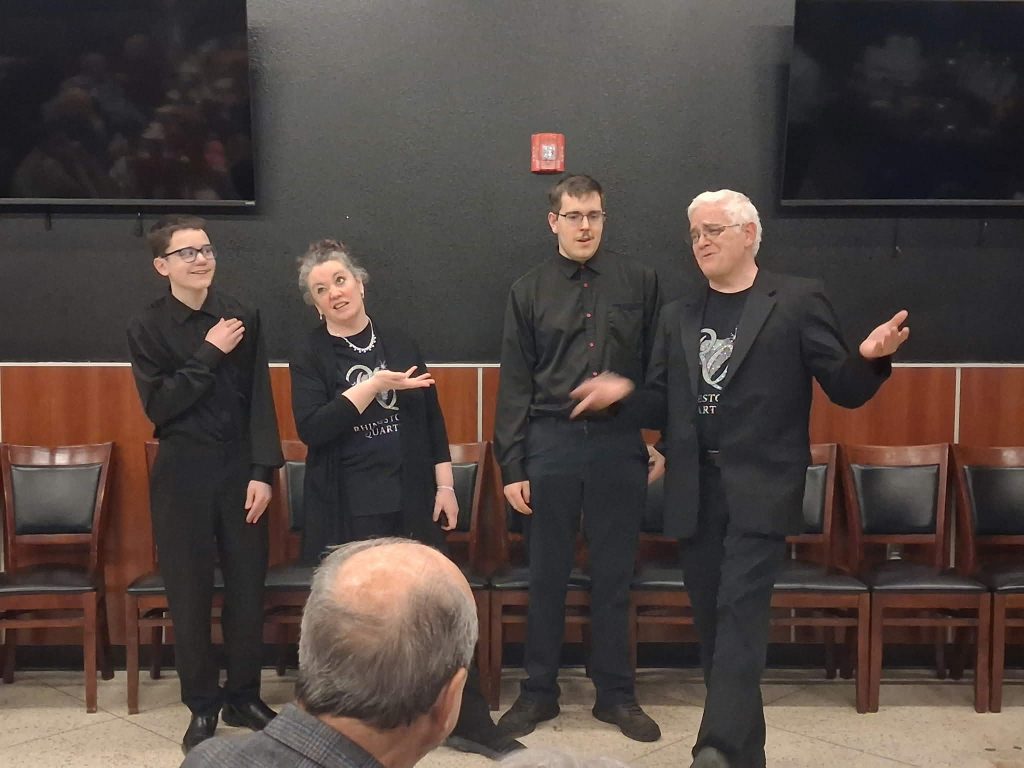
The Gutschke family, Nathan and Dawn with their sons Jonathan (24) and Daniel (15), a family whose shared faith and love of music have shaped a lifetime of harmony.

A Family Shaped by Faith, Music, and Harmony

The Gutschke family reflects a beautiful blend of faith, family, and harmony. Nathan and Dawn, along with their sons Jonathan (24) and Daniel (15), have spent their lives singing a cappella in church and sharing music as an expression of worship and community. Dawn brings years of choir, show choir, and musical experience from high school and college, while Nathan—once a proud band geek—earned his master’s degree in music and served as a band director for eight years. For the past twenty‑four years, they have also sung together in barbershop quartets and choruses, carrying their love of close harmony into every season of life. Their sons have followed right along: Jonathan sang in band and choir throughout middle and high school, and Daniel is already walking in his big brother’s musical footsteps.

Their story opens the door into something I’ve been reflecting on deeply—how harmony can point us toward God’s design, His order, and His desire for His people to walk in righteousness and unity. It’s what I call the sacred beauty of four.


“Sing to the Lord a new song; sing to the Lord, all the earth.”
Psalm 96:1


The Subtle Pattern of “Four” in Scripture

Scripture is full of gentle patterns that draw our attention to God’s intentional design. We read of the four corners of the earth, the four rivers flowing from Eden, the four Gospels telling the one story of Jesus, and the four living creatures surrounding the throne in Revelation. Even God’s covenant name is written with four letters—YHWH (יהוה), the Tetragrammaton.

I don’t treat this as numerology, but as a quiet reminder that God often weaves the number four into expressions of order, witness, and beauty. And in the world of close harmony—especially barbershop—there are also four parts that must work together to create one ringing, unified sound that reflects God’s creativity, structure, and purpose.


“For God is not a God of confusion but of peace.”
1 Corinthians 14:33


How Close Harmony Forms Us

Barbershop harmony is different from most choral experiences. It isn’t about hiding within a section or blending into a large group; it requires a unique closeness—almost a musical geometry—where each vocal line meets the others with precision, shaping a sound that cannot be produced alone. In this style, you don’t coast, you don’t hide, and you don’t sing your part without listening—really listening. Every rehearsal invites you to lean toward the people beside you, to adjust constantly, to communicate, and sometimes even to breathe together. It is relational music and vulnerable music, the kind that insists on genuine connection.


“Let the word of Christ dwell in you richly… singing psalms and hymns and spiritual songs.”
Colossians 3:16


The Holiness in Every Choir

There is a holy beauty in every expression of group singing. In a church choir, voices rise as worship, lifting Scripture and praise to God. This unity is sacred—it forms community and strengthens believers in a way that only worship can. In a community choir, there is holiness in the shared joy of music and in friendships formed over rehearsals, laughter, and performances.

Barbershop harmony is equally beautiful, but it calls for its own set of skills:

  • deeper listening
  • constant interaction
  • fine‑tuned adjustment
  • vulnerability
  • teamwork on a micro‑level

Each form of choral singing honors God in its own way, but barbershop adds a vivid spiritual metaphor through its closeness and intentional unity.


When the Chord Finally Locked

I remember a rehearsal when everything felt wrong—we were off pitch, tense, and frustrated—until the director finally stopped us and said, “You’re singing your part, but not together. The ringing only comes when you listen to each other.” So we tried again, and something shifted. We softened, leaned in, and stopped trying to be heard, choosing instead to support one another. Lead found the melody, bass laid the foundation, baritone glued the chord, and tenor added the shimmer. And then—the chord locked. The sound that rose in the air didn’t belong to any one of us; it hovered above, around, and through us. Singers call it an overtone, but to my heart, it became a quiet reminder of the beauty God creates when people surrender themselves to a shared purpose.


The Sacred Geometry of Four

This is where harmony meets holy presence. Music becomes divine because it points toward the work of the Holy Spirit. Scripture calls us to “Make every effort to keep the unity of the Spirit through the bond of peace” (Ephesians 4:3), reminding us that unity is not something we manufacture but something the Spirit forms as we surrender—our preferences, our timing, our tone, and even our ego. Just like the four harmony parts, the body of Christ thrives when every voice listens, adjusts, and joins the whole without losing its God‑given identity. And when this happens, something rings—something unmistakable that turns our attention toward God’s presence and His righteous ways.

“Make every effort to keep the unity of the Spirit through the bond of peace.” Ephesians 4:3


Rehearsal as a Picture of Discipleship

Harmony teaches us the spiritual life:

You cannot grow alone.
You cannot worship without listening.
You cannot mature without adjusting.
You cannot experience unity without humility.

Rehearsal becomes a classroom for the soul—a place where believers show up, learn together, submit to one another, adjust as needed, and blend their lives into worship. The same God who designed four‑part harmony is the One who forms His people into a community of righteousness and grace. When we surrender to Him, something beautiful happens. The chord rings. The Spirit moves. Heaven feels near.


Looking Ahead

The sacred beauty of four is simply this: God’s people, tuned by His Spirit, walking in holiness together—distinct, devoted, and directed toward His glory. And as we think of the Gutschke family—Nathan, Dawn, Jonathan, and Daniel—may the Lord’s grace rest on their voices and their lives. May their home continue to echo with Scripture, kindness, and song; may their harmonies point hearts to God’s order and righteousness; and may their gifts strengthen the church and bless everyone who listens. Amen.


When Scripture Whispers and the Spirit Sings

by Pastor Dee

When the Word Awakens the Soul

“In the beginning was the Word, and the Word was with God, and the Word was God.”
John 1:1

Whenever the Scriptures are opened, something sacred stirs—like the breath of God awakening what was dormant. His Word is never silent. It rises from the page with power, lighting a flame in the depths of the heart. What happens there is more than reading. It is meeting. It is revelation. It is the voice of the Lord whispering life into the soul.

And often, His presence comes so fully that it feels as though the heart cannot contain it. The Holy Spirit speaks in waves—placing thoughts, impressions, Scriptures, melodies, and connections into the mind in a way no human creativity could manufacture. It becomes clear that God alone is the source of this overflow.

For He delights to fill His people.

The moment His Word is opened, the Spirit begins to weave together memories, unspoken prayers, old conversations, hidden burdens, and even forgotten songs—stitching them into a single invitation:

“Listen. Follow. Speak what I give you.”

This is not something to boast about. This is grace. Pure grace.

“Let the one who boasts, boast in the Lord.” —1 Corinthians 1:31
“Let him who boasts boast in this: that he understands and knows Me.” —Jeremiah 9:24

We are only earthen vessels—fragile jars containing a treasure we could never create. Yet God pours into us still. Today, that pouring came wrapped in music.


When Scripture Becomes a Song

As the Scriptures were opened today, something unexpected rose within—a holy awareness of the music sung recently with The Singing Women of Texas, West Chapter at First Baptist Church in Levelland.

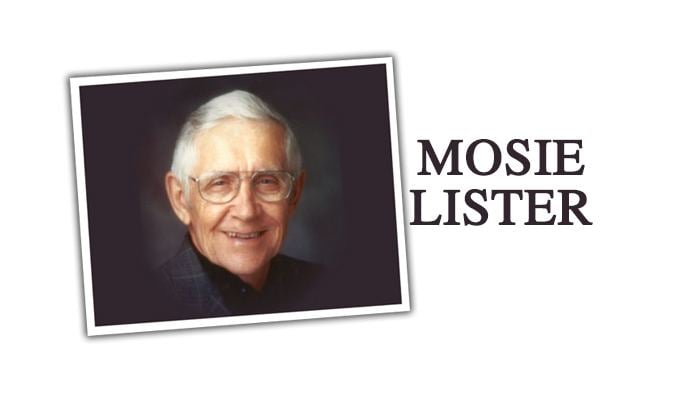
Two Mosie Lister anthems returned like a gentle tide:

  • Till the Storm Passes By (1958)
  • Love Was in the Room (1998)

The harmonies had felt like hands lifting the soul toward peace. The lyrics didn’t merely tell stories—they ministered. They steadied the heart. They radiated the nearness of God. And today, the Holy Spirit whispered a reminder:

Music becomes prayer when God breathes through it.


Where a Human Story Meets God’s Voice

While reflecting on worship, a look into Mosie Lister’s life unearthed a treasure.

He once said:

“The best way to receive inspiration is to keep one’s mind open to the Giver of all things.”

That is the posture of true devotion—staying open to the Giver.

Then came the detail that humbled the heart:

Mosie Lister’s most-recorded song,
“How Long Has It Been?”,
was written after a simple prayer:

“Lord, help me express what I’m thinking.”

Within fifteen minutes, the entire song arrived—not through striving or brilliance, but through surrender and listening.

It happened because he remained open.

And this is the invitation for anyone reading these words:

Open the Bible. Listen to God. Obey the Holy Spirit.
You are being pursued.

“Surely goodness and mercy shall follow me…” —Psalm 23:6
“The Son of Man came to seek and to save the lost.” —Luke 19:10
“I have loved you with an everlasting love; I have drawn you with unfailing kindness.” —Jeremiah 31:3

Just as God poured a song into Mosie, He pours words into His people today. Not because we are clever. Not because we are disciplined. But because the Spirit delights to fill those who open their hearts.


A Closing Prayer

Heavenly Father,
Thank You for speaking through Scripture, through the Holy Spirit, and through songs written before we ever knew how deeply we would need them. Thank You for placing eternal treasure within earthen vessels. Keep every heart open to the Giver of all things. Teach Your people to listen as Mosie Lister listened, to respond quickly when You inspire, and to recognize Your voice in every word, melody, and moment.
Let every step along this Prayful Path draw us deeper into Your presence. Whisper to us today, move through us, and let everything offered through our lives bring glory to Jesus alone.
In His holy name, amen.

Preparing and Dwelling: Martha’s Hands, Mary’s Heart

by Pastor Dee

After prayer and time in the Word this morning, the Lord put this on my heart. I’m sharing it simply as a new member of the Singing Women of Texas, West Chapter who loves Jesus with all my heart and wants to be faithful to Jesus.

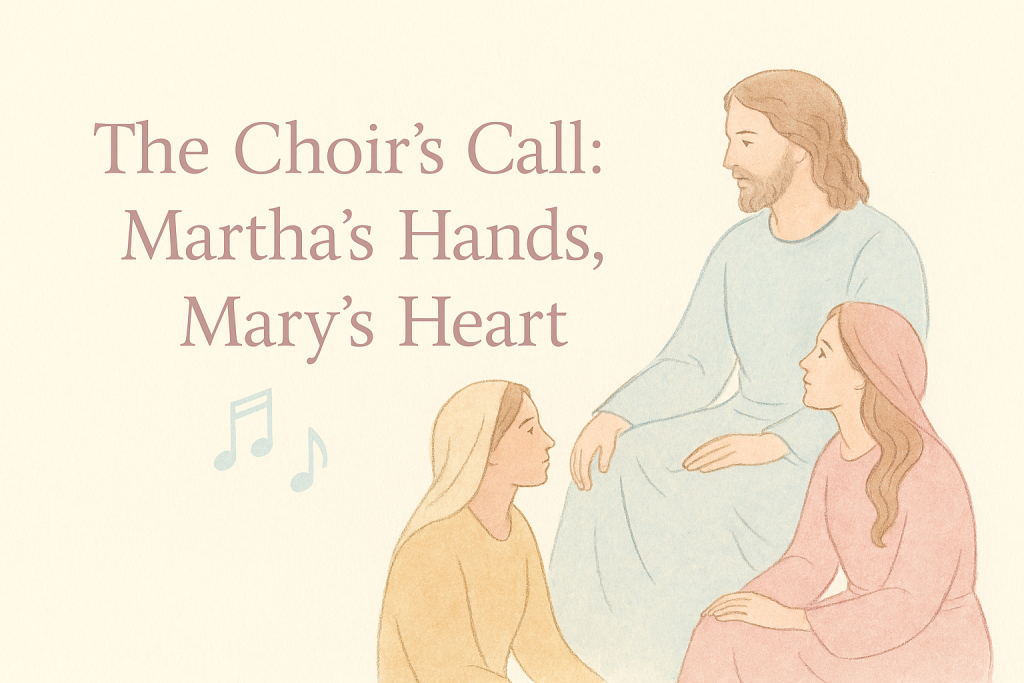
I’m realizing that practice is my “Martha” offering.
I show up, mark my music, blend, breathe, and listen — because I want to make room for others to meet Jesus (Luke 10:38–40). That preparation is hospitality. It is love in the details. It’s my way of saying,
“Lord, You are worthy of my best.” (Psalm 33:3)

But when the service begins, my heart shifts.
It’s time to be “Mary.”
It’s time to lay the work down and sit at His feet (Luke 10:41–42).
One thing is needed: His presence.

This is not performance.
This is worship.

I set my eyes on Jesus (Heb. 12:2).
I quiet my soul — “Be still and know that I am God” (Ps. 46:10).
I remember that “the light shines in the darkness, and the darkness has not overcome it” (John 1:5).
Jesus is the Light of the world, and when we sing His Word, light breaks in (John 8:12; Ps. 119:130).

Singing together helps me experience the Body of Christ as one body with one voice — many hearts, one prayer (Rom. 15:5–6; Eph. 5:19).
If my faith feels dim, your voice helps me see again.
If someone in the room is weary, our shared song can lift their eyes to the Lord (Matt. 5:14–16).

In His light we see light (Ps. 36:9).
His Word is a lamp to our feet and a light to our path (Ps. 119:105).
And I believe the Lord truly is enthroned on the praises of His people (Ps. 22:3). When we adore Him, He gathers our scattered thoughts and brings holy order to our hearts.

This is the rhythm He’s teaching me:

Prepare like Martha.
Worship like Mary.
Then rise and go with His presence into the world He loves (Matt. 28:19–20).

My rehearsal is service.
My worship is encounter.
My sending is mission.
All of it for His glory, all by His grace (Rom. 11:36).

This is what I carry in my heart when I take my place in the choir loft:
I’m here for Jesus.
I offer Him my voice, my breath, my attention, my love.
And then I rest in Him, trusting that He will make of it a song someone needs to hear today (Ps. 40:3).


Short Blessing Prayer

Lord Jesus, tune my heart to Yours.
Let Your Word light my way, and let Your presence be the song I sing.
Use our choir’s offering to draw many to Your feet.
Pour peace and joy over Joanna today.
Amen.

Stepping Into Harmony: The Hope of Hosea 14:4

A Conversation in the Choir Loft…Learning to Rest in the One Who Holds the Harmony

This past month, I joined the Singing Women of Texas, West Chapter. Many of these musicians have sung together for years, their harmonies woven through countless seasons of ministry. But for me, it was the first time I had sung in a choir in nearly twenty‑five years. I walked into that rehearsal room a little nervous, aware of how new I was and how long it had been since I blended my voice with others. It reminded me of Joshua stepping into leadership after Moses — surrounded by people who had walked this road far longer than he had, stepping into something familiar for them but brand‑new for him. And just as God told Joshua to take courage because He was with him, I sensed that same quiet encouragement as I stepped into this new season with trembling but willing faith.

So when I stepped into that room—new, nervous, and unsure—the kindness I received echoed the heart of Hosea 14:4: the God who meets us in our weakness, restores us in love, and draws us close even when we feel off‑key.   I will heal their faithlessness; I will love them freely, For my anger has turned from them. (Hosea 14:4)

That is Hosea 14:4 in our rehearsal‑room.

God doesn’t say, “Fix it first.”
He doesn’t say, “Get the notes right, then come back.”
He says:

“I will heal your faithlessness.”

He steps toward us while we’re still singing the wrong notes.
He wraps covenant love around our dissonance.
He restores the relationship His people fractured.
He loves us freely—not because we earned it, but because He is who He is.

And just like my Alto sisters who sat with me afterward—prayed with me, shared a meal with me—God’s healing doesn’t stop at forgiveness. It leads to fellowship. It leads to belonging. It leads to a table.


Bringing the Principle Home

Here’s what Hosea 14:4 invites us to remember today:

God’s healing reminds us that restoration is always His work, never ours; just as Israel’s faithlessness was a spiritual illness they could not cure on their own, we too depend entirely on God to mend what is broken in us. He loves without hesitation—freely, fully, and without conditions—stepping toward us with the kind of grace that leans in gently when we miss the note. His restoration is deeply relational, bringing intimacy, beauty, and renewed connection, much like the imagery of the lily, fragrance, and Lebanon that speaks of a love-song relationship restored. And what God restores, He places back into community, just as the early church saw Hosea’s promise as a doorway welcoming believers into a new family—restored, renamed, and embraced. In the same way my singing sisters turned wrong notes into fellowship, God often uses our shortcomings as the very places where His love becomes most visible.


A Gentle Challenge (for our hearts)

What if we stopped hiding the notes we miss?

What if we brought our spiritual “off‑pitch moments” to the One who heals faithlessness?

And what if we became for others what those women were for me—voices of grace, not judgment… companions at the table… reminders that God loves freely?


Shall we pray?

Heavenly Father,
Thank You for being the God who heals because we can’t.
Thank You for loving us freely—without hesitation, without condition, without turning away.

Where we are faithless, heal us.
Where we are wounded, restore us.
Where we feel unworthy, speak Your love again.

Make our lives like a harmony of grace—
carrying others, forgiving quickly,
and reflecting the tenderness with which You love Your people.

Gather us, restore us, and tune our hearts to Your mercy.
In Jesus’ name, Amen.

IT WAS NEVER ABOUT small FAITH

Let’s pour a cup of coffee and sit with Jesus for a minute.

Some mornings I’ve looked at my life—my people, my city, my calling—and thought, “Lord, I don’t feel like I have much today.” Maybe you’ve felt that, too. We often stare at our faith like it’s a measuring cup: Do I have enough? Is it big enough? Strong enough? But a mustard seed never looks at itself and wonders if it’s big enough to be a tree. A seed doesn’t measure—it grows. And that is exactly where Jesus meets us.

“The kingdom of heaven is like a mustard seed, which a man took and planted in his field. Though it is the smallest of all seeds, yet when it grows, it is the largest of garden plants and becomes a tree, so that the birds come and perch in its branches.” — Matthew 13:31–32 (NIV)

“It is like a mustard seed, which is the smallest of all seeds on earth. Yet when planted, it grows and becomes the largest of all garden plants, with such big branches that the birds can perch in its shade.” — Mark 4:31–32 (NIV)

I love how Jesus takes something ordinary and reveals something unstoppable. He’s not giving a botany lesson about the tiniest seed; He’s showing us that God’s kingdom—and the faith God plants—cannot stay small. It carries His life inside it. It carries a future. It carries shelter for others.


A Conversation Over Coffee: So… what did Jesus mean?

Most of us grew up hearing, “Even a little faith is enough.” But let’s listen a bit closer. In the kingdom parables (Matthew 13; Mark 4), Jesus sets the mustard seed in a field and says, Watch what happens. The point isn’t the seed’s size; it’s the seed’s destiny—it will become something that cannot be missed. The kingdom may start quietly, but it will not end quietly.

When Jesus talks about faith “like a mustard seed” in other places, we often assume He means “faith as small as.” But there’s a rich, faithful way to hear it as faith with the nature of a seed—faith that carries the certainty of what God has promised. A seed doesn’t wonder if it will become a plant; it simply becomes what it was designed to be. That’s how divine faith works inside a believer: it trusts the outcome God has already authored.

One writer I found puts it beautifully: faith accomplishes more in proportion to its beginning than anything else we possess—not because we are impressive, but because the God who gives faith is omnipotent. Jesus’ “move a mountain” language is a holy, hope-stirring hyperbole pointing to God’s power, not our spiritual muscle. Pure, living faith the size of a seed removes a mountain; lifeless faith the size of a mountain removes nothing. That contrast shifts our eyes from our faith’s size to our faith’s Source.


What the First Audience Heard (and Felt)

Picture Jesus’ listeners—farmers, tradespeople, parents, elders—people who knew the dirt under their nails and the ache in their backs. They had seen mustard grow wild and hardy in their fields. When Jesus said, “The kingdom is like a mustard seed,” they didn’t reach for a ruler. They nodded because they’d watched a seed, which almost became a plant that took over the garden and offered shade to birds. They heard inevitability. They heard life that spreads. They heard, “What God plants will take root in this world, even if it starts in the margins.”

And when Jesus spoke of faith “like a mustard seed,” they weren’t picturing a tiny drop of spiritual courage on a measuring spoon. They were picturing seed-life—the built-in certainty that what God begins, He finishes; what He plants, He grows; what He promises, He keeps.


Bringing the Principle Home (to your kitchen table and mine)

So, let’s carry this into our lives.

  • When you whisper a prayer that feels small, remember faith doesn’t work because it’s big; faith works because God is big. The seed doesn’t “try” to grow—it responds to light, water, and the hand that planted it. Your faith responds to God’s character, God’s Word, and God’s Spirit.
  • When the need in front of you looks like a mountain, don’t stare at the “size” of your faith. Stare at the faithfulness of your God. Mountains don’t move because we push hard; they move because He speaks and He sustains.
  • When you feel disqualified by weakness, remember living faith outgrows every limit because its life is divine. It may begin quietly, but it becomes a tree with branches wide enough for others to rest. Your trust in Jesus is meant to become shade for someone else.

If God planted it, it’s going to grow. That’s true for His kingdom in the world, and it’s true for His faith in you.


A gentle challenge (for our hearts)

Let’s retire the phrase, “My faith is small.” The seed never says, “I’m tiny.” The seed simply becomes. From now on, let’s say, “My God is great, and He has planted His life in me.” That confession turns the eyes of our hearts to where power truly lives.

It was never about small faith.
It has always been about God’s faithfulness growing in us.


Prayer

Heavenly Father
Thank You for planting Your life in our hearts.
Teach us to stop measuring and start trusting—
to look less at ourselves and more at You.

Where we feel thin, breathe Your strength.
Where we feel late, remind us You are right on time.
Where the mountain looms, speak Your word, and align our faith with Your will.

Make our lives like that mustard tree—
rooted, growing, and wide-branched with shelter for others.
Let Your kingdom come through the faith You planted in us.

In Jesus’ name, Amen.